Hot!
Kwaku Antwi Boasiako in ‘comfortable lead’ with his 12-feet Rasta hair


- /home/u249204778/domains/spectator.com.gh/public_html/wp-content/plugins/mvp-social-buttons/mvp-social-buttons.php on line 27
https://spectator.com.gh/wp-content/uploads/2020/11/Mr.Kwaku-Antwi-Boasiako-is-keeping-his-hair-for-life-scaled.jpg&description=Kwaku Antwi Boasiako in ‘comfortable lead’ with his 12-feet Rasta hair', 'pinterestShare', 'width=750,height=350'); return false;" title="Pin This Post">
- Share
- Tweet /home/u249204778/domains/spectator.com.gh/public_html/wp-content/plugins/mvp-social-buttons/mvp-social-buttons.php on line 72
https://spectator.com.gh/wp-content/uploads/2020/11/Mr.Kwaku-Antwi-Boasiako-is-keeping-his-hair-for-life-scaled.jpg&description=Kwaku Antwi Boasiako in ‘comfortable lead’ with his 12-feet Rasta hair', 'pinterestShare', 'width=750,height=350'); return false;" title="Pin This Post">
Unless they want to maintain an afro, most men would visit a barber’s shop, at least once every month, to get a clean shave and haircut.
Even those who admire dreadlocks or Rasta may not have the patience to keep it up to a certain length let alone sustain it for life.
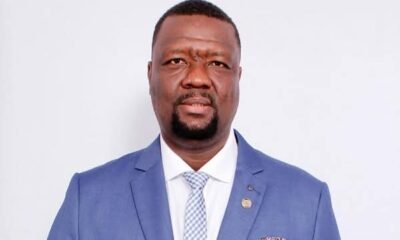
But 58-year-old Mr Kwaku Antwi Boasiako is comfortable with his 12-feet (365.76 cm) long hair which is about twice his own height.
rasta measures 12-feet
When he first visited The Spectator in 2003, the hair, arguably the longest kept by a Ghanaian Rastafarian, was only six-and-half feet long.
The 5.8 feet native of Bekwai in the Ashanti Region is determined to still grow the already longer hair further, as long as he lives.
Origin
Interacting with this paper once again, on Tuesday, Mr Boasiako explained that he became a Rastafarian at 16 years so he could “get closer to God and understand his spiritual being.”
Recounting the genesis of his 37-year-old journey of Rasta hairdo, he said he was exposed to a Pan-African society at St Peter’s Secondary School at Kwahu Nkwatia in the Eastern Region and later decided to transform his natural hair in accordance with the tenets of the group.
He noted that his parents were initially, against the idea of keeping a bushy hair as they thought that decision would interfere with his education but they eventually gave in after he had convinced them.
Education
True to his assurances, Mr Boasiako completed his ‘O’ level at St Peters Secondary School, pursued a private Advanced Level (A-Level) course, and gained admission to do Diploma in Communication Studies at Ghana Institute of Journalism. He later acquired Bachelor of Artsin Administration at University of Ghana, Legon.
He said he could not pursue a post-graduate programme due to financial constraints but he would have loved to study law and defend Rastafarians.
Influence
Mr Boasiako, quoting sections of the Bible throughout the interview, maintained that members of the group defended the spiritual cause of black people regardless of their peculiar outlook.
He said the rise in Pan-Africanism, subtle influence of Bob Marley music, and the other forms of indoctrination by peers deepened his interest in the virtues of Emperor Haile Selassie of Ethiopia who was and is considered the ‘Messiah’.
According to him, his ‘Rasta-man-ship’ was strengthened through prayers as he grew up to realise that there were more spiritual undertones to Rastafarianism than what others perceived.
“Rastafarianism encourages those who believe in the movement to fast and pray for spiritual uplift. You cannot be a real Rasta man without prayers,” he noted, adding that “no other race could maintain Rasta except the black man.”
Discrimination
He admitted that the decision to maintain the Rasta came with “discrimination and frustrations” at the workplace and society as a whole.
“I could not work to my full potential at my former workplace. Eventually I had to leave. They were not giving me the opportunity to work like other people. Sometimes I felt bad and discriminated against because I wanted to practice journalism than any other profession,” he noted.
Since then, he decided to operate his own venture as a real estate agent, however, some sections of the public still mocked at him for sustaining his Rasta hair throughout the years.
Maintenance
Unlike other people, Mr Boasiako revealed that he did not apply any chemical nor went to any special outlet to treat his natural hair which took only five minutes to wash.
“As much as it does not cost you to bath, it does not cost to maintain this hair. I only wash it with warm water and soap to remove dandruff and sometimes I apply lime which acts as natural disinfectant,” he said.
Asked how heavy the thick hair was, he replied: “your hair is like a cloth. When there is water in it, it is heavy, when there is no water, it is light.”
Ridicule
Although social and technological advancement have contributed to the acceptance of Rastafarian culture, Mr Boasiako noted that some people had often asked if he was able to sleep at night.
“I always tell them I have been standing ever since I was born. When I step out of my house, I always pray to God to help me to tolerate all the ridiculous comments people make,” he said.
Advice
Mr Boasiako encouraged young men who aspire to be Rastamen not to perceive the movement from a radical point of view.
“The motive behind this lifestyle is to uplift the spirit. It is not to encourage violence and radicalism. Aspiring Rasta men must “keep themselves neat so people do not confuse them with bad men,” he stressed.
He further argued that Ghanaian ladies must not be carried away by western hairstyles but rather maintain their natural hair and cover it with scarf so they will “look very simple.”
To him, Rastamen were not supposed to shave part of their dreadlock and leave other parts or even dye their hair.
“Some people say they are Rasta so they do not wear shoe or slippers but that is not Rastafarianism,” he added.
Mr Boasiako has two children. He is a member of the Ethiopian Orthodox Church and the Rastafari Council of Ghana, and loves reggae and gospel music.
Indeed, there are other people with longer hairs but he insisted he is in a “comfortable lead.”
By Ernest Nutsugah

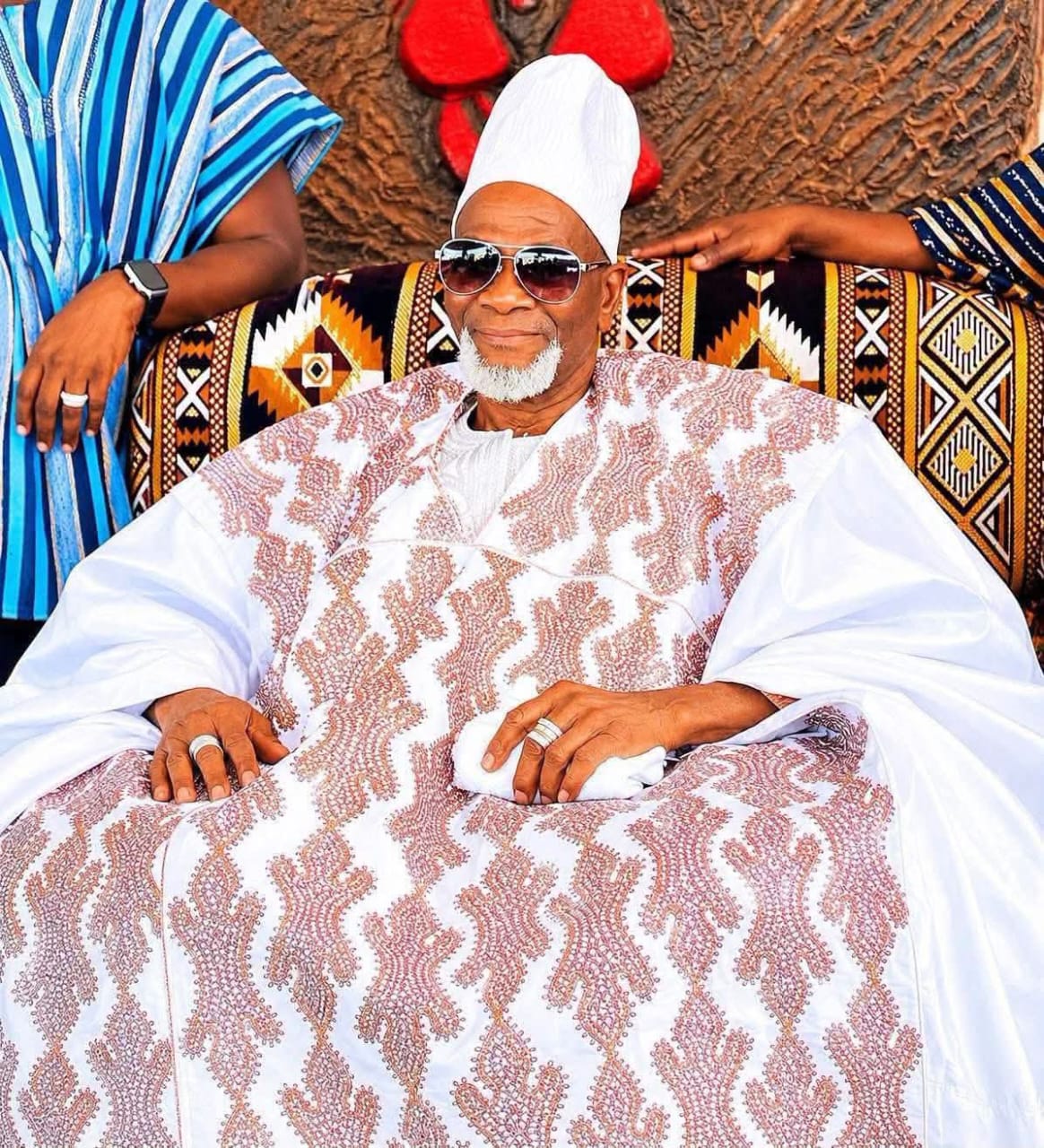
The Government of Ghana has expressed profound sadness over the passing of His Majesty Yaa Naa Abukari Mahama II, King of Dagbon.
In a statement issued on Monday, President John Dramani Mahama, on behalf of the Government, extended his deepest condolences to the Royal Family, the people of Dagbon, and the entire nation.
“The Government of Ghana has received with profound sadness the news of the passing of His Majesty Yaa Naa Abukari Mahama II,” the statement said.
President Mahama described the late King as a distinguished traditional ruler whose reign was defined by healing, reconciliation, and lasting peace in Dagbon following years of conflict.
The statement noted that His Majesty’s “unwavering commitment to unity, stability, and the welfare of his people created an enabling environment for development”and strengthened the partnership between traditional authorities and Government in advancing progress across Dagbon and Ghana.
The Government paid tribute to the life and legacy of Yaa Naa Abukari Mahama II, and honoured his invaluable service to the nation.
“May his wisdom, leadership, and dedication to peace continue to inspire future generations. May his soul rest in perfect peace,” the statement concluded.
The passing of Yaa Naa Abukari Mahama II marks the end of an era for Dagbon, which saw significant strides in unity and development under his leadership.
By Edem Mensah-Tsotorme

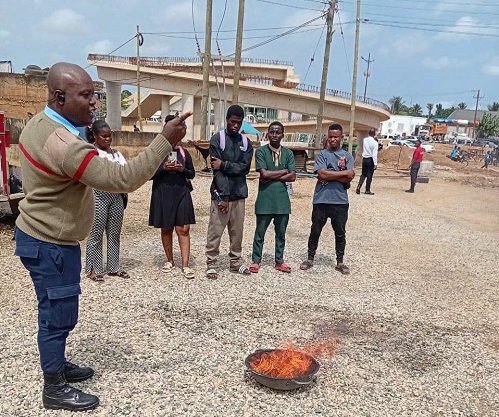
The Ghana National Fire Service (GNFS), Hohoe Municipality Command, has conducted fire safety inspections and public education at selected fuel filling stations within the municipality.
The exercise, held from July 3, 2026 to July 5, 2025 was led by the Municipal Commander, DO III Bismark Hosu-Porbley.
During the inspection, the team assessed the fire safety preparedness of the facilities. Staff were also educated on fire prevention, emergency response procedures, and the proper use of firefighting equipment.
Management of the affected fuel stations expressed appreciation for the exercise and pledged to comply with the recommended safety measures.
The GNFS said the exercise reaffirms its commitment to continuous fire safety awareness and risk reduction to safeguard lives and property.
By Edem Mensah-Tsotorme