Hot!
$200m boost for cocoa production

- /home/u249204778/domains/spectator.com.gh/public_html/wp-content/plugins/mvp-social-buttons/mvp-social-buttons.php on line 27
https://spectator.com.gh/wp-content/uploads/2020/06/COCOBOD-1.......Mr-Joseph-Boahen-Aidoo-Chief-Executive-of-Ghana-Cocoa-Board.-.jpg&description=$200m boost for cocoa production', 'pinterestShare', 'width=750,height=350'); return false;" title="Pin This Post">
- Share
- Tweet /home/u249204778/domains/spectator.com.gh/public_html/wp-content/plugins/mvp-social-buttons/mvp-social-buttons.php on line 72
https://spectator.com.gh/wp-content/uploads/2020/06/COCOBOD-1.......Mr-Joseph-Boahen-Aidoo-Chief-Executive-of-Ghana-Cocoa-Board.-.jpg&description=$200m boost for cocoa production', 'pinterestShare', 'width=750,height=350'); return false;" title="Pin This Post">
The Ghana Cocoa Board (COCOBOD), has received US$200 million loan facility from a consortium of banks for the take-off of the Productivity Enhancement Programmes (PEPs).
The facility is the first tranche of a US$600 million credit from the banks signed in 2017 to enhance both cultivation of cocoa beans and the processing of same in the country.
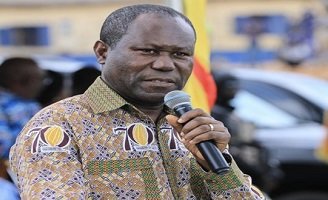
Chief Executive Officer of the Board, Joseph Boahen Aidoo, who disclosed this in Accra yesterday at the launch of the syndicated loan facility for the PEPs said the facility has come at a right time to support the cocoa sector.
The facility will among others increase cocoa production through the PEPs, irrigation facilities, the expansion of warehousing capacity, processing and promotion of cocoa consumption, as well as, the creation of a reliable database required for the smooth distribution of inputs to farmers.
“We believe this loan will support us to strengthen the cocoa value chain, help alleviate poverty by increasing productivity and promoting a progressive cocoa consumption environment,” the CEO of COCOBOD said.
According to him, through the Board’s own resources, significant progress has been made in efforts to implement the PEPs to increase yield per hectare to at least 1000 kilograms.
For example the cocoa swollen shoot virus disease control programme which is in its second year in the Western and Eastern Regions, Mr Aidoo said, has seen the rehabilitation of several hectares of diseased farms.
Additionally, Mr Aidoo said the 2020 mass pruning exercise which began two months ago has been excellent; adding that, “We have achieved 100 per cent coverage of farm area, giving more prospects for higher yields.”
He assured the investors that the fund would be used judiciously to achieve the intent behind the programme.
The Minister of Food and Agriculture, Dr Owusu Afriyie Akoto, on his part said in government’s effort to ensure the provision of quality extension services and give farmers equal access to all of its interventions, “we have rolled out a cocoa management system which will enable us have adequate and accurate data of our farmers, farms, licensed buying companies input suppliers and other players in the cocoa value chain”.
The cocoa price volatility on the world market, Dr Akoto said, required that domestic processing was increased to ensure a stable income for farmers.
Linking local production and consumption, he said “amidst the current Coronavirus pandemic, I strongly believe that increased intake of cocoa with high concentration of flavanols and its associated components will help significantly in fighting the disease”.
Mr Yasumichi Araki, the Chief Representative of Japan International Cooperation Agency (JICA), the lead of the Consortium, hoping that the partnership would yield the needed result underscored the need for greater support for the protection of farmers’ livelihoods.
The rest of the firms making up the consortium include the Africa Development Bank, Development Bank of South Africa, Credit Suisse, the Industrial and Commercial Bank of China and Italian investment firm CDP.
Source: Ghanaian Times


The Government of Ghana has expressed profound sadness over the passing of His Majesty Yaa Naa Abukari Mahama II, King of Dagbon.
In a statement issued on Monday, President John Dramani Mahama, on behalf of the Government, extended his deepest condolences to the Royal Family, the people of Dagbon, and the entire nation.
“The Government of Ghana has received with profound sadness the news of the passing of His Majesty Yaa Naa Abukari Mahama II,” the statement said.
President Mahama described the late King as a distinguished traditional ruler whose reign was defined by healing, reconciliation, and lasting peace in Dagbon following years of conflict.
The statement noted that His Majesty’s “unwavering commitment to unity, stability, and the welfare of his people created an enabling environment for development”and strengthened the partnership between traditional authorities and Government in advancing progress across Dagbon and Ghana.
The Government paid tribute to the life and legacy of Yaa Naa Abukari Mahama II, and honoured his invaluable service to the nation.
“May his wisdom, leadership, and dedication to peace continue to inspire future generations. May his soul rest in perfect peace,” the statement concluded.
The passing of Yaa Naa Abukari Mahama II marks the end of an era for Dagbon, which saw significant strides in unity and development under his leadership.
By Edem Mensah-Tsotorme

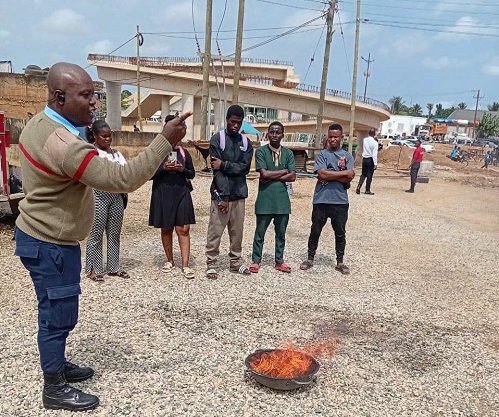
The Ghana National Fire Service (GNFS), Hohoe Municipality Command, has conducted fire safety inspections and public education at selected fuel filling stations within the municipality.
The exercise, held from July 3, 2026 to July 5, 2025 was led by the Municipal Commander, DO III Bismark Hosu-Porbley.
During the inspection, the team assessed the fire safety preparedness of the facilities. Staff were also educated on fire prevention, emergency response procedures, and the proper use of firefighting equipment.
Management of the affected fuel stations expressed appreciation for the exercise and pledged to comply with the recommended safety measures.
The GNFS said the exercise reaffirms its commitment to continuous fire safety awareness and risk reduction to safeguard lives and property.
By Edem Mensah-Tsotorme