Fruitful Living
THE SERMON ON THE MOUNT — PART III

- /home/u249204778/domains/spectator.com.gh/public_html/wp-content/plugins/mvp-social-buttons/mvp-social-buttons.php on line 27
https://spectator.com.gh/wp-content/uploads/2023/01/Jesus-Christ-teaching-the-sermon-on-the-mount-1.jpeg&description=THE SERMON ON THE MOUNT — PART III', 'pinterestShare', 'width=750,height=350'); return false;" title="Pin This Post">
- Share
- Tweet /home/u249204778/domains/spectator.com.gh/public_html/wp-content/plugins/mvp-social-buttons/mvp-social-buttons.php on line 72
https://spectator.com.gh/wp-content/uploads/2023/01/Jesus-Christ-teaching-the-sermon-on-the-mount-1.jpeg&description=THE SERMON ON THE MOUNT — PART III', 'pinterestShare', 'width=750,height=350'); return false;" title="Pin This Post">
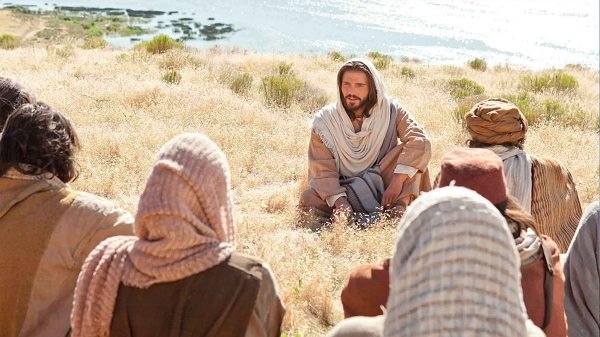
• Jesus Christ teaching the sermon on the mount
In the same way, let your light shine before others, that they may see your good deeds and glorify your Father in heaven. But seek first His kingdom and His righteousness, and all these things will be given to you as well. – Matthew 5:16; 6:33.
INTRODUCTION
This week we publish the concluding part of Christ’s Sermon on the Mount in Matthew 7:1-29.
Please enjoy and pass it on to others!
JUDGING OTHERS
“Do not judge, or you too will be judged. For in the same way you judge others, you will be judged, and with the measure you use, it will be measured to you.
“Why do you look at the speck of sawdust in your brother’s eye and pay no attention to the plank in your own eye? How can you say to your brother, ‘Let me take the speck out of your eye,’ when all the time there is a plank in your own eye? You hypocrite, first take the plank out of your own eye, and then you will see clearly to remove the speck from your brother’s eye.
“Do not give dogs what is sacred; do not throw your pearls to pigs. If you do, they may trample them under their feet, and turn and tear you to pieces.
ASK, SEEK, KNOCK
“Ask and it will be given to you; seek and you will find; knock and the door will be opened to you. For everyone who asks receives; the one who seeks finds; and to the one who knocks, the door will be opened.
“Which of you, if your son asks for bread, will give him a stone? Or if he asks for a fish, will give him a snake? If you, then, though you are evil, know how to give good gifts to your children, how much more will your Father in heaven give good gifts to those who ask him! So in everything, do to others what you would have them do to you, for this sums up the Law and the Prophets.
THE NARROW AND WIDE GATES
“Enter through the narrow gate. For wide is the gate and broad is the road that leads to destruction, and many enter through it. But small is the gate and narrow the road that leads to life, and only a few find it.
TRUE AND FALSE PROPHETS
“Watch out for false prophets. They come to you in sheep’s clothing, but inwardly they are ferocious wolves. By their fruit you will recognise them. Do people pick grapes from thornbushes, or figs from thistles? Likewise, every good tree bears good fruit, but a bad tree bears bad fruit. A good tree cannot bear bad fruit, and a bad tree cannot bear good fruit. Every tree that does not bear good fruit is cut down and thrown into the fire. Thus, by their fruit you will recognize them.
TRUE AND FALSE DISCIPLES
“Not everyone who says to me, ‘Lord, Lord,’ will enter the kingdom of heaven, but only the one who does the will of my Father who is in heaven. Many will say to me on that day, ‘Lord, Lord, did we not prophesy in your name and in your name drive out demons and in your name perform many miracles?’ Then I will tell them plainly, ‘I never knew you. Away from me, you evildoers!’
THE WISE AND FOOLISH BUILDERS
“Therefore everyone who hears these words of mine and puts them into practice is like a wise man who built his house on the rock. The rain came down, the streams rose, and the winds blew and beat against that house; yet it did not fall, because it had its foundation on the rock. But everyone who hears these words of mine and does not put them into practice is like a foolish man who built his house on sand. The rain came down, the streams rose, and the winds blew and beat against that house, and it fell with a great crash.”
When Jesus had finished saying these things, the crowds were amazed at His teaching, because He taught as one who had authority, and not as their teachers of the law.
RELEVANCE OF THE SERMON ON THE MOUNT
The Sermon on the Mount is relevant to modern life because it depicts the behaviour which Jesus expected of each of His disciples then and also of us now because of our citizenship in God’s Kingdom. The Sermon speaks of what ought to be in a disciple’s heart, what should be his motives and what should be in his private and public life.
I agree with the preacher, John Stott when he says that the relevance of the Sermon on the Mount can be seen in the following areas:
• A Christian’s character (Matthew 5: 3-12): The beatitudes emphasise eight principal marks of a Christian’s character and conduct in life.
• A Christian’s influence (Matthew 5: 13-16): Salt and Light indicate the influence for good, which Christians will exert in the community if they maintain their distinctive character as portrayed in the beatitudes.
• A Christian’s righteousness (Matthew 5:17- 48): A Christian’s righteousness denotes what should be that Christian’s attitude to the moral law of God.
• A Christian’s piety (Matthew 6:1-18): This should not be a hypocritical display as in the days of the Pharisees nor should it be the mechanical formalism of unbelievers. A Christian’s piety should be marked by reality and the sincerity of children who always live in the Heavenly Father’s presence.
• A Christian’s ambition (Matthew 6:19-34): A Christian is to live above worldliness and secularism by concentrating on a relationship with the living God which creates contentment and peace. A Christian’s supreme ambition ought to be the glory of God which is what we should seek. – But seek first his kingdom and his righteousness, and all these things will be given to you as well – Matthew 6:33 (NIV)
• A Christian’s relationships (Matthew 7:1-20): Once a Christian is properly related to Christ, all other relationships are positively affected. New relationships are created and old ones are changed for good.
• A Christian’s Commitment (Matthew 7:21-27): A Christian should not merely call Jesus Lord, but to seek to obey Him who is called Lord. Such is the wisdom that drives from being a Christian.
PRACTICALITY OF THE SERMON ON THE MOUNT
Many people wonder how practical the Sermon on the Mount is for today’s everyday living. The truth is, no one can achieve the standards set by the Lord Jesus Christ without being born again. Because it is only in the new nature that comes with our relationship with Christ it gives us the impetus to live to please God. 2 Corinthians 5:17 (NIV) states categorically “Therefore, if anyone is in Christ, the new creation has come: The old has gone, the new is here! It is this new life empowered and enabled by the Holy Spirit that marks out how a Christian is able to live his life.
Jesus spoke the Sermon to those who are citizens of God’s Kingdom and children of God’s family. It is when we attain Christ’s standards that we give evidence of what, by God’s free grace and gift we are.
Stay blessed!
For further inquiries please contact us on Tel Nos. 0243588467 or 0268130615.
Email: saltnlightministries@ gmail.com
Website: saltandlightministriesgh.org
Dr. Joyce Aryee, the author

Fruitful Living
Environmental Stewardship Is an Act of Worship: The Islamic response to climate change and environmental degradation (Final part)

The Role of Faith Leaders and the Way Forward
Addressing climate change and environmental degradation requires more than legislation, technological innovation, and financial investment. It also demands a transformation of attitudes, values, and behaviours. While governments formulate policies and enforce environmental regulations, faith leaders possess a unique moral authority to shape public conscience and inspire responsible stewardship. In Ghana, where religion plays a significant role in public life, religious institutions can become powerful partners in advancing environmental sustainability.
Islam assigns Imams and religious scholars the responsibility of guiding society toward righteousness and preventing harmful practices. Allah instructs, “Invite to the way of your Lord with wisdom and good instruction, and argue with them in a way that is best” (Qur’an 16:125, Sahih International). This responsibility extends beyond matters of ritual worship to encompass every aspect of life that affects human wellbeing, including the protection of the environment.
Environmental stewardship should therefore become an integral part of Islamic teaching, preaching, and community engagement.
Mosques, as centres of learning and social transformation, have enormous potential to cultivate environmental consciousness. Imams can regularly incorporate environmental themes into Friday sermons, Islamic lectures, marriage counselling, youth programmes, and educational activities. Teaching congregants that protecting rivers, forests, wildlife, and public spaces is an act of worship that helps bridge the perceived divide between religious devotion and environmental responsibility. Such education can inspire lasting behavioural change rooted not merely in fear of legal sanctions but in consciousness of accountability before Allah.
Religious institutions can also lead by example. Mosques can organise community clean-up campaigns, tree-planting exercises, and public awareness programmes on sanitation and responsible waste disposal. They can adopt environmentally friendly practices by reducing unnecessary waste during religious gatherings, encouraging water conservation during ablution, and promoting the proper maintenance of mosque facilities and surrounding communities. These initiatives demonstrate that Islamic values are best communicated through practical action as well
as words.
Meaningful environmental protection also requires collaboration among multiple stakeholders. Government agencies should continue strengthening the enforcement of environmental laws while addressing corruption and enhancing institutional accountability. Environmental governance must be guided by transparency, fairness, and the consistent application of the law. At the same time, sustainable economic alternatives should be developed for communities that depend on environmentally destructive activities, particularly illegal mining. Investments in vocational education, climate-smart agriculture, responsible small-scale mining, and entrepreneurship can provide dignified livelihoods while reducing pressure on fragile ecosystems (UNDP, 2023).
Traditional authorities equally have an indispensable role to play. As custodians of customary lands, chiefs and community leaders possess considerable influence over land use and natural resource management. Their collaboration with government institutions, faith leaders, and local communities is essential in protecting forests, water bodies, and communal lands from unsustainable exploitation. Community ownership of environmental conservation initiatives often produces more enduring outcomes than enforcement measures alone.
Educational institutions should integrate environmental ethics into their curricula from the basic to the tertiary levels. Beyond teaching scientific concepts, schools should cultivate a sense of environmental citizenship, encouraging young people to appreciate the interconnectedness of ecological health, economic development, and human wellbeing. Parents likewise bear the responsibility of nurturing environmentally responsible habits within the family by teaching children the values of cleanliness, moderation, conservation, and respect for public property.
Individual citizens cannot be absolved of responsibility. The Qur’anic concept of Khalifah reminds every believer that stewardship begins with personal conduct. Conserving water, disposing of waste responsibly, planting and protecting trees, reducing unnecessary consumption, respecting public spaces, and reporting environmental offences are practical ways through which every Muslim can fulfil this sacred trust. Environmental stewardship is not reserved for governments or
environmental experts; it is the collective duty of every member of society.
The environmental challenges confronting Ghana should also be viewed as opportunities to strengthen national unity. Climate change, pollution, and environmental degradation affect people irrespective of religion, ethnicity, political affiliation, or social status. They therefore call for collective action grounded in shared values of justice, responsibility, and compassion. Islam’s
ethical framework complements national development efforts by reminding believers that service to humanity and protection of creation are integral dimensions of worship.
As Ghana strives to achieve sustainable development, environmental protection must cease to be regarded as a peripheral concern and instead become a national moral priority. The combined efforts of government, traditional authorities, religious institutions, civil society, academia, the private sector, and citizens can restore degraded ecosystems and build resilient communities. Through wise leadership, sound governance, and unwavering commitment to the divine trust of
stewardship, the nation can preserve its rich natural heritage for generations yet unborn.
In conclusion, protecting the environment is not merely an environmental obligation—it is an act of worship, a fulfilment of humanity’s divine trust, and a legacy of justice for future generations.
Thank you.
The author is Chief Imam of Katamanso Municipal and Certified Counsellor and Governnace Expert
SKIP THE QUEUE, TAP THE NEWS
You can now read the Ghanaian Times and The Spectator newspapers from the comfort of your device via TimesNewsPlus.
Join our WhatsApp Channel: https://whatsapp.com/channel/0029VbBElzjInlqHhl1aTU27
Fruitful Living
Environmental stewardship is an act of worship: The Islamic response to climate change, environmental degradation (Part 4)
The environmental consequences of illegal mining have reached alarming levels in Ghana. Several major rivers, including the Pra, Ankobra, Offin, Birim and Tano, have experienced significant pollution from illegal mining activities, increasing the cost and complexity of water treatment while threatening the availability of potable water for millions of citizens (Water Resources Commission, 2024; Ghana Water Limited, 2024). These developments underscore the urgent need for stronger environmental governance and collective action.
Islam equally emphasises accountability in governance. The Prophet Muhammad (peace be upon him) taught that every leader is responsible for those under his or her authority (Sahih al-Bukhari, Hadith 7138; Sahih Muslim, Hadith 1829). This principle extends to public officials entrusted with environmental regulation, traditional authorities responsible for communal lands, mining companies, local assemblies, and community leaders. Environmental protection cannot succeed
where accountability is absent.
At the same time, addressing galamsey requires more than law enforcement. Sustainable solutions must tackle the underlying socio-economic realities that drive individuals into illegal mining. Many young people are motivated by unemployment, poverty, and limited economic opportunities. Islamic principles of social justice therefore call for the creation of alternative livelihoods through sustainable agriculture, vocational training, responsible small-scale mining under strict environmental standards, entrepreneurship, and skills development. Environmental protection and economic empowerment should not be viewed as competing priorities but as complementary goals that promote human dignity and national development.
Faith communities also have an indispensable role to play. Mosques, churches, schools, traditional councils, and civil society organisations possess significant influence in shaping public attitudes and behaviours. Imams, in particular, should consistently remind congregations that wealth acquired through actions that destroy communities and Allah’s creation cannot be regarded as a blessing. Religious education should cultivate environmental ethics alongside spiritual devotion, reinforcing the understanding that protecting rivers, forests, and farmlands is an expression of gratitude to Allah and a fulfilment of the trust of Khalifah.
Ultimately, the struggle against galamsey is more than a campaign to protect natural resources; it is a struggle to uphold justice, preserve human dignity, and honour the trust that Allah has placed upon humanity. Lasting solutions will require strong governance, responsible citizenship, sustainable economic opportunities, and renewed moral leadership. Only when these elements
work together can Ghana safeguard its natural heritage for present and future generations.
Water conservation, waste management and sustainable development: Practical expressions of Islamic stewardship
Religious education should cultivate environmental ethics alongside spiritual devotion, reinforcing the understanding that protecting rivers, forests, and farmlands is an expression of gratitude to Allah and a fulfilment of the trust of Khalifah.
Ultimately, the struggle against galamsey is more than a campaign to protect natural resources; it is a struggle to uphold justice, preserve human dignity, and honour the trust that Allah has placed upon humanity. Lasting solutions will require strong governance, responsible citizenship, sustainable economic opportunities, and renewed moral leadership. Only when these elements
work together can Ghana safeguard its natural heritage for present and future generations.
Islam is not merely a religion that condemns environmental destruction; it also provides practical guidance for preserving and sustaining the natural world. Through its teachings on moderation, cleanliness, conservation, and responsible consumption, Islam cultivates an environmental ethic that remains remarkably relevant to contemporary challenges such as water scarcity, pollution, waste management, and climate change. These teachings encourage Muslims to become
responsible custodians of Allah’s creation in both private and public life.
Water conservation: A sacred responsibility
Water occupies a unique position in Islam as the source of life and an essential element of worship. Allah says, “And We made from water every living thing. Then will they not believe?” (Qur’an 21:30, Sahih International). This verse reminds believers that water is not merely an economic resource but a divine blessing upon which all living creatures depend. The importance of water is further reflected in Islamic acts of worship. Muslims perform ablution (wudu) before the five daily prayers and ritual bathing (ghusl) under prescribed circumstances.
Yet, despite its central role in purification, Islam strongly discourages wastefulness. The Prophet Muhammad (peace be upon him) once advised one of his companions not to waste water while performing ablution, even when using water from a flowing river (Sunan Ibn Majah, Hadith 425). This timeless guidance establishes the principle that abundance does not justify extravagance.
Conservation remains a religious obligation regardless of the apparent availability of natural resources.
This Prophetic teaching carries profound implications for contemporary Ghana. Illegal mining has severely polluted many rivers, increasing the cost of water treatment and limiting access to safe drinking water for numerous communities. Climate change has also intensified seasonal variability in rainfall, placing additional pressure on freshwater resources (IPCC, 2023). Against this
backdrop, conserving water is no longer simply an environmental preference—it is a moral imperative grounded in Islamic teaching.
Water conservation should therefore become a shared responsibility among households, educational institutions, industries, and places of worship. Simple practices such as repairing leaking pipes, harvesting rainwater, protecting riverbanks, avoiding contamination of water bodies, and promoting efficient irrigation contribute to safeguarding one of Allah’s greatest blessings. Every effort to preserve water is an investment in public health, food security, and the
wellbeing of future generations.
Unfortunately, indiscriminate disposal of refuse remains a significant challenge in many communities. Plastic waste clogs drainage systems, contributes to flooding during the rainy season, pollutes rivers and beaches, and threatens marine ecosystems. Open burning of waste further degrades air quality and poses serious health risks, particularly for children and the elderly (UNEP,2024).
The author is Chief Imam of Katamanso Municipal and Certified Counsellor and Governnace Expert.
By Imam Alhaji Saeed Abdulai

 Entertainment1 week ago
Rhythms On Da Runway returns November 28 with 16th edition themed ‘Unbound’
- Entertainment1 week ago
Ohemaa Mercy’s Tehillah Experience outfit was priestly regalia, not costume – Management clarifies
 News1 week ago
Janet Asana Nabla criticises Mahama over China curriculum controversy involving Haruna Iddrisu