News
Feasibility of the Ghana ‘TV learning’ initiative and the way forward


- /home/u249204778/domains/spectator.com.gh/public_html/wp-content/plugins/mvp-social-buttons/mvp-social-buttons.php on line 27
https://spectator.com.gh/wp-content/uploads/2020/06/More-must-be-done-to-improve-e-learning-in-Ghana.jpg&description=Feasibility of the Ghana ‘TV learning’ initiative and the way forward', 'pinterestShare', 'width=750,height=350'); return false;" title="Pin This Post">
- Share
- Tweet /home/u249204778/domains/spectator.com.gh/public_html/wp-content/plugins/mvp-social-buttons/mvp-social-buttons.php on line 72
https://spectator.com.gh/wp-content/uploads/2020/06/More-must-be-done-to-improve-e-learning-in-Ghana.jpg&description=Feasibility of the Ghana ‘TV learning’ initiative and the way forward', 'pinterestShare', 'width=750,height=350'); return false;" title="Pin This Post">
The novel coronavirus has exposed the inequalities in numerous aspects of what makes society whole, and among the numerous affected sectors education has not been spared.
In a bid to minimise the spread of the virus, the Government of Ghana imposed a ban on all social gatherings, leading to the closure of educational institutions. But learning, as the cliché goes, “never stops”.
In an effort to help students keep up with the syllabi and remain active while social distancing and other health protocols were being practised, stakeholders in education came up with some innovative measures.
The Ministry of Education, Ghana Education Service and the Ghana Broadcasting Corporation partnered with the MultiChoice Ghana Ltd to make GES approved educational content available for Ghanaian students, mainly those in Basic, Junior High and Senior High Schools.
The collaboration and subsequent roll out of the programme became effective on April 14, 2020.
Although the Minister of Education along with the other agencies involved in taking that decision had students at heart, it appears the disadvantages of the e-learning arrangements outweigh the advantages.
Inasmuch as Ghana is catching up with Western countries in terms of technology, it still remains a country with a large number of people living in poverty.
A good number of the populace, especially in rural areas, still do not have the luxury of a television set and uninterrupted power supply. Digital television channels are not available in some areas due to poor connection.
Though the e-learning measure was meant to fill some gaps, this mode of learning, to some extent, prevents students from having a personal interaction with their teachers.
Students lose the benefits of asking questions, seeking clarification when confused and getting immediate feedback.
Weaker students who do not perform so well in class could suffer the most as they do not receive the extra attention they deserve after classroom lessons.
There is also the problem of laziness as most students tend to feel relaxed in the comfort of their homes and are most likely to choose sleeping, watching a movie or playing games rather than paying attention to a lesson instructor on television.
Some students at basic and tertiary levels indicate they do not have enough data to keep up and access online tutorials. Others also lose the motivation to learn when separated from peers.
Though efforts are being made for schools to re-open in the shortest possible time, there is still the fear that the entire syllabus could be completed with majority of students having very little understanding of various topics in their respective programmes of study.
While the Ghana e-learning TV initiative could prove to be beneficial to students at home, the challenges associated with its practicality cannot be understated.
From all indications, we still have a long way to go in mitigating gaps birthed by the e-learning system in our part of the world.
As far as improving e-learning in the near future is concerned, stakeholders must as well increase the tools and equipment which could help achieve the objective of this learning system.
When the pandemic is over, there would be an urgent need to review our educational system to help strengthen the areas where there are some shortfalls.
While students are encouraged not to give up on the e-learning system, collaboration and a deliberate effort by the state will be required so that the desired outcome of the e-learning initiative is completely attained.
Priscilla Boakye,
Student, Ghana Institute of Journalism

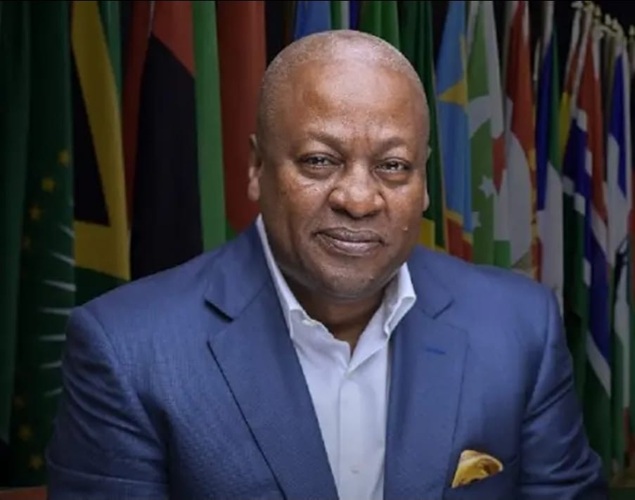
President John Dramani Mahama will be joining African heads of state, business leaders, investors and innovators shaping Africa’s next chapter, at the inaugural Alamein Africa Forum scheduled to take place from 2nd to 4th October 2026 in the historic city of Alamein on Egypt’s Mediterranean coast.
The three-day Alamein Africa Forum is established as a permanent African Business Forum to convene biennially in Egypt.
It is to become the continent’s premier gathering where political power meets entrepreneurial prowess, bridging the established engines of African growth with the new sectors defining its future.
Co-organised by the Government of Egypt, African Export – Import Bank (Afreximbank), the African Union and AUDA-NEPAD, it is expected to bring together more than twenty (20) heads of state and government representatives alongside business leaders, bankers and development institutions.
Ghana’s President, who on 23rd September 2026 declared Ghana is open for business in New York after ringing the ceremonial closing bell at the Nasdaq Stock Market will be leading the Ghanaian delegation, to include the Minister for Trade, Agribusiness, and Industry, Elizabeth Ofosu – Adjare, to the forum.
Other members of the Ghanaian delegation are the Head and Presidential Advisor for Ghana’s 24-Hour Economy and Accelerated Export Development Programme, Hon. Augustus Goosie Tanoh, Ghana’s Special Envoy to the Alliance of Sahel States, Colonel Larry Gbevlo – Lartey alongside key Ghanaian private sector players.
Bringing together leaders in politics, business and policy from across the continent, the Alamein Africa Forum will provide a unique opportunity to shape Africa’s growth agenda by aligning policy and investment priorities, mobilising partnerships for implementation and strengthening financing and investment pathways.
The private sector must become an integral part of Agenda 2063, the African Union’s strategic fifty-year masterplan to transform the continent. The private sector is the core economic engine required to turn the African 2063 from an aspirational government roadmap into realized infrastructure, jobs, and value-added trade.
By Chris KONEY
News
Contractors move to site to begin construction of 120-Bed Trauma Hospital at Bole – Felix Kwakye Ofosu

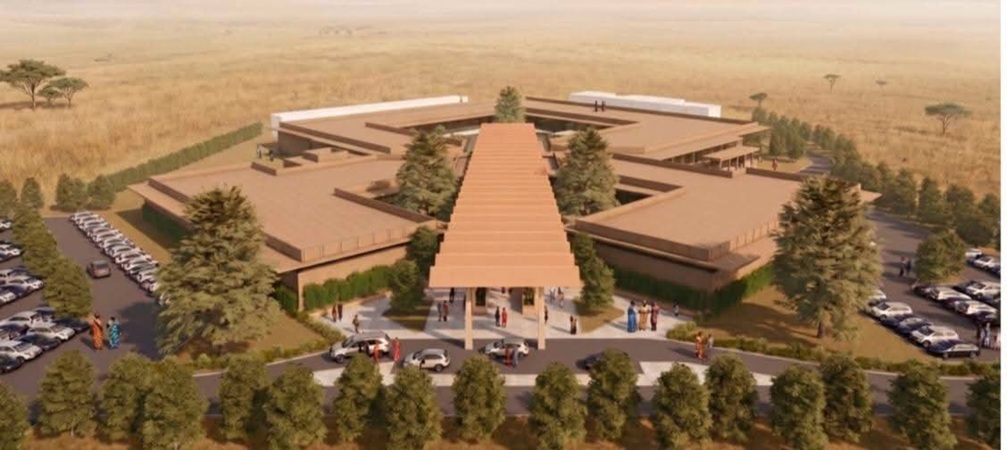
Minister for Government Communications, Felix Kwakye Ofosu, has revealed that contractors have moved to site to begin construction of a 120-bed Specialised Trauma and Emergency Hospital at Bole in the Savannah Region.
According to the Minister, the 16,000 square metre facility will be equipped with modern medical infrastructure to provide emergency and trauma care.
The hospital will have a 24-hour Accident and Emergency Unit, trauma resuscitation bays, emergency operating theatres, an Intensive Care Unit (ICU) and a High Dependency Unit (HDU).
It will also include specialised trauma wards, a burns treatment unit, orthopaedic and surgical units, as well as imaging and diagnostic facilities, among others.
By Edem Mensah-Tsotorme