Hot!
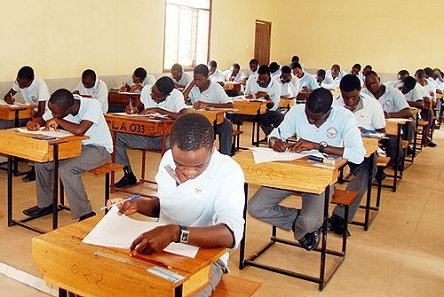
Ghana will revert to writing WASSCE in May/June – GES Director-General

- /home/u249204778/domains/spectator.com.gh/public_html/wp-content/plugins/mvp-social-buttons/mvp-social-buttons.php on line 27
https://spectator.com.gh/wp-content/uploads/2022/07/Students-At-An-Exam-Hall-1.jpeg&description=Ghana will revert to writing WASSCE in May/June – GES Director-General', 'pinterestShare', 'width=750,height=350'); return false;" title="Pin This Post">
- Share
- Tweet /home/u249204778/domains/spectator.com.gh/public_html/wp-content/plugins/mvp-social-buttons/mvp-social-buttons.php on line 72
https://spectator.com.gh/wp-content/uploads/2022/07/Students-At-An-Exam-Hall-1.jpeg&description=Ghana will revert to writing WASSCE in May/June – GES Director-General', 'pinterestShare', 'width=750,height=350'); return false;" title="Pin This Post">
Professor Kwasi Opoku-Amankwa, The Director-General of the Ghana Education Service (GES), has announced that Ghana will revert to writing the West African Senior School Certificate Examination (WASSCE) in May/June of 2024.
He said Ghana is considering scheduling the timetable for the examination of 2024 based on contact hours in the classroom adding that this year’s WASSCE will be written by Ghana alone.
Four-member countries of the West African Examinations Council (WAEC) — Nigeria, Liberia, Sierra Leone, and The Gambia — have returned to the May/June calendar and administered the WASSCE for their school candidates from May 9 to June 24, 2022.
He said “We are hoping that by 2024, we would have come up to the same level with the other member countries.
“That is why we said this year the calendar that we put out was a transitional calendar. We are transiting to go back to our old calendar when we start school from September/October and end in June/July the following year.”
According to Prof. Opoku-Amankwa, the 2022 WASSCE candidates would write the examination from August 1 to September 27, 2022, while “for 2023, we hope to write the examination a bit earlier than this year, most likely July/August.” Prof Kwasi Opoku-Amankwa
Amankwah explained that Ghana made a case that returning to the May/June calendar immediately would amount to disadvantaging the candidates “because they would not have met the 1,134 contact hours.”
“So we made a case to WAEC, the issue was considered at the international level and they agreed that we write our examination outside of the others,” he stated.
“But just as the May/June and the Nov/Dec examinations are both standardised and the award systems and the processes that they go through are the same, so is our August/September WASSCE an international WASSCE examination, the only difference being that the period when it is written is different from that of the other countries.
“We believe that our insistence on contact hours is a major contributor to the performance of our students in the WASSCE so far because we make sure that they get the fullest. In the past, they were doing about 1,080 contact hours in a year, but now they do 1,134 in a year and that, we believe, has contributed to their performance,” Prof. Amankwa noted.
“What we realised in the past with those rogue websites was that even though we tried as much as possible to start the papers at the same time, because of time differences, some countries might start slightly earlier than others and so some of those rogue website operators took advantage of that,” he explained.

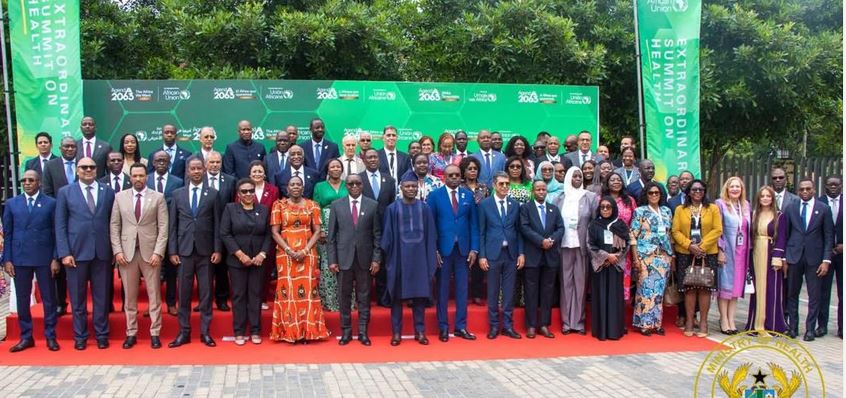
African leaders have been urged to strengthen political commitment and domestic investment to end preventable maternal deaths and AIDS by 2030.
The call comes as African health ministers and policymakers meet in Accra to deliberate on health financing, health security and universal health coverage across the continent.
Mr Edouard Bizimana, Burundi’s Minister of Foreign Affairs, Regional Integration and Development Cooperation, made the call on Tuesday at the opening of the African Union’s (AU) 25th Extraordinary Summit on Health in Accra.
He said Africa needed increased domestic investment to build resilient health systems as it continued to grapple with infectious diseases and the growing burden of non-communicable diseases (NCDs).
Mr Bizimana, who is also Chairperson of the AU Executive Council, said although Africa accounted for nearly 17 per cent of the world’s population, it bore 24 per cent of the global disease burden while having less than three per cent of the global health workforce and only one per cent of global health expenditure.
“Despite maternal mortality declining by nearly 40 per cent since 2000, Africa still accounts for about 70 per cent of maternal deaths globally, while almost two-thirds of people living with HIV reside on the continent,” he said.
Mr Bizimana said the growing burden of NCDs was placing additional pressure on already stretched health systems.
“These figures are not merely statistics. They represent painful human realities, preventable losses and unacceptable inequalities, they remind us that health is not an expense it is a strategic investment and a prerequisite for our sovereignty and development. “he said.
Mr Bizimana said recent global health emergencies had exposed Africa’s vulnerability and underscored the need to expand local production of medicines and vaccines, strengthen the health workforce and improve emergency preparedness.
“Our citizens expect resilient health systems where every mother can give birth safely, every child has access to essential healthcare and every African enjoys quality health services regardless of where they live,” he said.
The two-day summit, being held ahead of the 20th Extraordinary Session of the AU Assembly of Heads of State and Government, has brought together health ministers, policymakers and health stakeholders to identify solutions to Africa’s health financing and security challenges.
Madam Florence Samizi, Tanzania’s Deputy Health Minister, called for stronger collaboration among AU Member States to accelerate progress towards universal health coverage.
The summit is being held on the theme: “Advancing Justice, Equality and Universal Health Coverage: Ending AIDS, Tuberculosis, Improving Maternal Health, Addressing Endemic Non-Communicable and Neglected Tropical Diseases in Africa.”
The meeting is expected to adopt the Accra Declaration, a roadmap to strengthen Africa’s health systems and advance health sovereignty by 2030. -GNA


Senior Lecturer at the University of Ghana’s Department of Political Science, Dr. Joshua Jebuntie Zaato says the imprisonment of the Ashanti Regional Chairman of the New Patriotic Party (NPP), Bernard Antwi Boasiako, popularly known as Chairman Wontumi, will have little meaning unless it leads to a broader crackdown on illegal mining.
In a post on his Facebook page on the July 21, 2026, Dr. Zaato said the judgment should mark the beginning of efforts to completely eradicate galamsey and hold all those involved accountable, regardless of their political affiliation.
He said the country must work towards restoring polluted rivers, protecting forests and ensuring that people implicated in illegal mining activities are prosecuted.
According to him, those the President has publicly acknowledged to be involved in galamsey should face prosecution.
He called for the prosecution of district chief executives (DCEs), members of Parliament (MPs) and senior political party officials who have been accused of engaging in or supporting illegal mining.
Dr. Zaato further urged the government to take decisive action to end the destruction of the country’s forests caused by galamsey.
He maintained that the imprisonment of Chairman Wontumi would only have a lasting impact if it results in a comprehensive and impartial fight against illegal mining across the country.
By: Jacob Aggrey