Hot!
Allow women to own farmlands in the north – ActionAid


- /home/u249204778/domains/spectator.com.gh/public_html/wp-content/plugins/mvp-social-buttons/mvp-social-buttons.php on line 27
https://spectator.com.gh/wp-content/uploads/2022/05/Womens-lack-of-control-and-land-ownership-is-affecting-agriculture-productivity.jpg&description=Allow women to own farmlands in the north – ActionAid', 'pinterestShare', 'width=750,height=350'); return false;" title="Pin This Post">
- Share
- Tweet /home/u249204778/domains/spectator.com.gh/public_html/wp-content/plugins/mvp-social-buttons/mvp-social-buttons.php on line 72
https://spectator.com.gh/wp-content/uploads/2022/05/Womens-lack-of-control-and-land-ownership-is-affecting-agriculture-productivity.jpg&description=Allow women to own farmlands in the north – ActionAid', 'pinterestShare', 'width=750,height=350'); return false;" title="Pin This Post">
The Upper West Regional Programmes Manager of ActionAid, a non-governmental organisation (NGO) in the country, Ms Terence Tienaah has appealed to chiefs and land owners in the region to allow women own lands for sustainable agriculture.
She said that women’s lack of control and ownership over land was impeding their efforts in attaining substantive productivity in agriculture.
“Elsewhere in this country where women have been allowed to own lands, we are seeing the impact they are making in agriculture, women can do well when they are empowered in this regard”, she said.
Ms Tienaah was speaking on the sidelines of a Stakeholders Consultative Meeting on the implementation of a climate smart project by the NGO christened “Northern Ghana Integrated Development Project (NGIDP).
The 48 months’ project which commenced in 2019 in 15 districts in the Upper West, Upper East, Savannah and Northern regions of Ghana sought to among other things, promote opportunities for sustainable agriculture, social protection and decent work in the agrarian sector.
Ms Tienaah said that there had been a lot of improvement with regard to access to land by women in northern Ghana due to increased advocacy but stated sadly that “the lands which were given to them were not permanent”.
“A woman is given a land and in the next farming season or two when the land has become fertile, the land is taken away from her and she is given another fallow one; if this continues the woman is unable to undertake production of cash crops because those ones take time to mature but they are the ones that bring in the much needed income”, she stressed.
She said ecological farming which was sustainable and favourable in addressing climate change was low among smallholder women farmers in the region due to ownership of land.
“So we see a lot of women in agriculture but most of them are working on their husbands’ farms, only a few of them can boast of lands that belong to them and are able to practise ecological farming and we need this narrative to change”, she said.
The Programmes Manager said they were working as an organisation in collaboration with local actors such as the Department of Agriculture of the various Dstrict and Nunicipal Assemblies as well as civil society organisations to reach out to as many smallholder women farmers as possible to support them in their vocation.
“We are not only looking at cultivation; we are also supporting women along the agriculture value chain by installing equipment for women who were into processing of Shea fruits to aid their work”, she said.
She used the opportunity to call on beneficiary communities of the intervention in the Upper West Region to maintain the pieces of equipment to ensure their longevity and serve the purpose for which they were provided.
From Lydia Darlington Fordjour, Wa


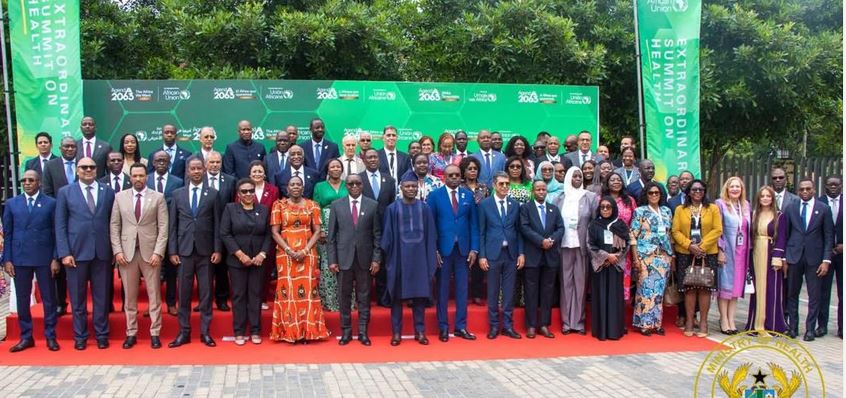
African leaders have been urged to strengthen political commitment and domestic investment to end preventable maternal deaths and AIDS by 2030.
The call comes as African health ministers and policymakers meet in Accra to deliberate on health financing, health security and universal health coverage across the continent.
Mr Edouard Bizimana, Burundi’s Minister of Foreign Affairs, Regional Integration and Development Cooperation, made the call on Tuesday at the opening of the African Union’s (AU) 25th Extraordinary Summit on Health in Accra.
He said Africa needed increased domestic investment to build resilient health systems as it continued to grapple with infectious diseases and the growing burden of non-communicable diseases (NCDs).
Mr Bizimana, who is also Chairperson of the AU Executive Council, said although Africa accounted for nearly 17 per cent of the world’s population, it bore 24 per cent of the global disease burden while having less than three per cent of the global health workforce and only one per cent of global health expenditure.
“Despite maternal mortality declining by nearly 40 per cent since 2000, Africa still accounts for about 70 per cent of maternal deaths globally, while almost two-thirds of people living with HIV reside on the continent,” he said.
Mr Bizimana said the growing burden of NCDs was placing additional pressure on already stretched health systems.
“These figures are not merely statistics. They represent painful human realities, preventable losses and unacceptable inequalities, they remind us that health is not an expense it is a strategic investment and a prerequisite for our sovereignty and development. “he said.
Mr Bizimana said recent global health emergencies had exposed Africa’s vulnerability and underscored the need to expand local production of medicines and vaccines, strengthen the health workforce and improve emergency preparedness.
“Our citizens expect resilient health systems where every mother can give birth safely, every child has access to essential healthcare and every African enjoys quality health services regardless of where they live,” he said.
The two-day summit, being held ahead of the 20th Extraordinary Session of the AU Assembly of Heads of State and Government, has brought together health ministers, policymakers and health stakeholders to identify solutions to Africa’s health financing and security challenges.
Madam Florence Samizi, Tanzania’s Deputy Health Minister, called for stronger collaboration among AU Member States to accelerate progress towards universal health coverage.
The summit is being held on the theme: “Advancing Justice, Equality and Universal Health Coverage: Ending AIDS, Tuberculosis, Improving Maternal Health, Addressing Endemic Non-Communicable and Neglected Tropical Diseases in Africa.”
The meeting is expected to adopt the Accra Declaration, a roadmap to strengthen Africa’s health systems and advance health sovereignty by 2030. -GNA

Senior Lecturer at the University of Ghana’s Department of Political Science, Dr. Joshua Jebuntie Zaato says the imprisonment of the Ashanti Regional Chairman of the New Patriotic Party (NPP), Bernard Antwi Boasiako, popularly known as Chairman Wontumi, will have little meaning unless it leads to a broader crackdown on illegal mining.
In a post on his Facebook page on the July 21, 2026, Dr. Zaato said the judgment should mark the beginning of efforts to completely eradicate galamsey and hold all those involved accountable, regardless of their political affiliation.
He said the country must work towards restoring polluted rivers, protecting forests and ensuring that people implicated in illegal mining activities are prosecuted.
According to him, those the President has publicly acknowledged to be involved in galamsey should face prosecution.
He called for the prosecution of district chief executives (DCEs), members of Parliament (MPs) and senior political party officials who have been accused of engaging in or supporting illegal mining.
Dr. Zaato further urged the government to take decisive action to end the destruction of the country’s forests caused by galamsey.
He maintained that the imprisonment of Chairman Wontumi would only have a lasting impact if it results in a comprehensive and impartial fight against illegal mining across the country.
By: Jacob Aggrey