Hot!
We miss your fire, return to IPAC – EC to NDC


- /home/u249204778/domains/spectator.com.gh/public_html/wp-content/plugins/mvp-social-buttons/mvp-social-buttons.php on line 27
https://spectator.com.gh/wp-content/uploads/2023/12/Jean-mensa.jpeg&description=We miss your fire, return to IPAC – EC to NDC', 'pinterestShare', 'width=750,height=350'); return false;" title="Pin This Post">
- Share
- Tweet /home/u249204778/domains/spectator.com.gh/public_html/wp-content/plugins/mvp-social-buttons/mvp-social-buttons.php on line 72
https://spectator.com.gh/wp-content/uploads/2023/12/Jean-mensa.jpeg&description=We miss your fire, return to IPAC – EC to NDC', 'pinterestShare', 'width=750,height=350'); return false;" title="Pin This Post">
The Chairperson of the Electoral Commission (EC) has extended an invitation to the National Democratic Congress (NDC) to return to meetings of the Inter-Party Advisory Committee (IPAC).
The NDC, after the 2020 general elections, boycotted all IPAC meetings.
The EC Chairperson, therefore, invited the NDC to return to the IPAC at a stakeholders’ meeting on inter-party dialogue organized by the National Peace Council (NPC) at Peduase in the Eastern Region on Thursday.
“I would like to use this opportunity to invite the leadership of the National Democratic Congress to our IPAC meetings. We do realize that since 2021, the NDC has not been present at our IPAC meetings.”
“We miss them, we miss their fire. I extend an olive branch, and in the interest of the peace of our country. We invite them to IPAC,” she stated.
Meanwhile, the EC Chairperson has justified the decision to shift the closing time ofvoting from 5:00 pm to 3:00 pm during the upcoming 2024 general elections.
She emphasized that this adjustment aims to facilitate the transparent and orderly collation of votes by electoral officers in broad daylight.
Mrs. Mensa highlighted that the proposal was grounded in the lessons learned from the 2020 elections, where approximately 70 percent of voting centers witnessed minimal activity by 1:00 pm.
She stressed that this adjustment aims to diminish the long queues that have historically characterized elections, streamlining the voting process for citizens.
“In 2020, 70 percent of our polling centers had a voter threshold of 500 and below. This time we intend to ensure that all our polling station centers have a threshold of 500 voters and below. In the same vein, we will increase the number of our polling stations nationwide. We believe that this will go a long way to reduce the long queues that characterize our elections and allow for a smooth, seamless, hassle-free voting process. In 2020, it took voters not more than five minutes to cast their votes due to the introduction of this policy.”
“Based on our 2020 experience and also feedback from several observer groups, we propose to close the polls at 3:00 pm. Our experience in 2020 reveals that by 1:00 pm, 70 per cent of our polling stations were empty of voters as most voters had cast their votes. This made it possible because the threshold of most polling centers was reduced to 500 voters per voting center. This was coupled with the robust verification devices that were deployed to the polling stations. We are convinced that by closing the polls at 3:00 pm, we will be able to count and collate in broad daylight, and this will promote the needed transparency and orderliness that we so desire,” Mrs. Mensa said.
Source: Citinewsroom.com



The Tema Regional Police Command has arrested a 32-year-old man for allegedly posing as a soldier and extorting money from unsuspecting members of the public at Ashaiman.
The suspect, identified as Bright Atsu Kudiabor, was arrested by the Ashaiman Police on Wednesday, September 16, 2026, at about 7:00 a.m.
According to the Police, he was arrested at an area known as “I Shall Return”, where he was allegedly parading himself as a soldier and demanding money from people.
The Police said Kudiabor, who is an ex-convict, was initially arrested by personnel of the Ghana National Fire Service in Ashaiman with assistance from other members of the public.
A search conducted on him after he was handed over to the Police reportedly led to the recovery of a set of military camouflage uniform.
The suspect is currently in Police custody and assisting with investigations.
The Tema Regional Police Command said he would be processed for court after investigations are completed.
The Police urged the public to remain vigilant and report anyone who falsely presents themselves as a soldier or a member of another security agency to deceive or extort money from the public.
By: Jacob Aggrey
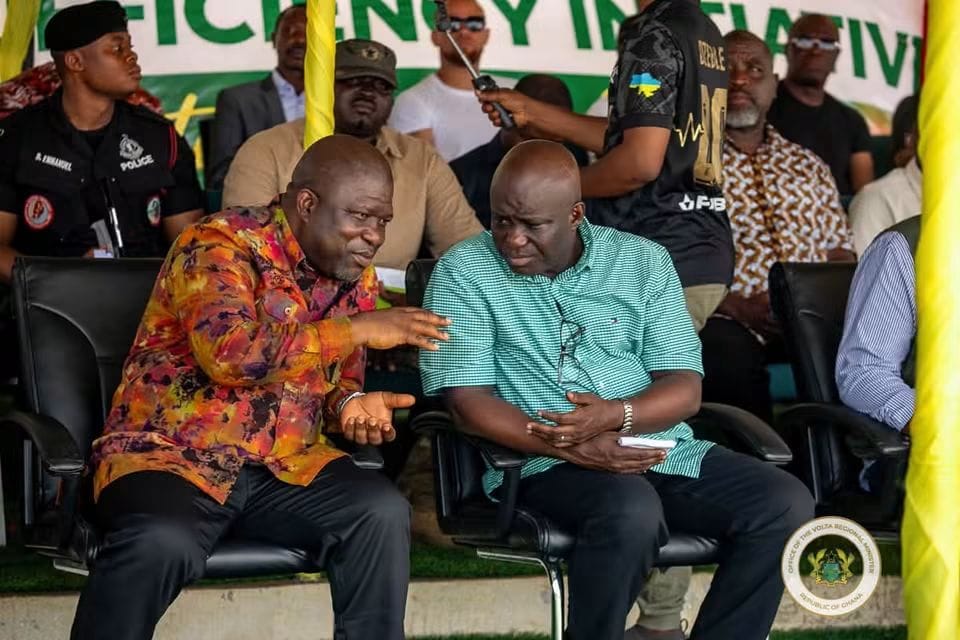
Volta Regional Minister, James Gunu, says the Volta Region holds enormous agricultural potential and efforts must be geared towards connecting farmers to the needed resources to unlock that potential.
He said focus must be on linking farmers to resources, technology, financing and markets to increase production, create jobs and build sustainable livelihoods.
Hon. Gunu made the remarks at the national launch of the Ghana Tomato Self-Sufficiency Initiative (GHATSI) held at Anloga in the Volta Region on Tuesday, September 15.
The initiative, under the theme “Produce at Home. Feed the Nation. Export the Surplus,” seeks to boost local tomato production, processing and marketing while reducing Ghana’s heavy reliance on imported tomatoes.
The launch was attended by the Minister for Food and Agriculture, Eric Opoku, his Deputy, John Setor Dumelo, Feed Ghana Coordinator, Bright Demordzi, Members of Parliament, traditional leaders, MMDCEs, farmers and other stakeholders.
Mr.Gunu expressed appreciation to the Minister for Food and Agriculture for the support announced for the region, including two excavators, 200 cartons of organic fertiliser, and GH¢200,000 for Ms. Kuatudzo Esther Dela, a tomato farmer and processor from Ziope.
He described the initiative as an important step towards making agriculture a stronger driver of food security, job creation and economic growth in the Volta Region.
By Edem Mensah-Tsotorme