Hot!
WASSCE violence: Invigilators must stop intimidating candidates – MCE


- /home/u249204778/domains/spectator.com.gh/public_html/wp-content/plugins/mvp-social-buttons/mvp-social-buttons.php on line 27
https://spectator.com.gh/wp-content/uploads/2022/08/wassce-768x411-1.jpg&description=WASSCE violence: Invigilators must stop intimidating candidates – MCE', 'pinterestShare', 'width=750,height=350'); return false;" title="Pin This Post">
- Share
- Tweet /home/u249204778/domains/spectator.com.gh/public_html/wp-content/plugins/mvp-social-buttons/mvp-social-buttons.php on line 72
https://spectator.com.gh/wp-content/uploads/2022/08/wassce-768x411-1.jpg&description=WASSCE violence: Invigilators must stop intimidating candidates – MCE', 'pinterestShare', 'width=750,height=350'); return false;" title="Pin This Post">
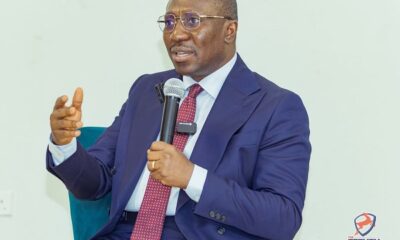
The Municipal Chief Executive for Abuakwa North in the Eastern region Alhaji Umar Bodinga has appealed to external invigilators from the West Africa Examination Council, WAEC, to desist from intimidating candidates writing this year’s West Africa Secondary School Certificate Examination (WASSCE) in the Municipality.
Last year, some candidates in two examination centres went on a rampage over calculated intimidation against them by WAEC officials. Some invigilators sustained injuries during the violence.
In a goodwill message issued on August 8, 2022, the Abuakwa North MCE said the municipal security council is ensuring such incidents do not repeat this year.
The MCE, therefore, advised the candidates to desist from examination malpractices.
“I kindly urge you to desist from practices that do not conform to the rules and regulations of the West Africa Examination Council (WAEC)”.
Similarly, he also appealed to the officials of the West Africa Examination Council “to be highly professional in the execution of their duties and avoid all forms of intimidation in the examination halls.”
Alhaji Umar Bodinga also said MUSEC in collaboration with stakeholders on alert against all forms of examination fraud
“I hereby caution all stakeholders to beware of scammers who demand money in exchange for Examination questions and report them to the Police for further action”.
A total number of 3,593 candidates from 7 public and private institutions are sitting for this year’s West Africa Secondary School Certificate Examination (WASSCE) in the Abuakwa North Municipality in the Eastern region.
The West African Senior Secondary School Certificate Examination (WASSCE), which is both for selection to tertiary institutions and for certification, kicked off on the 1st of August and is expected to end on September 27, 2022.
The MCE is confident of improved performance this year.
“I can boast that the Abuakwa North Municipality is the hub of vibrant private and public Senior High Schools with enviable academic track records. It is my hope and prayer that the good Lord protects and favours you, grants you retentive memory throughout the period, so you can write the exams with all confidence and come out with flying colours”
Source: Starrfm.com.gh


General Secretary of the New Patriotic Party (NPP), Justin Kodua Frimpong, has filed his nomination to contest the position of General Secretary again as the party begins its rebuilding efforts ahead of the 2028 general elections.
He was accompanied by party stalwarts and supporters who were in high spirits, expressing confidence that he is the right person to hold the position.
Speaking after filing his nomination, Mr Kodua Frimpong assured the rank and file of the party that he would not disappoint them.
“I can assure you that the faith the rank and file of the party have had in me, I will never disappoint them,” he said.
He also pledged to run a clean campaign devoid of personal attacks.
“I can assure you that our internal campaign will be devoid of personal attacks,” he told his fellow contestants and the rank and file of the party as he seeks to retain his position.
His tenure has seen the party through the 2024 general elections, where the NPP lost power to the National Democratic Congress (NDC) after eight years in government.
The party is currently in a rebuilding phase, with internal elections scheduled to elect new national executives to lead its reorganization towards the 2028 polls.
The General Secretary position is considered one of the most influential in the party’s administrative structure, responsible for the day-to-day running of the party secretariat and implementation of party decisions.
By Edem Mensah-Tsotorme

The University of Ghana Medical Centre (UGMC) has disputed claims made on social media by comedian Michael Blackson concerning the treatment given to his late mother, saying a review found that the allegations did not accurately reflect what happened during her stay at the hospital.
In a statement issued in Accra on August 5, 2026, the management of UGMC expressed condolences to Mr. Blackson and his family over the death of his 83-year-old mother, who died at the facility on July 16, 2026.
The hospital said it had taken the concerns raised by Mr. Blackson seriously and conducted a thorough review in line with its clinical and administrative procedures.
According to the statement, the facts presented by Mr. Blackson on social media contained “numerous inaccuracies” and did not accurately reflect the medical care provided to his mother.
UGMC explained that she was referred to the facility from another hospital and received treatment there from May 27 to July 16, 2026, a period of about eight weeks.
The hospital stated that it would not release details of her diagnosis, treatment, medical records or other aspects of her care because it had a duty to protect patient confidentiality, even after death.
It said the decision was intended to respect the dignity of the deceased and the privacy of her family.
UGMC further stated that all clinical decisions at the facility are made by qualified healthcare professionals based on medical judgment, established standards of care and the best interests of the patient.
The statement added that such decisions are made in consultation with authorised family representatives where necessary and that billing and financial procedures are governed by institutional policies and are separate from clinical decision-making.
The hospital noted that it values feedback from patients and their families and considers both positive and negative comments important for improving the quality of care.
Mr. Blackson had earlier used social media to criticise the care his mother received at UGMC, prompting the hospital’s response.
By: Jacob Aggrey