Hot!
VP Bawumia Commissions Automated Premix Fuel Dispensing And Monitoring System

- /home/u249204778/domains/spectator.com.gh/public_html/wp-content/plugins/mvp-social-buttons/mvp-social-buttons.php on line 27
https://spectator.com.gh/wp-content/uploads/2023/09/VP-Bawumia-Automated-Premix-Fuel-Dispensing.jpg&description=VP Bawumia Commissions Automated Premix Fuel Dispensing And Monitoring System', 'pinterestShare', 'width=750,height=350'); return false;" title="Pin This Post">
- Share
- Tweet /home/u249204778/domains/spectator.com.gh/public_html/wp-content/plugins/mvp-social-buttons/mvp-social-buttons.php on line 72
https://spectator.com.gh/wp-content/uploads/2023/09/VP-Bawumia-Automated-Premix-Fuel-Dispensing.jpg&description=VP Bawumia Commissions Automated Premix Fuel Dispensing And Monitoring System', 'pinterestShare', 'width=750,height=350'); return false;" title="Pin This Post">
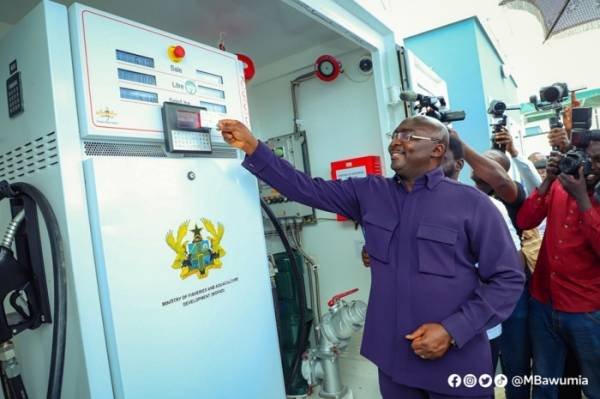
Vice President Mahamudu Bawumia has commissioned the Automated Premix Fuel Dispensing and Monitoring System, a transformative project designed to redefine the landscape of Ghana’s fishing industry.
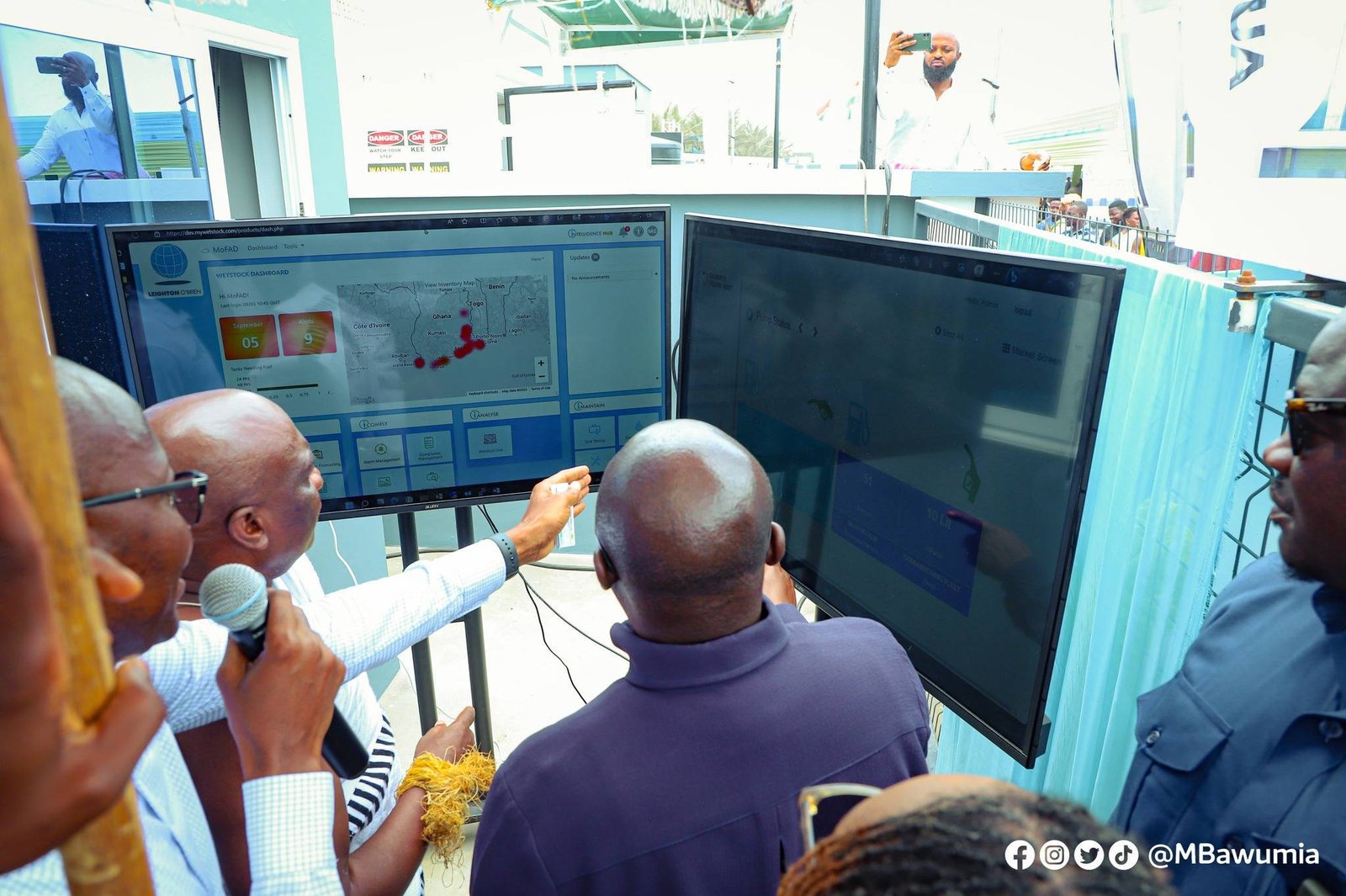
The groundbreaking initiative promises to eliminate the corruption, diversion and other bottlenecks associated with the supply and distribution of premix fuel, ushering in an era of efficiency, transparency, and accountability.
Commissioning the project at Elmina in the Central region on Tuesday, September 5, 2023 Vice President Bawumia explained that fisherfolk can now directly access the quantity of pre-mix fuel they require at the pumps, using their personalized Canoe Identification Cards containing their bio-and other data and linked to their vessels, instead of relying on middlemen and other interlocutors for supplies.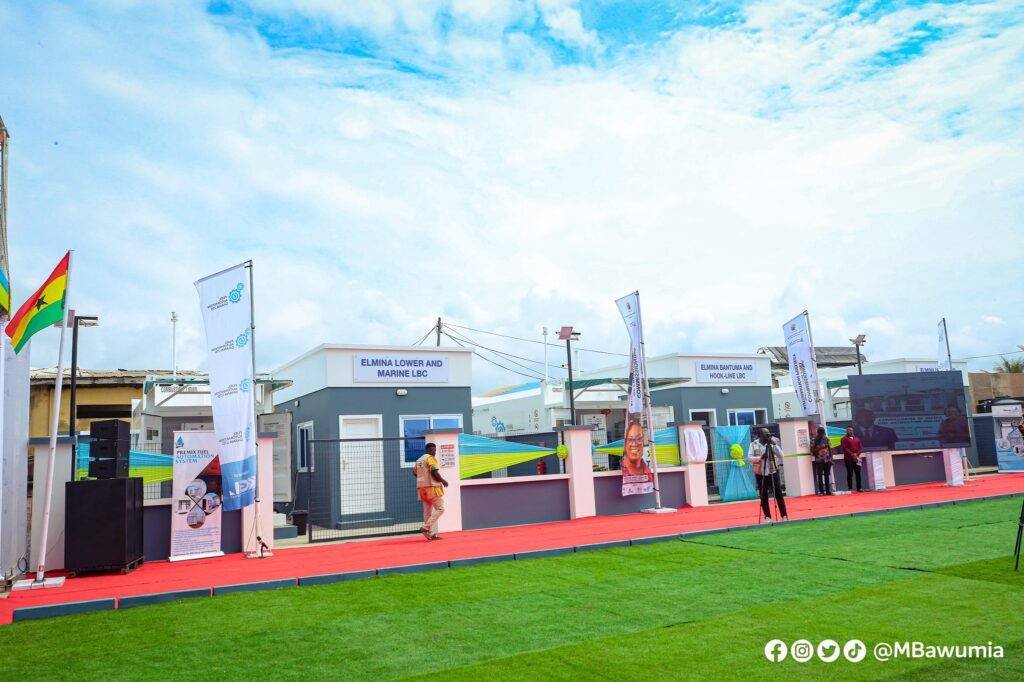
“The integration of such cutting-edge technology promises to put an end to the persistent issue of hoarding, which has cast a shadow on the fishing industry for far too long. By ensuring accurate and transparent tracking, the Automated Premix Fuel Dispensing and Monitoring System will guarantee that premix fuel reaches its intended recipients without delay, leveling the playing field for all stakeholders involved,” he noted.
“Indeed, transparency and accountability are the cornerstones of this project. We are resolute in our commitment to overcome any attempts at fraud, diversion, or illicit activities within the supply chain. Through real-time monitoring of fuel levels and transactions, we shall foster an environment of trust and integrity, wherein suppliers and consumers can partake in a fair and just system.”
The Automated Premix Fuel Dispensing and Monitoring System is comprised of cutting edge technology, including dispensing control units, fuel level sensors, card utilization systems for authorization and access, and web and mobile applications for monitoring and generating reports. This comprehensive infrastructure ensures efficient tracking, transparent transactions, and accurate data collection, providing a strong foundation for the optimization of premix fuel distribution.
According to officials of the Ministry of Fisheries and Aquaculture, the Automation System has a number of modules, allowing stakeholders to track and view in real time orders, transportation, delivery and fueling transactions.
31 Landing Beaches have been fitted with the pumps so far, with work on the others ongoing, according to officials of the Ministry of Fisheries and Aquaculture. All outlets, according to the Ministry, will have remote access on authorized web devices allowing stakeholders to view in real time all transactions at each landing beach and eliminate the age-long issue of hoarding and other ills.
With the deployment of the Premix Automation Platform, the National Premix Secretariat will access real time data from their control centre to facilitate forecasting, and inventory management which avoids stockouts. Through proper logistics management, the data generated will be essential for re-ordering, whiles each order is carefully monitored and measured against delivery timelines to enhance delivery efficiency.
“Few projects hold the potential to transform lives and uplift communities as profoundly as the Automated Premix Fuel Dispensing and Monitoring System,” Dr Bawumia emphasized. “Its implications are not confined to the technical realm; instead, they ripple through the fabric of our society, touching the lives of our hardworking fisher folk, the suppliers, and the entire fishing industry ecosystem.”
Vice President Bawumia lauded the “very significant contribution” of the Ghanaian fishing industry to national development, noting that it not only sustains the livelihoods and social wellbeing of our people but also contributes substantially to the food security of the nation, and pledged Government’s continued focus on addressing the issues hampering their progress.
“As we celebrate the commissioning of the Automated Premix Fuel Dispensing and Monitoring System, let us recognize the vital role of the fishing industry in our nation’s pursuit of prosperity and commit to supporting its sustainable growth for the benefit of the people of Ghana. Together, let us work hand in hand to preserve this precious resource and forge a future where the Ghanaian fishing industry thrives, and contributes to the inclusive development of our country,” he urged.
Dr Bawumia also emphasized the linkages between technological advancement and economic development, pointing out that in “the 21st century, technology has emerged as a powerful catalyst for nation building, propelling countries towards progress, innovation, and prosperity. As we stand at the precipice of a digital revolution, it is essential to recognize the transformational role of technology in shaping the destiny of nations.
“As we celebrate the commissioning of the Premix Fuel Automation System today, we witness yet another manifestation of the government’s dedication to leveraging technology for the greater good. This transformative project, alongside numerous other digitization efforts, showcase the government’s vision to build a stronger, more prosperous Ghana—one that thrives on the wings of innovation and technological advancements.”



The Tema Regional Police Command has arrested a 32-year-old man for allegedly posing as a soldier and extorting money from unsuspecting members of the public at Ashaiman.
The suspect, identified as Bright Atsu Kudiabor, was arrested by the Ashaiman Police on Wednesday, September 16, 2026, at about 7:00 a.m.
According to the Police, he was arrested at an area known as “I Shall Return”, where he was allegedly parading himself as a soldier and demanding money from people.
The Police said Kudiabor, who is an ex-convict, was initially arrested by personnel of the Ghana National Fire Service in Ashaiman with assistance from other members of the public.
A search conducted on him after he was handed over to the Police reportedly led to the recovery of a set of military camouflage uniform.
The suspect is currently in Police custody and assisting with investigations.
The Tema Regional Police Command said he would be processed for court after investigations are completed.
The Police urged the public to remain vigilant and report anyone who falsely presents themselves as a soldier or a member of another security agency to deceive or extort money from the public.
By: Jacob Aggrey

Volta Regional Minister, James Gunu, says the Volta Region holds enormous agricultural potential and efforts must be geared towards connecting farmers to the needed resources to unlock that potential.
He said focus must be on linking farmers to resources, technology, financing and markets to increase production, create jobs and build sustainable livelihoods.
Hon. Gunu made the remarks at the national launch of the Ghana Tomato Self-Sufficiency Initiative (GHATSI) held at Anloga in the Volta Region on Tuesday, September 15.
The initiative, under the theme “Produce at Home. Feed the Nation. Export the Surplus,” seeks to boost local tomato production, processing and marketing while reducing Ghana’s heavy reliance on imported tomatoes.
The launch was attended by the Minister for Food and Agriculture, Eric Opoku, his Deputy, John Setor Dumelo, Feed Ghana Coordinator, Bright Demordzi, Members of Parliament, traditional leaders, MMDCEs, farmers and other stakeholders.
Mr.Gunu expressed appreciation to the Minister for Food and Agriculture for the support announced for the region, including two excavators, 200 cartons of organic fertiliser, and GH¢200,000 for Ms. Kuatudzo Esther Dela, a tomato farmer and processor from Ziope.
He described the initiative as an important step towards making agriculture a stronger driver of food security, job creation and economic growth in the Volta Region.
By Edem Mensah-Tsotorme

 Entertainment1 week ago
Fiifi Coleman Productions adapt ‘I Told You So’ stage play into feature film
- News6 days ago
48 Engineer Regiment to be major sub-contractor on Accra-Kumasi Expressway, $2bn ready- Prez Mahama
- News1 week ago
Ghanaian journalist celebrates Texas town’s ‘Eden of the Far West’ tag after mayor’s nod