News
Treat breast cancer care cases as fundamental right, not privilege –First Lady


- /home/u249204778/domains/spectator.com.gh/public_html/wp-content/plugins/mvp-social-buttons/mvp-social-buttons.php on line 27
https://spectator.com.gh/wp-content/uploads/2026/08/Mrs-Lordina-Mahama.jpg&description=Treat breast cancer care cases as fundamental right, not privilege –First Lady', 'pinterestShare', 'width=750,height=350'); return false;" title="Pin This Post">
- Share
- Tweet /home/u249204778/domains/spectator.com.gh/public_html/wp-content/plugins/mvp-social-buttons/mvp-social-buttons.php on line 72
https://spectator.com.gh/wp-content/uploads/2026/08/Mrs-Lordina-Mahama.jpg&description=Treat breast cancer care cases as fundamental right, not privilege –First Lady', 'pinterestShare', 'width=750,height=350'); return false;" title="Pin This Post">
The First Lady, Mrs Lordina Mahama, has called for an equitable breast cancer care system that guarantees every Ghanaian woman access to screening, diagnosis and treatment, irrespective of her wealth, social status or geographical location.
She said breast cancer care should be treated as a fundamental right and not a privilege, stressing that no woman should be left behind because she could not afford healthcare or lived in a remote community.
Mrs Mahama said this in a speech read on her behalf at the Breast Society of Ghana’s annual general and scientific meeting held in Accra last Thursday.
The two-day event was held on the theme: ‘Bridging the breast cancer care gap for everyone, every step and everywhere,’ brought together health professionals, policymakers, researchers, survivors, advocates and other stakeholders to deliberate on improving breast cancer outcomes in Ghana.
Mrs Mahama said the harsh reality was that many women were diagnosed with breast cancer when the disease had already advanced, making treatment more difficult and outcomes less favourable.
She said the financial implications could force women to make difficult choices between meeting basic family needs and paying for treatment.
According to her, the situation must change, noting that the government’s free primary healthcare initiative, which includes breast cancer screening, offered an opportunity to remove some of the financial barriers preventing women from accessing early detection services.
She also commended the Ghana Medical Trust Fund for its efforts to ease the financial burden faced by families following a cancer diagnosis.
Mrs Mahama said the theme of the meeting required stakeholders to interpret “everyone, every step and everywhere” as a commitment to accompanying women throughout the entire breast cancer journey, from prevention and awareness through screening, diagnosis and treatment.
She stressed that a woman living in a remote village deserved the same access to quality screening and care as a woman living in an urban centre.
She urged health workers to strengthen their knowledge, engage communities with compassion and ensure that no eligible woman was missed.
Mrs Mahama further called on policymakers and partners, including the National Health Insurance Authority and the Ghana Medical Trust Fund, to monitor accessibility, measure outcomes and remove bureaucratic, logistical and financial barriers to care.
Meanwhile, the Ministry of Gender, Children and Social Protection has pledged to strengthen its contribution to the national breast cancer response by addressing the social and economic barriers that prevent women from accessing and remaining in care.
The sector minister, Dr Agnes Naa Momo-Lartey, said breast cancer was as much an economic issue as it was a health crisis.
She said women undergoing treatment often had to cope with repeated transportation costs, loss of daily wages and the responsibility of caring for their families while their incomes declined.
The Ministry, she explained, was therefore integrating social protection interventions into the cancer response and also partnering the Ministry of Health to integrate breast health services into the Free Primary Healthcare initiative to facilitate timely screening at no cost to patients.
By Esinam Jemima Kuatsinu
SKIP THE QUEUE, TAP THE NEWS
You can now read the Ghanaian Times and The Spectator newspapers from the comfort of your device via TimesNewsPlus.
Join our WhatsApp Channel: https://whatsapp.com/channel/0029VbBElzjInlqHhl1aTU27




Over 20 structures built within the 50-metre buffer zone of the Kpeshie Lagoon at the Laboma Beach Resort in the La Dade-Kotopon Municipality were on Sunday demolished by the Greater Accra Regional Coordinating Council (GARCC).
Buildings such as single-unit semi-detached under construction and completed chalets at the resort were pulled down while portions of a newly constructed perimeter wall were also demolished. Read More
SKIP THE QUEUE, TAP THE NEWS
You can now read the Ghanaian Times and The Spectator newspapers from the comfort of your device via TimesNewsPlus.
Join our WhatsApp Channel: https://whatsapp.com/channel/0029VbBElzjInlqHhl1aTU27

About 120 golfers from clubs across Ghana participated in an 18-hole competition, dubbed ‘MTN 30th Anniversary CEO Invitational Golf Tournament’ held at the Achimota Golf Club on Saturday.
At the end of the hectic day, Frederick Semenu Duvor won the Men’s Group A event with 39 points, while Julienne Afi claimed the Ladies’ Group A title with the same score.
Yaw Mireku Jnr. won the Men’s Group B with an impressive 45 points, while Kous Louanges Mang took the Ladies’ Group B title with 38 points.
Kofi Mangesi won Men’s Group C with 40 points while Elorm R. Akuash Bonney claimed the Ladies’ version with 42 points.
In the Seniors Division, Jan Vogel emerged winner of the men’s category with 39 gross, while Helen Appah topped the ladies’ category with 44 gross.
Addressing participants, the company’s Board Chairman, Mr Ishmael Yamson, urged the company to approach its next phase with the same resilience, discipline and determination that have defined its success over the past three decades.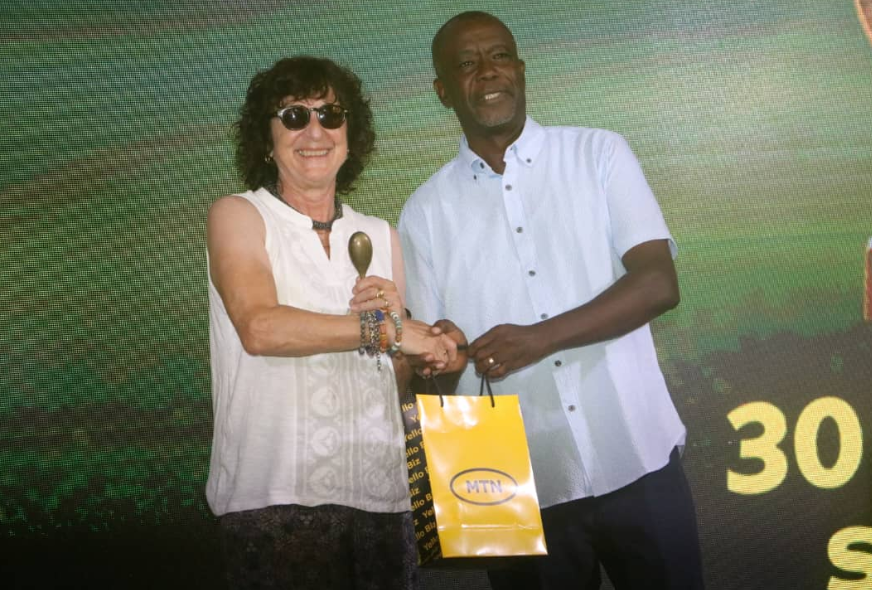
He drew a striking parallel between the game of golf and MTN Ghana’s three-decade journey, describing both as long games in which success depends less on one spectacular moment than on consistency, patience, judgment and the ability to recover from setbacks.
He said, golf had taught him a lesson that extended far beyond the fairways, thus, a round cannot be won on the first hole.

In golfing terms, he said, MTN Ghana had encountered its share of regulatory bunkers, competitive hazards and unexpected storms that had forced the company to pause, reassess and change its approach.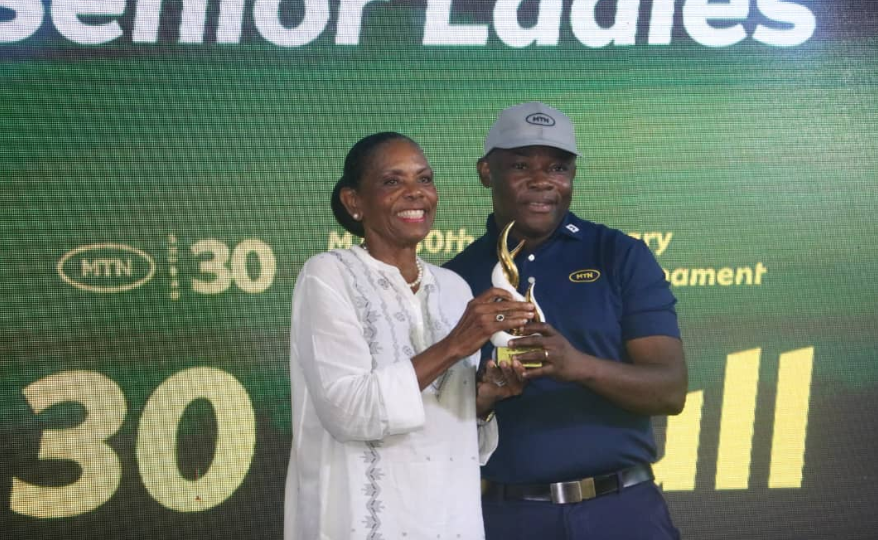
But those challenges, he suggested, were part of the journey rather than reasons to abandon it.
By Andrew Nortey
SKIP THE QUEUE, TAP THE NEWS
You can now read the Ghanaian Times and The Spectator newspapers from the comfort of your device via TimesNewsPlus.
Join our WhatsApp Channel: https://whatsapp.com/channel/0029VbBElzjInlqHhl1aTU27

 Entertainment1 week ago
Fiifi Coleman Productions adapt ‘I Told You So’ stage play into feature film
- News7 days ago
48 Engineer Regiment to be major sub-contractor on Accra-Kumasi Expressway, $2bn ready- Prez Mahama
- Entertainment6 days ago
Rhythms On Da Runway returns November 28 with 16th edition themed ‘Unbound’