Editorial
Thumbs-up to Ghana Police Service

Dear Editor,
I want to use your respected platform to commend the police administration for the swoops that resulted in the arrest of members of some gangs that operates in Accra and other parts of the country.
These are notorious criminals that are always hell-bent to make life difficult for people.
Within two weeks into the New Year, the police has already busted several gang members with dangerous weapons in their possession.
It started in Accra with the arrest of 16 suspected individuals who were involved in various criminal cases including daylight thefts, phone snatching, residential robberies, impersonation and many others.
Following that was the seizure of suspected substances believed to be Indian Hemp in the North Tongu District of the Volta region.
Again, the Greater Accra and Eastern Regional Commands also collaborated well to smash a highway robbery syndicate with seven of the members arrested.
The last I can recount for the first month of the year was the interception of 1,613 parcels of suspected narcotics drugs by the Tema Police Command.
All of these goes to speak about the good work the police is doing to make life comfortable and violence –free for Ghanaians.
Without this commitment from the force, a lot of these activities would not have happened. They did all of these at the peril of their lives.
It is my hope that those arrested would be prosecuted and be made to face the full rigours of the law.
Nana Yaw Amankwaa,
Ofankor
Join our WhatsApp Channel now!
https://whatsapp.com/channel/0029VbBElzjInlqHhl1aTU27










In last week’s edition, The Spectator published an article titled “El Nino: Rising temperature threat to public health – Gmet.” The article discussed how the country’s recent temperature increases have the potential to escalate everyday discomfort into a serious health emergency.
By effectively linking global climate patterns to the everyday economic reality of Ghanaian workers, the article presented an important and timely public health warning.
A silent discomfort is already taking place throughout the busy stalls of Makola, Lapaz, and Odawna as the midday heat is beating down with exceptional intensity, and traders are huddled under improvised umbrellas, wiping away perspiration.
Millions of Ghanaians, including market women, farmers, commercial drivers, and construction workers, have always had to put up with the heat in order to make a living.
However, that familiar discomfort is quickly turning into a full-blown public health emergency as the Ghana Meteorological Agency (GMet) warns of a serious El Niño phenomenon that is expected to intensify from now until April 2027.
Ghana’s heat response procedures are still insufficient, as Environmental Health Expert Professor Mawuli Dzodzomenyo of the University of Ghana’s School of Public Health correctly notes.
It is no longer sufficient to know that temperatures will rise. A weather forecast that informs a farmer that the temperature will be 38 degrees Celsius without initiating community-level protection is only an indication of potential danger, not a means of preventing it.
Although extreme heat does not discriminate, those with the least ability to flee it bear the brunt of its effects. Long-term exposure exacerbates underlying cardiac and respiratory conditions and causes heat exhaustion, severe dehydration, kidney stress, and deadly heatstroke.
Pregnant women, the elderly, and students seated in classrooms with inadequate ventilation are at serious risk. In the meantime, since their families rely on every hour they spend at the market or construction site, informal workers cannot just decide to stay indoors.
Over the next six months, protecting Ghanaians will need decisive, coordinated action from important institutions.
The Ministry of Health (MoH) and GMet must set precise temperature limits that will automatically initiate public health alerts and mobilise nearby clinics.
Major marketplaces and transportation hubs require Metropolitan, Municipal, and District Assemblies (MMDAs) to make investments in fundamental cooling infrastructure, such as accessible clean water sources and shaded canopies.
Employers in the construction and agricultural industries are required to implement enforced break periods and move labour-intensive tasks to the cooler morning and late afternoon.
The Ghana Education Service (GES) must issue explicit directions mandating that schools enhance classroom ventilation, provide drinking water, and halt strenuous afternoon sports.
Health professionals, educators, and community leaders need to be prepared to recognise the early warning indicators of heat-related diseases.
The moment to take action is now since the warning signs are already above us.
Dear Editor
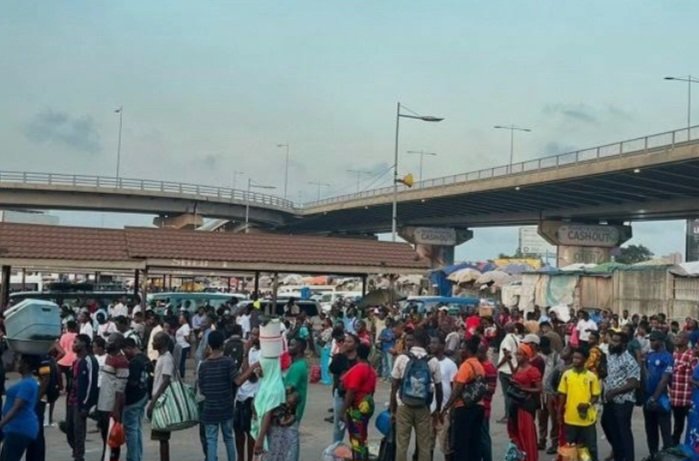
As Christmas approaches, overcrowding at transport stations and along roadsides in Accra and other parts of Ghana is becoming increasingly worrying.
Areas such as Circle, Kaneshie, Madina and Kasoa are already experiencing long queues as passengers struggle to find vehicles to their homes and other destinations.
Workers, schoolchildren, traders and travellers are bearing the brunt. Some workers now have to leave work early just to stand a chance of getting home on time. Others may reach a station as early as 4 p.m. but get home around 8 p.m., even when traveling a relatively short distance.
Some passengers eventually walk home or to cover some distance because they cannot find a vehicle at a particular place, while others are left stranded at stations for hours. There are even reports of people spending the night at stations.
The situation also affects motorists. With so many people and vehicles competing for space, traffic becomes heavier, making it difficult for drivers to reach their destinations promptly.
The crowds and long queues can make it seem as though there are not enough vehicles to meet the demand.
Passengers are also facing rising transport fares. People who carefully budget for their journeys may find that the cost of getting home exceeds what they planned to spend. This places an additional burden on families already dealing with the high cost of living.
And this is happening even before December. What will the situation be like as Christmas draws closer, when more people travel to visit family and friends?
I appeal to the relevant authorities, transport unions and city officials to act urgently.
They should assess the availability of vehicles, coordinate transport services during peak hours, manage queues and traffic more effectively, and ensure that fares are fair and clearly communicated.
The public also deserves timely updates about what steps are being taken.
Ghanaians should not have to spend hours stranded or pay unpredictable fares simply to get home. Christmas is approaching, action is needed now.
Vanessa Elizabeth Nkum,
Kasoa
SKIP THE QUEUE, TAP THE NEWS

You can now read the Ghanaian Times and The Spectator newspapers from the comfort of your device via TimesNewsPlus.
Join our WhatsApp Channel: https://whatsapp.com/channel/0029VbBElzjInlqHhl1aTU27