Features
Stop worrying and take control


- /home/u249204778/domains/spectator.com.gh/public_html/wp-content/plugins/mvp-social-buttons/mvp-social-buttons.php on line 27
https://spectator.com.gh/wp-content/uploads/2022/08/Worries-ruin-our-lives.jpg&description=Stop worrying and take control', 'pinterestShare', 'width=750,height=350'); return false;" title="Pin This Post">
- Share
- Tweet /home/u249204778/domains/spectator.com.gh/public_html/wp-content/plugins/mvp-social-buttons/mvp-social-buttons.php on line 72
https://spectator.com.gh/wp-content/uploads/2022/08/Worries-ruin-our-lives.jpg&description=Stop worrying and take control', 'pinterestShare', 'width=750,height=350'); return false;" title="Pin This Post">
Nobody’s life is worry-free, but that doesn’t mean our worries need to ruin our lives. Learning how to manage our worries can make all the difference in our well-being. This is what a busy young father learned. He had a challenging career and was feeling overwhelmed with his many responsibilities.
He would come home from work every night feeling anxious and even physically ill. He found it very difficult to sleep at night. He went to his physician for help; he prayed and pondered about what to do. The man soon realised that he needed to stop worrying so much. But how would he do that?
In time, he was inspired with a simple idea: he got two baskets; one he labelled “worry” and the other “concern.” Then he organised all his challenges and responsibilities into one of the two baskets, even if only mentally. The things he could do nothing about went in the worry basket, and those he had some ability to resolve went in the concern basket.
In this way, he could focus his attention on concerned issues over which he had some power. He could prioritise these issues and do his best to resolve as many of them as possible, without wasting time on worries that were outside his control.

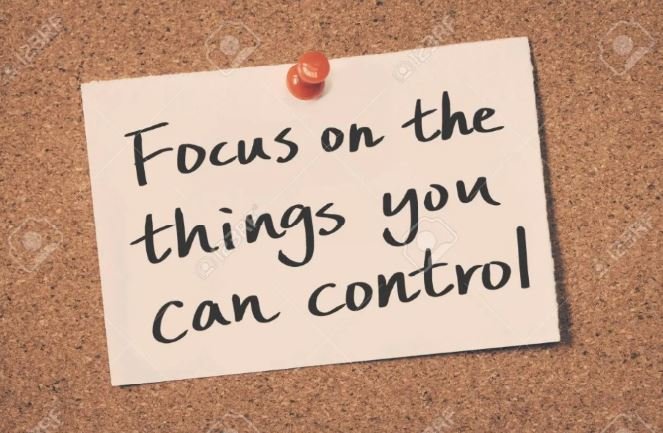
Of course, just putting something in the worry basket didn’t make it go away, but he did find that, if he was patient, solutions emerged very often with divine help or even just the passage of time.
The anxiety didn’t vanish all at once, but whenever he felt it stirring inside him, he stopped what he was doing, prayed for support, and said to himself, “I am not going to do something else until I begin to control my emotions.” Over time, as he learned to put worry in its proper place, his health and well-being improved, and what was once a weakness in his life became one of his strengths.
Worry can be disheartening, leading us to feel overwhelmed or powerless. But when we put our worries in their proper place whether in a basket or simply out of our minds, we can take purposeful action, be resourceful, and tackle the problems within our control. Eventually, instead of being filled with worry, our lives will be filled with patience, perspective, and peace.
Sometimes in our lives we all feel as if the world is spinning out of control and we worry about unnecessary things. Hearing about tragedies and perils near and far can cause us to worry about how things will turn out.
While there is solace in accepting things we cannot control, we also need to feel that there are some things we can control, that will determine, at least to some degree, the direction of our lives.
An unknown author wrote: “The greatest battle of life is fought out within the silent chambers of the soul. A victory on the inside of a person’s heart is worth a hundred conquests on the battlefields of life. To be master of yourself is the best guarantee that you will be master of the situation. Know thyself. The crown of character is self-control.”
In the end, self-control is the only real control in life. Efforts to control others or even to control our circumstances usually don’t succeed. But we can become the master of our self. We begin by controlling our thoughts, then our words, and ultimately our actions.
We gain more self-control when we daily strive to choose goodness and kindheartedness, to be honest and trustworthy, to care for our mind, body, and soul. Our self-control deepens as we set worthy goals and achieve them, as we make promises and keep them, and as we simply do our best to live with integrity.
This striving for self-control is rightly called a “battle,” for we all have tendencies we must fight to overcome. But those tendencies don’t represent our real selves. As we begin to take control of our lives, we come to understand who we truly are.
We find that our true identity has less to do with the mistakes we’ve made in the past and more to do with our potential for future growth. We aren’t defined so much by where we’ve been as by where we are going.
There are many battles that need fighting in this world, many wrongs to be righted, many changes to be made. But to win any of them, we must first win the greatest battle of life, the battle most worth fighting: the battle for self-control.
By Samuel Enos Eghan

Features
Responding to religious insults with faith, wisdom and restraint …The Prophetic Model for Muslim–Christian Peace and Coexistence(Part 1)

All praise belongs to Allah, Lord of the worlds. We praise Him, seek His help and forgiveness, and seek refuge in Him from the evil within ourselves and from our evil deeds.
May His Peace and Blessings be Upon the Noble Prophet Mohammed, his household, companions and all righteous people till the Last Day. Ameen
GHANA, WE MUST NOT ALLOW A MOMENT OF ANGER TO DESTROY DECADES OF PEACE
My dear brothers and sisters in Ghana.
Today I speak about something that should concern every Muslim, every Christian and every responsible Ghanaian.
Recent events involving controversial statements about Prophet Muhammad (pbuh), the arrest of an Islamic cleric accused of making statements advocating violence, and the arrest of a Christian preacher over alleged derogatory comments concerning the Prophet (pbuh) have generated considerable national concern. The Ghana Police Service has said the matters are under investigation and that due process will apply.
And now, reports of an alleged assault on a detained pastor have added another troubling dimension to the matter.
Let us be very clear:
Ghana is not at war.
Muslims are not at war with Christians.
2 | P a g e
Christians are not at war with Muslims.
For generations, we have lived together, traded together, worked together, attended the same schools, built communities together and, in many Ghanaian families, even married across religious lines.
Therefore, we must not allow the reckless words or actions of a few individuals to destroy the peace built by generations.
WHEN SOMEONE INSULTS THE PROPHET (PBUH), WHAT DOES ISLAM EXPECT
FROM ME?
This is the question we must answer.
Not: “How angry am I?”
But: “What does Allah require from me?”
Not: “What can I do to my enemy?”
But: “What did Prophet Muhammad (pbuh) do when his enemies hurt him?”
This distinction is crucial.
Islam does not teach us to abandon our faith when we are provoked.
Islam teaches us how to behave because we have faith.
Allah says:
“Do not let the hatred of a people cause you to depart from justice. Be just; that is nearer to righteousness.” (Qur’an 5:8).
Notice the greatness of Islam.
Allah does not say, “Be just when people respect you.”
He says, be just even when you hate what they have done.
Therefore: An insult does not give me permission to become unjust.
The author is the Chief Imam of Katamanso Municipal and Certified Counsellor and Governance Expert
By Imam Alhaji Saeed Abdulai
THE earliest known regimented police force in Ghana comprised recruits who were certified illiterates. The British relied on their illiteracy for efficiency. They were called ‘bugabuga’ who took orders without question. Massa say make I bring you.
In those days, there were no short policemen. The ‘bugabuga’ were tall and straight as a pole. They were trained to look unfriendly. And when it came to slapping a recalcitrant for misbehaviour, a single slap was enough to deter other potential offender.
A policeman could single-handedly maintain order in the entire suburb of Bubuashie in Accra. He simply strolled around and his presence was felt in every home, every lane, every nook and cranny. His mere shadow was terrifying to behold.
A trouble maker was always mindful of the powerful delivery of the policeman’s slap at close range. Such a slap could cause a two-week nightmare plus or minus internal bleeding.
BLACK CAP
At that time, the policeman’s uniform was not black. It was brown! The black uniform is a latter-day idea, probably conceived when British suzerainty gave way to self-rule. The policeman was now attired in black outfit, black shoes and black cap, absorbing the heat from the sun.
The black-uniformed policeman looks dangerously hostile even if he is not. Black is for mourning, not keeping the peace. Black means something ominous. The top-ranking policemen managed to attire themselves in a gabardine-like material, looking more human.
Ghanaians have complained about the black uniforms for decades. They have seen British and American policemen on television in blue, smart-looking and professional in outlook, not black and miserably looking. So they complained but it fell on deaf ears.
This week, it was announced that black-uniformed cops will be a matter of the past. Ghanaian policemen will be differently attired, hurray! The cops will look like Yankee policemen and of course, walk like them. They will also be permitted to dance like them. This is not a presidential initiative.
It is my hope that with a change in uniform, there will also be a change in attitudes so that an entirely modern police force will be presented to Ghanaians.
Currently, there are a good number of policemen in the system doing some great job, catching the criminals and bringing them to book. The problem is that there is also a good number, negating the good reports of the dutiful and patriotic ones.
Gone are the days, though, when a policeman shot a warning-shot and the bullet ended in somebody’s nose. In those days, warning shots were aimed at the forehead so that if it missed, it could at least lodge in the nostrils. The idea was to disperse rioters. And how could that be done without bullets finding new homes in the ears and knee-caps of the rioters?
Today, there is a more professional police force. However, some of them have still not purged themselves of the ‘bugabuga’ ways. They still slap suspects, to teach them where power lies. This is not policing. It is an abuse of human rights.
What happens when a suspect is tortured and in the end he is found to be innocent? The police must be re-orientated to understand the importance of protecting rights instead of abusing them.
PROSTITUTES
And the police should stop swooping on people and parading them on television as prostitutes. Do they know what that means? It means, those swooped upon have been tried by the entire population of Ghana (via television) before they even appeared before the judge to be judged innocent or guilty. That is bad policing.
Should any of them be found innocent by the judge, how does she redeem her tarnished image? With certain sensitive cases, policemen should not be too over-zealous in parading suspects before the cameras. Redeeming one’s damaged image is a very difficult process no one should be saddled with.
Now, the most important role Ghanaians want the police to play is to provide personal security so that armed robbers will not continue to have a field day.
That calls into question whether or not the police patrols in the communities and on the highways are taking place. If robbers know that patrols are constantly being done, they’ll stop attacking people.
Even in the ‘bugabuga’ days, a single policeman’s stroll was effective enough to prevent crime. So jeep and car patrols should be the rule if truly we want to stem the tide of crime. In other words, the patrols will make it impossible for crime to flourish.
Finally, policemen should learn to be polite. They should be educated on this before handed their new uniforms. They should not talk like the ‘bugabuga’ people. They should learn consciously to use words like “please”, “kindly”, etc. For example, “Kindly let me see your driving licence.” Not, “Commot your driving licence come here right now.”
The newly-uniformed cops should have a civil tongue.
This article was first published on Saturday July 29, 2006
SKIP THE QUEUE, TAP THE NEWS

You can now read the Ghanaian Times and The Spectator newspapers from the comfort of your device via TimesNewsPlus.
Join our WhatsApp Channel: https://whatsapp.com/channel/0029VbBElzjInlqHhl1aTU27