Features
Parents, beware of kidnappers and ritual murderers!

- /home/u249204778/domains/spectator.com.gh/public_html/wp-content/plugins/mvp-social-buttons/mvp-social-buttons.php on line 27
https://spectator.com.gh/wp-content/uploads/2020/11/Kidnappers-take-advantage-of-vulnerable-children.jpg&description=Parents, beware of kidnappers and ritual murderers!', 'pinterestShare', 'width=750,height=350'); return false;" title="Pin This Post">
- Share
- Tweet /home/u249204778/domains/spectator.com.gh/public_html/wp-content/plugins/mvp-social-buttons/mvp-social-buttons.php on line 72
https://spectator.com.gh/wp-content/uploads/2020/11/Kidnappers-take-advantage-of-vulnerable-children.jpg&description=Parents, beware of kidnappers and ritual murderers!', 'pinterestShare', 'width=750,height=350'); return false;" title="Pin This Post">
We are once again confronted with the phenomenon of missing children and in some cases adults at a time that we are approaching elections.
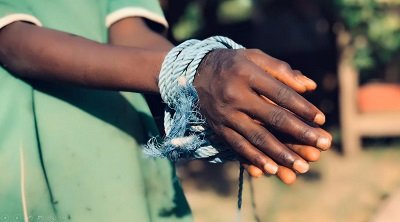
Parents must, therefore, be very particular about the going out and the coming in of their children given the modus operandi of the kidnappers who are mostly engaged by the ritual murderers.
When someone is missing and you read a headline ‘Missing Person’, it does not usually elicit the kind of sadness that it would if the person was a close relation or a friend or someone you know in your neighbourhood.
The sadness the relatives of the Takoradi Missing Girls would experience is not the same as what people who have no relations with them would experience. Anyone who has lost a close relation knows how painful it really feels and it is not something you would want to wish on even your worst enemy.
Those who have never experienced such traumatic events should guard against ever falling victim to such an occurrence.
It is an open secret that ritual murders happen in this country. The story of Kofi Kyinto that led to the arrest and public execution of Nana Akwasi Agyei of Akaasu near Sefwi Bekwai in the 1980s, is still fresh in my mind.
Stories from people who have been fortunate to escape their wicked acts have revealed the degree of callousness in these ritual murderers and the kidnappers working for them. There is a story of a gentleman who went to work as an exploration geologist and never returned. He has never been found since that day.
Colleagues warned me to be careful about my movements when I went to work on one of the mines in the Sefwi area due to this phenomenon.
There have been several reports of people who have been found dead with parts of their bodies missing in various parts of our country confirming the presence and existence of ritual murders and murderers respectively in our country.
The sophistication of the kidnappers gives cause for worry. They have upped their game and seemed to be focused on young people. A recent story where a kidnapper disguised as a mad person and chloroformed a 12-year-old young girl is an eye opener to us all.
According to the story, she woke up to find herself on a bus among a lot of children most of them younger than her all asleep being guarded by a certain woman. She managed to sneak out of the bus when the woman guarding them got out of the minibus when the bus stopped at some point.
What must be brought to the attention of the police and other security agencies is the use of vehicles with tinted glasses. I believe a law was passed during the PNDC era that outlawed the use of tinted glasses by vehicles due to anticipation of criminal activities that such vehicles are used for.
If this law is in existence, then it must be enforced in order to help stamp out this evil practice. The police must be given training in detection of chloroformed people in vehicles so that at check points, they will be able to catch kidnappers.
Government agencies like the Ministry of Information, Commission for Civic Education etc. must embark on education of the populace on personal safety. Children must be taught how to be vigilant when going to school on their own.
Parents must be informed about the dangers of letting their children go to school on their own. Recently a child was chloroformed while waiting for her school bus by the roadside in Kumasi.
Parents should try to see their children off to board their buses instead of letting them go to board their school buses on their own. This will eliminate the potential for kidnappers to take advantage of the vulnerability of such children.
The police can go a step further by engaging the services of a lot of plain clothes personnel who can mix up with the crowd at lorry stations, near schools and also through the use of cameras at vantage points, to enhance protection for the general populace.
Other methods of surveillance must be used to track people whose sources of income are questionable as compared with their lifestyle. Security awareness programmes can be organised by the police for communities which will go a long way to forge a partnership to fight this menace. Special communication channels using whistleblower concepts can be provided to enable anonymous tips to be offered to thwart kidnapping attempts or ritual murders.
Parents should on their own also provide awareness at home to their children to avoid talking to strangers, avoid walking along lonely stretches of roads alone and quickly raise an alarm if any of their friends are suddenly taken into vehicles and driven away etc.
Parents should make self-defence training like Judo available for their children so they can escape from kidnappers. Mechanisms such as confirmation of their wards’ arrival in schools after leaving home can be put in place to ensure that the children are always safe.
Technology can also be used to track their movement so that should they observe the deviation of the children from their usual route, they can quickly alert the police for immediate intervention.
By Laud Kissi-Mensah
The writer is a social commentator


Some things do not change in this country. The rains shall fall in May, and June and even July. That is out of our control. It is an act of God and he decides how often and the intensity. Who are we to question God?
However, there is something man-made that is gradually becoming something that is also not changing and it is worrying. A week ago the President initiated a national clean up campaign to address the issue of sanitation in the country, especially in Accra.
Citizens enthusiastically got involved and engaged in cleaning their environment and other places but afterwards, the issue that is becoming a permanent feature resisting change, reared its ugly head again.
The rubbish and the silt that were dug out of the drains, were heaped on the shoulders of the drains and left there. Any little rain will render the whole effort futile because the rubbish and silt will be washed right back into the drains.
This is what is not changing in the country and the various assemblies must ensure that this issue is dealt with and must become a thing of the past.
There is the need to engage the citizenry across board, in connection with mindset change, as far as sanitation is concerned. At this juncture, I must acknowledge the thoughtful initiative of the current crop of Abenfo (i.e. students both present and past) of SUTESCO of Suhum, with support of the school administration for decorating the area under the overpass on the Accra Kumasi highway, near the school, with fascinating paintings. This is an example worthy of emulation and makes me proud as one of the Abenfo.
An example not worthy of emulation is an eyesore currently existing behind a cemetery along the Atta Mills link as you branch left, off the main Accra-Cape Coast road at Old barrier and head towards the beach through Aplaku, Bortianor, Oshiyie, Korobite through to Tuba and beyond.
The drain along the walls of the cemetery also lying astride the road, is choked with silt and rubbish. This has created a problem near the end of the cemetery wall just before you enter Bortianor.
Water has accumulated at that point, creating potholes and also gradually creating a channel across the road, creating a nightmare for motorists using that route. This route is the main link between parts of Kasoa and the Accra – Cape Coast road and whenever it rains and the Atala stretch of the road is blocked, that is the route most motorists from Kasoa uses.
It is also the route used by tourists going to the beaches along the sea of the towns stretching from Bortianor to Kokrobite and so it does not speak well of us, as a nation at all.
A few days ago, I had to pass through Tema Station, the place where a major clean up exercise was conducted just fews days ago and it was very shocking to see the level of wanton littering that had taken place.
One begins to wonder if this whole exercise initiated by the President was worth it. People just do not care and are not willing to change their attitude towards sanitation.
We cannot continue like this and to win this battle against insanitary conditions in our environment, the NCCE must be resourced to embark on a serious educational drive. The MMDCEs must also be held accountable for sanitation lapses in their administrative areas, by making sanitation part of their KPIs among other innovative policies. This is one of the surest ways to overcome this sanitation challenge confronting us. God bless.
By Laud Kissi-Mensah
THE discussion lasted only ten minutes. Mr Philip Sampson, Eunice’s father, had asked to see him, and he was led to the sitting room for the first time. Mr Sampson indicated that he should sit down.
‘Yes, Kakraba. I know that you have been, er, friends with Eunice for some months now, and naturally, as her father, I thought it would be important to meet you, and to reach an understanding with you on, er, some basic issues. So, I hear you are a graduate in building technology. Now, tell me about what you do’.
‘Okay. I worked with the Electricity Company for two years after National Service. During that time I interacted with some lawyers and land surveyors on our project sites, so I suggested to some of them that we take some dilapidated buildings in some parts of Accra, rehabilitate them and find new owners. Soon after starting that I got a job as Project Manager with a group of development agencies who are executing projects in the Northern Region, so I have been balancing the two positions’.
‘I see. That sounds like a bold step. So is it going well, financially?’
‘Well, sir, I absolutely enjoy what I’m doing now. Financially, I would only say that I am a work in progress. A lot of what I’m doing now involves some risk taking, as it involves trust issues with land and property owners.
I am partnering with prominent lawyers and land surveyors, so I am not taking any serious risks. So currently I am doing okay financially, but it will take me some time before I reach the level where I can say I am comfortable financially.’
‘Okay. Now tell me about your parents’.
‘My father was an Agricultural Extension Officer, so we spent some time at several locations with him. He is now enjoying his retirement. And my mother is a retired nurse. I have three elder sisters, all married’.
‘So you live with your parents?’
‘Yes and no. My dad built his home on one acre at Pokuase, so he gave me one plot, and I have done a three-bedroom house, where I live’.
‘Okay, fine. Thanks for the answers. You see, in addition to my position socially, I spent many years in the diplomatic service, so I’m sure you will understand that I need to ensure that my kids, especially my daughters, maintain suitable relationships. For now I think it is fine that you and Eunice are friends. I’m sure you understand what I mean’.
‘Yes sir. I understand perfectly well.’
‘Great, okay, that would be all.’
Kakraba stood up, bowed and said thank you to Mr Sampson, and walked to the garden where his girlfriend Eunice, her mother Mrs Elaine Sampson and her two elder sisters, Yvonne and Emma, were seated, busily discussing some dresses being offered for sale online.
‘So,’ Mrs Elaine asked him, ‘you and Daddy had a good discussion?’
‘Yes, Ma. We certainly did. I really appreciate Dad for the discussion. It was really good.’
‘Great. Although he has met you here on quite a number of occasions, I think it is good that you have met for a chat.’
‘Yes indeed, Ma, and I really appreciate it. So Eunice, I will be on my way. I will call.’
Eunice led him to his car, and after driving off he exhaled and shook his head. Although he had long concluded that Eunice’s family were so snobbish that a future relationship with her would be problematic, this discussion, or was it interrogation, had virtually cancelled any likelihood.
Mr Sampson just told him, in no uncertain terms, that the Sampson family was so prominent and socially connected that a union between his daughter and him was undesirable.
He had a good relationship with Eunice. They shared some beautiful moments together, and often went out to entertainment joints, often with her three friends Marian, Patricia and Amanda. But Kakraba was often uncomfortable with their preferences.
Eunice regularly spoke about her family’s experiences during her father’s postings in Europe and Asia, and her three friends were always discussing the latest fashion trends, always noting the importance of placing themselves among the best-dressed ladies in town.
Eunice, her mother and siblings had indicated in several ways that he did not quite fit into their social standing. They had only said a mild ‘thank you’ when he brought them a goat or sheep and a generous amount of foodstuffs from the north every month.
But Kakraba did not really take it to heart, because they were quite inexpensive up north. Moreover, he always went to the food market and arranged with the truck drivers for a big package which was picked up by his buddy Paa John and delivered to his family and a few others, including the Sampsons.
By Ekow de Heer