Hot!
Kwaku Krobea Asante cautions journalists and the public on information sharing


- /home/u249204778/domains/spectator.com.gh/public_html/wp-content/plugins/mvp-social-buttons/mvp-social-buttons.php on line 27
https://spectator.com.gh/wp-content/uploads/2023/06/IMG-20230621-WA0020.jpg&description=Kwaku Krobea Asante cautions journalists and the public on information sharing ', 'pinterestShare', 'width=750,height=350'); return false;" title="Pin This Post">
- Share
- Tweet /home/u249204778/domains/spectator.com.gh/public_html/wp-content/plugins/mvp-social-buttons/mvp-social-buttons.php on line 72
https://spectator.com.gh/wp-content/uploads/2023/06/IMG-20230621-WA0020.jpg&description=Kwaku Krobea Asante cautions journalists and the public on information sharing ', 'pinterestShare', 'width=750,height=350'); return false;" title="Pin This Post">
TMr Asante counting from right, third, Mr Henry Afrifa(PHD),next, facilitators and personnel from MFWA in grouo photograph with journalists at the workshop
The Programmes Officer, Media Foundation for West Africa (MFWA), Kwaku Krobea Asante has cautioned journalists and the public to be circumspect on sharing of information on traditional or social media as many information shared could disinform the public.
He indicated that due to advancement in technology, and the availability and easy access to information on the internet and social media, “almost everyone has the opportunity to put out information in any shape or form and this has created what is called Information Disorder, where there is Mis-information, Dis-Information and Mal-information.”
He stated that information was necessary in driving the society and mis-information or dis-information could be a threat to the country’s peace and security, and hence advised the media and public to ensure that they verified information by using the fact-checking tools such as Yandex, Google, Tineye, among others to check the authenticity of information before they shared.
Mr Krobea Asante who presented on fact-checking was speaking at a two-day workshop organised by the MFWA, with funding support from the Foreign Commonwealth and Development Office (FCDO), for some Journalists working in the broadcast, online and print media across the country.
The workshop, themed “Fact-checking and Countering Mis-disinformation in Ghana” was aimed at training journalists on the phenomenon of mis and disinformation, as well as eimprove their skills for analyzing content and producing fact-check reports.
15 Journalists were exposed to some fact-checking and verification tools that could be used to identify and counter misinformation as well as fact-checking standards and ethics.
Mr Asante noted that the journalistic profession was a professional one of verification and called on them to ensure that they fact-check and verify stories thoroughly before they publish them
“I advise that as journalists, we read beyond headlines, check our biases, supporting sources and dates as well. Sometimes people repost old stories as if they were current. Let us check whether a story posted is a meme, joke or satire, parodic content before we put them out there.”
He revealed that various fact-checking tools available on the internet and could be employed for reverse image search and fact-checking.
Mr Asante also noted that beyond the media, the public played a critical role in the information eco-system, by contributing to sharing information and cautioned them to fact-check with the media or appropriate fact-checking institutions to verify information before they put it out.
He indicated that an information unchecked could cause the public to be misinformed, dis-informed or mal-informed and could be a recipe for disaster in the country, “especially as we are heading towards an election year in 2024.”
For his part, a facilitator at the workshop. Mr Stephen Tindi, a Lecturer from the University of Media Arts and Communication (UniMAC) noted that some persons were cashing on the information disorder on social media, through clicks on websites, advertisements on blogs among others.
He cautioned the media and public to beware of such websites and desist from patronizing them, adding that their patronage made such persons rich and encouraged the spread of false news, fear and panic.
The Programmes Manager of MFWA, Abigail Larbi said
the phenomenon of fake news, disinformation and misinformation have the ability to pollute the public sphere and damage the country’s democracy.
She added that the workshop was part of series of workshops organised to train 125 journalists to empower them to help solve such challenges.
By Ama Tekyiwaa Ampadu Agyeman
Picture Caption


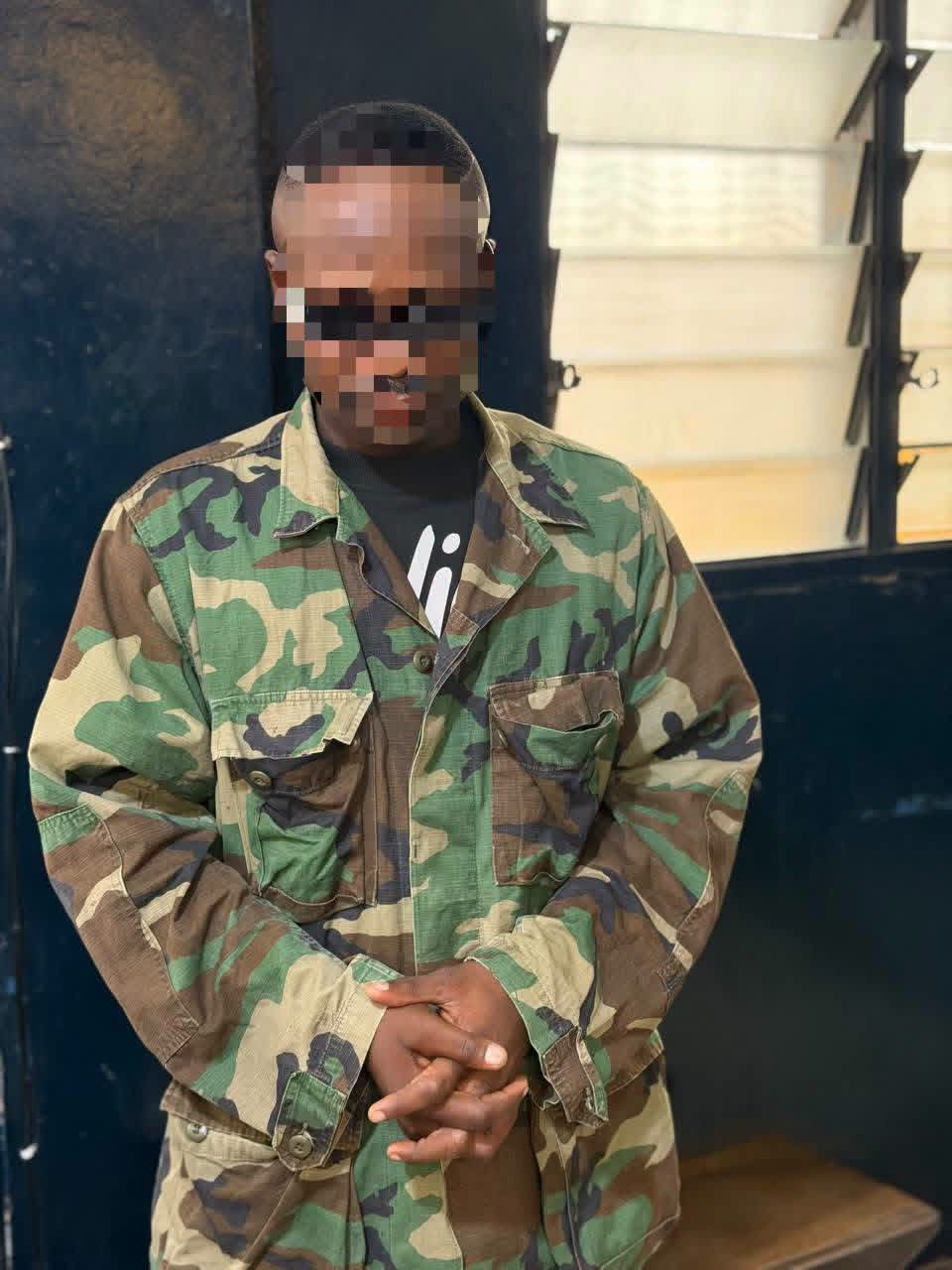
The Tema Regional Police Command has arrested a 32-year-old man for allegedly posing as a soldier and extorting money from unsuspecting members of the public at Ashaiman.
The suspect, identified as Bright Atsu Kudiabor, was arrested by the Ashaiman Police on Wednesday, September 16, 2026, at about 7:00 a.m.
According to the Police, he was arrested at an area known as “I Shall Return”, where he was allegedly parading himself as a soldier and demanding money from people.
The Police said Kudiabor, who is an ex-convict, was initially arrested by personnel of the Ghana National Fire Service in Ashaiman with assistance from other members of the public.
A search conducted on him after he was handed over to the Police reportedly led to the recovery of a set of military camouflage uniform.
The suspect is currently in Police custody and assisting with investigations.
The Tema Regional Police Command said he would be processed for court after investigations are completed.
The Police urged the public to remain vigilant and report anyone who falsely presents themselves as a soldier or a member of another security agency to deceive or extort money from the public.
By: Jacob Aggrey
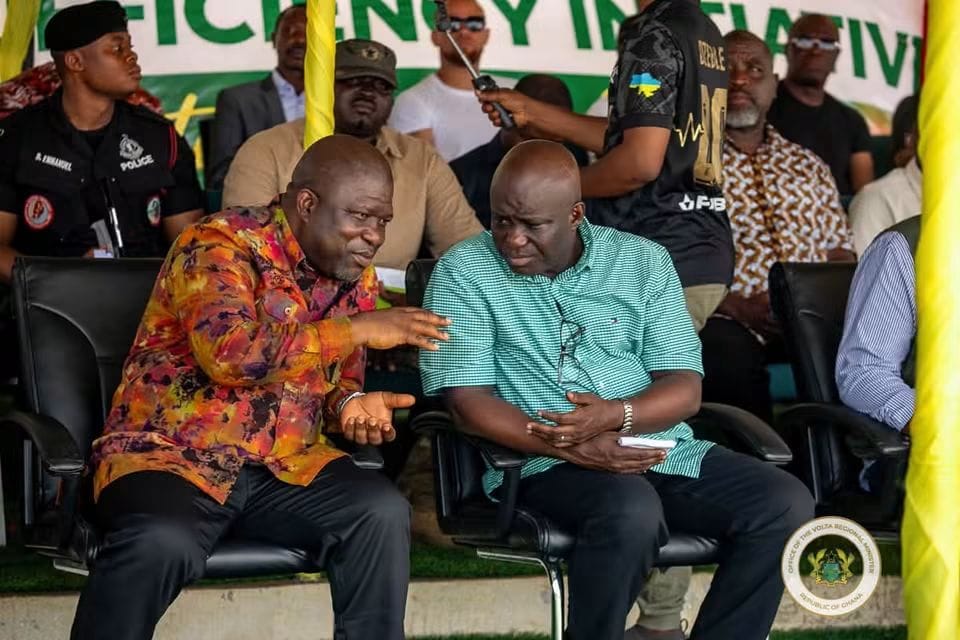
Volta Regional Minister, James Gunu, says the Volta Region holds enormous agricultural potential and efforts must be geared towards connecting farmers to the needed resources to unlock that potential.
He said focus must be on linking farmers to resources, technology, financing and markets to increase production, create jobs and build sustainable livelihoods.
Hon. Gunu made the remarks at the national launch of the Ghana Tomato Self-Sufficiency Initiative (GHATSI) held at Anloga in the Volta Region on Tuesday, September 15.
The initiative, under the theme “Produce at Home. Feed the Nation. Export the Surplus,” seeks to boost local tomato production, processing and marketing while reducing Ghana’s heavy reliance on imported tomatoes.
The launch was attended by the Minister for Food and Agriculture, Eric Opoku, his Deputy, John Setor Dumelo, Feed Ghana Coordinator, Bright Demordzi, Members of Parliament, traditional leaders, MMDCEs, farmers and other stakeholders.
Mr.Gunu expressed appreciation to the Minister for Food and Agriculture for the support announced for the region, including two excavators, 200 cartons of organic fertiliser, and GH¢200,000 for Ms. Kuatudzo Esther Dela, a tomato farmer and processor from Ziope.
He described the initiative as an important step towards making agriculture a stronger driver of food security, job creation and economic growth in the Volta Region.
By Edem Mensah-Tsotorme

 Entertainment7 days ago
Rhythms On Da Runway returns November 28 with 16th edition themed ‘Unbound’
- News1 week ago
48 Engineer Regiment to be major sub-contractor on Accra-Kumasi Expressway, $2bn ready- Prez Mahama
- Entertainment7 days ago
Ohemaa Mercy’s Tehillah Experience outfit was priestly regalia, not costume – Management clarifies