News
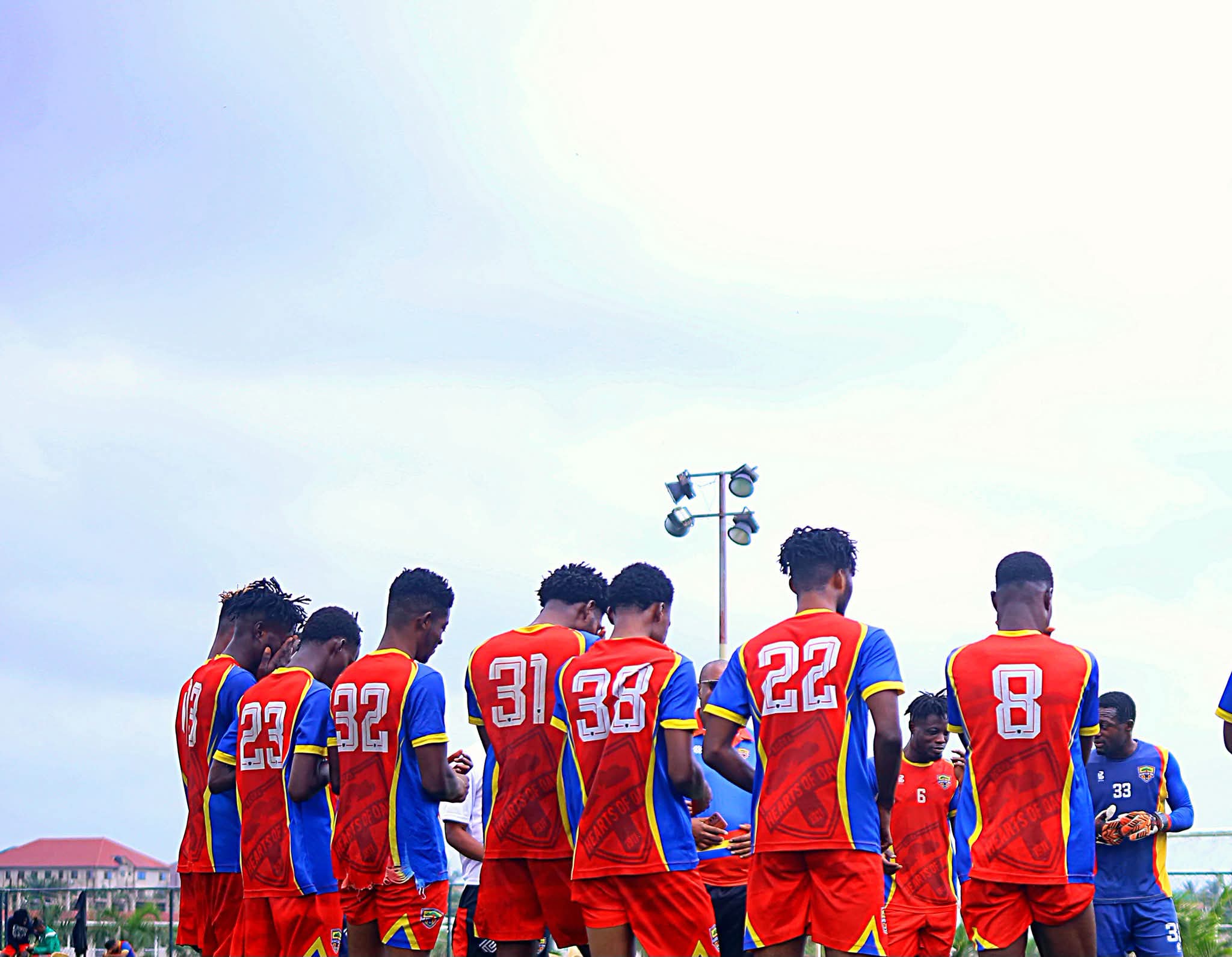
Hearts of Oak withdraws from 2026 GHALCA Top 4 tournament

- /home/u249204778/domains/spectator.com.gh/public_html/wp-content/plugins/mvp-social-buttons/mvp-social-buttons.php on line 27
https://spectator.com.gh/wp-content/uploads/2026/08/WhatsApp-Image-2026-08-11-at-14.27.28-1000x600.jpeg&description=Hearts of Oak withdraws from 2026 GHALCA Top 4 tournament', 'pinterestShare', 'width=750,height=350'); return false;" title="Pin This Post">
- Share
- Tweet /home/u249204778/domains/spectator.com.gh/public_html/wp-content/plugins/mvp-social-buttons/mvp-social-buttons.php on line 72
https://spectator.com.gh/wp-content/uploads/2026/08/WhatsApp-Image-2026-08-11-at-14.27.28-1000x600.jpeg&description=Hearts of Oak withdraws from 2026 GHALCA Top 4 tournament', 'pinterestShare', 'width=750,height=350'); return false;" title="Pin This Post">
Accra Hearts of Oak has withdrawn from the 2026 Ghana League Clubs Association (GHALCA) Top 4 tournament, citing a clash with the club’s existing programmes and preparations for the new league season.
In a statement issued on Tuesday, August 11, 2026, the club explained that the scheduled dates for the tournament conflicted with other programmes it had already agreed to.
The club also expressed concern about the tournament being held close to the start of the new league season.
According to Hearts of Oak, participating at this time could affect its preparations and other commitments ahead of the new season.
The club said it had earlier engaged GHALCA and requested a change in the tournament dates to allow it to participate.
“Unfortunately, those efforts did not materialize into a change of schedule,” the club stated.
Hearts of Oak said after carefully considering the situation, it had concluded that withdrawing from the competition was the most appropriate decision.
The club, however, expressed appreciation to GHALCA for its efforts in organising the 2026 Top 4 tournament and wished the association and the participating clubs a successful competition.
It stressed that the decision would not affect its relationship with GHALCA.
“Hearts of Oak remains committed to maintaining its cordial relationship and continued collaboration with GHALCA and the wider Ghana football community,” the statement added.
The withdrawal means Hearts of Oak will not feature in the 2026 edition of the competition, which brings selected Ghanaian clubs together for competitive matches ahead of the new league season.
By: Jacob Aggrey
News
GBA urges Chief Justice to halt trials during legal vacation

The Ghana Bar Association (GBA) has urged Chief Justice Justice Paul Baffoe Bonnie to stop the conduct of selected trials during the ongoing legal vacation.
In a letter dated August 10, 2026, the GBA said it had received petitions from the law firms Zoe, Akyea & Co, Dame & Partners and Sam Okudzeto & Associates over notices requiring some lawyers to appear in court for part heard criminal cases during the vacation.
The Association maintained that the legal vacation, which runs from August 1 to September 30, is intended to give judges, lawyers and judicial staff a period of rest after the longest term of the legal year.
According to the GBA, Order 79 Rule 4 of the High Court (Civil Procedure) Rules, 2004, CI 47, provides for three legal vacations each year, with the second vacation being the longest.
The Association explained that, by convention, certain courts are designated as Vacation Courts to deal with urgent matters during the period.
It noted, however, that such courts traditionally handle emergencies and interlocutory matters and do not conduct trials.
The GBA further pointed out that virtual courts operating during the legal vacation also follow the same principle and do not conduct trials.
The Association said lawyers were not obliged to appear before a Vacation Court if they were unavailable during the vacation.
“Once Counsel in a matter indicates their unavailability to attend Court during the vacation,” the GBA stated, the court cannot proceed with the case where counsel on either or both sides are unable to attend.
It stressed that an accused or other party to a trial should not be forced to represent themselves simply because their lawyer is unavailable during the legal vacation.
The GBA said judges should instead adjourn such cases to dates proposed by the lawyers.
The Association expressed concern that compelling lawyers to conduct trials during the vacation could create the impression of bias or selective justice.
It noted that lawyers had already worked extended hours during the legal year, including under the newly introduced afternoon court sittings.
The GBA added that some lawyers had scheduled professional engagements in other jurisdictions, while some law firms had closed for the entire vacation period.
National President of the GBA, Mrs. Efua Ghartey, therefore appealed to the Chief Justice and the Judiciary to respect the rules and long-standing traditions governing legal vacations.
The Association said it remained committed to working with the Judiciary to ensure the speedy delivery of justice and expressed confidence that the petitions brought before the Chief Justice would be favourably considered.
By:Jacob Aggrey
News
GBA President ‘in error’ on legal vacation, trial – Deputy AG

Legal practitioner Dr. Justice Srem-Sai has faulted the President of the Ghana Bar Association (GBA) over claims made in a letter to the Chief Justice dated August 10, 2024, regarding the conduct of trials during the legal vacation.
In the letter, the GBA President made two key assertions. First, that “Vacation Courts” only handle emergencies, “usually interlocutory matters and never trials.”
Second, was that the decision to proceed with substantive matters during vacation “has always been the willingness, availability of Counsel to appear,” meaning “Counsel are not under any compulsion whatsoever to appear before a Vacation Court.”
However, Dr. Srem-Sai in statement says both claims are unsupported by law, rules, practice, or reason.
Dr. Srem-Sai explained that court work is divided into two: substantive proceedings which can finally determine a case, including trials; and interlocutory proceedings such as motions and summons which do not.
He noted that during the “long legal vacation” in August and September, superior courts only “scale down significantly”, they do not shut down. A few judges are designated to work by a warrant issued by the Chief Justice, who is the administrative head of the courts.
“It is the Chief Justice who determines when and where a Court should work,” Dr. Srem-Sai wrote. A lawyer or a body of them do not determine that,” he stated.
He argued that giving lawyers the power to decide whether to appear would undermine the purpose of courts.
According to him, “A lawyer’s primary duty is to his client not to the client of another lawyer. If allowed to determine how justice is administered… lawyers will decisively make decisions which will promote his client’s interest over the interest of another lawyer’s client.”
Citing England, where the vacation practice originated, he noted that the Civil Procedure Rules Practice Direction 2F vests discretion in the bench with phrases like “as the Court may direct” and “subject to the discretion of the Judge,” The same, he said, applies in Ghana.
He noted that contrary to the GBA President’s claim that trials are “never” held during vacation, Dr. Srem-Sai said vacation judges can and do conduct substantive proceedings, but only in respect of cases in their own courts.
According to him, this is because a vacation judge eventually takes his leave during term time, and another “term judge” then handles only interlocutory matters in his court until he returns.
The arrangement, he explained, prevents cases in a vacation judge’s court from suffering “disproportionate delays.”
For cases from other judges’ courts, a vacation judge may only take interlocutory matters, because only a substantive judge can finally determine a case.
“So, again, one is not particularly clear what the GBA President grounds the allegation that courts ‘never’ conduct trials during legal vacations on,” he stated.
Dr. Srem-Sai acknowledged that law practice is draining and that legal vacation offers a needed rest. He said judges have traditionally accommodated lawyers’ requests to scale down work, but “always upon request, on case-by-case basis, and is subject to the consideration of the Judge.”
“What a professional lawyer is not entitled to do, and cannot do is to, in vacuo, beforehand, declare that he will not attend proceedings at all,” he concluded.
He warned that the GBA President’s proposition “seeks to move the power to manage and control court proceedings and to do justice from the hands of the Judge into the hands of a lawyer,” a move with “severe and far-reaching policy implication for justice administration in Ghana.”
By Edem Mensah-Tsotorme