News
Ghana Armed Forces details GH¢100,000 support for Kumasi stampede victim

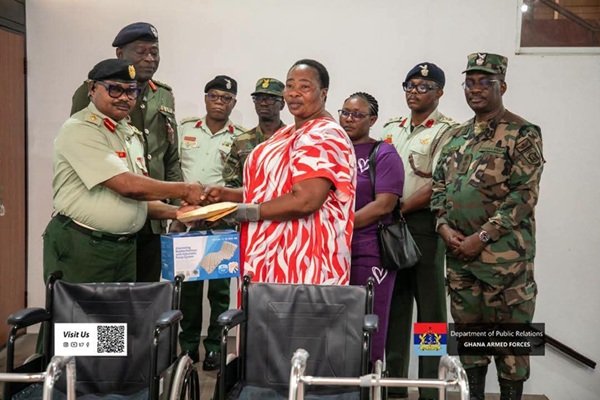
The Ghana Armed Forces (GAF) has clarified the support it has provided to Sandra Baafi, a victim of the Kumasi recruitment stampede, following a viral publication about her condition on social media.
In a press release issued on Friday, November 13, 2026, the Armed Forces said Baafi was admitted to the Komfo Anokye Teaching Hospital from November 12, 2025, to February 26, 2026, following the stampede.
According to the statement, she was later airlifted to the 37 Military Hospital at the family’s request, with the Armed Forces covering her medical expenses of GH¢100,000.
The military added that after her discharge, it assured the family that the 4 Medical Reception Station in Kumasi would continue providing medical care until her full recovery.
As part of its support to the family, the Ghana Armed Forces also offered a recruitment opportunity to a nominated family member.
Her sister, Mercy Bioh, is currently undergoing training at the Army Recruit Training School at Shai Hills.
The statement further disclosed that on October 28, 2026, Baafi’s mother received GH¢30,000 in financial assistance and an air bed to support her daughter’s care and comfort.
The Armed Forces also offered the family a wheelchair, which they declined because they already had one. An ambulance service to Kumasi was also offered, but the family opted to travel with the National Ambulance Service.
The military reaffirmed its commitment to supporting Baafi’s medical care and welfare until she fully recovers.
By: Jacob Aggrey








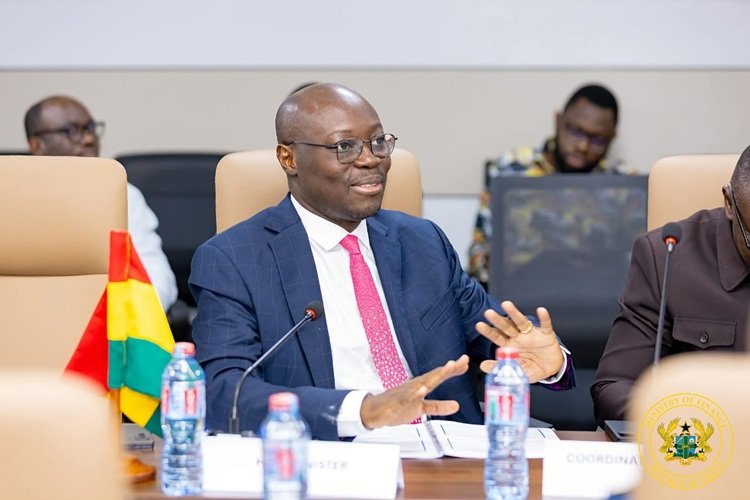
The Minister of Finance, Dr. Cassiel Ato Forson, has announced a US$3 billion investment in commercial agriculture under Pillar two of the New Economy Programme.
Presenting the 2027 Budget, Dr. Forson said agriculture will be a key driver of jobs, food security and industrial growth.
A key plank of the strategy is the construction of the Pwalugu Multipurpose Dam at a cost of $1 billion.
The dam will irrigate 25,000 hectares of farmland, provide facilities for 1,000 fish cages within the reservoir, support year-round vegetable production, ensure flood protection and water security, and generate 70 MW of hydropower.
The first phase is expected to be ready by early 2029, with full completion in 2030.
Government will also develop eight integrated agricultural industries and establish Rice Development Hubs in the Afram Plains, Volta Basin, Western Ghana and Northern Ghana.
The hubs will introduce irrigation, mechanisation, silos, modern mills, packaging and logistics.
An additional 100,000 hectares will be brought under rice cultivation, targeting yields of 5 to 6 metric tonnes per hectare and creating approximately 125,000 jobs.
He added that public procurement laws will be amended to ensure public institutions purchase only Ghana-grown rice and other staple foods using public funds.
Additionally, the government aims to achieve self-sufficiency in sugar production by 2030 through locally grown sugarcane, irrigated production zones and nucleus estates.
It will organise out-growers and establish commercially viable sugar mills, while introducing import permits and quotas to restrict sugar imports as local production increases.
For those in the poultry industry,
government will develop the entire poultry value chain, including breeder farms and hatcheries, day-old chicks, animal feed, vaccines and veterinary laboratories, modern poultry houses, processing plants, cold storage and retail distribution.
It will also develop commercial maize and soya bean production to reduce feed costs, which currently account for 60 to 70 percent of poultry production costs.
Furthermore, government will address Ghana’s estimated annual fish supply gap of 500,000 metric tonnes by making aquaculture the main source of new fish supply while restoring marine and inland fisheries.
It will support commercial and smallholder fish farmers with quality broodstock and fingerlings, fish feed, cages, ponds and tanks, aquatic health laboratories, disease surveillance and water-quality management systems.
Touching on oil plan, Dr.Ato Forson said, government will develop 100,000 hectares of new oil palm plantations across the Western, Central, Eastern, Volta and Ashanti regions.
Nurseries, nucleus estates and smallholder farmers will be connected to modern mills, refineries and manufacturing facilities.
He noted that US$500 million World Bank financing arrangement has been secured for consideration by Parliament. The programme has the potential to create more than 250,000 jobs, with a target of self-sufficiency and export capacity by 2032.
Approximately 100,000 hectares of suitable land have been identified, with acquisition processes underway.
The Finance Minister revealed that government will develop the vegetable industry around the Pwalugu Multipurpose Dam, with US$1 billion invested in the dam.
Dr.Ato Forson finally noted that government will process at least 50 percent of Ghana’s cocoa locally by 2028 and increase local processing to 100 percent by 2030, completing the transition towards ending raw cocoa exports.
Production will be expanded beyond primary grinding into cocoa liquor, cocoa butter, cocoa cake, cocoa powder, chocolate, cosmetics and other finished products.
By Edem Mensah-Tsotorme
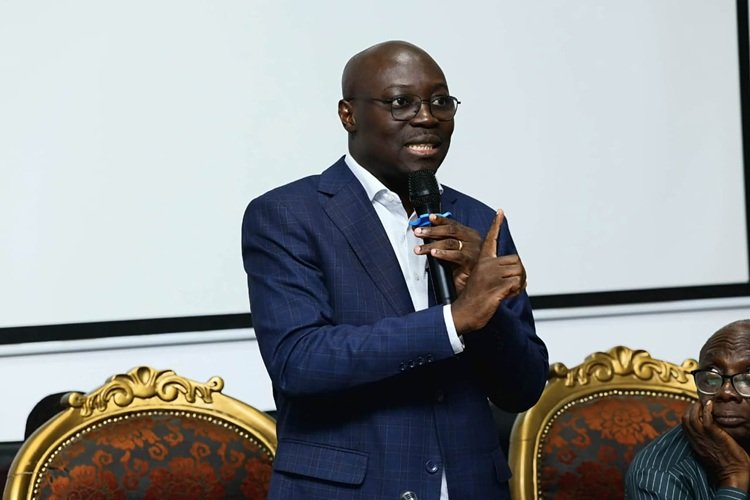
The Minister of Finance, Dr. Cassiel Ato Forson, has announced that bondholders under the Domestic Debt Exchange Programme (DDEP) whose payments fall due on February 16, 2027 can come for their payments ahead of schedule.
Presenting the 2027 Budget, Dr. Forson revealed that government has GH₵29 billion currently sitting in the sinking fund to make the payment.
He assured bondholders that the funds are available now, and there will be no delay when the payment date arrives.
Dr. Forson accused the previous New Patriotic Party (NPP) government of intentionally passing the huge DDEP repayment burden onto another government.
According to him, the NPP structured the repayments in a way that pushed the heavy financial obligation to the next administration, instead of dealing with it during their tenure.
He stressed that the current government has taken responsibility and made adequate provision to honour the obligation.
By Edem Mensah-Tsotorme