Editorial
Fight against breast cancer requires more action than awareness

BREAST cancer is no longer a silent killer spoken about only in whispers, thanks to the annual flood of pink ribbons, walks and corporate events that take place every October.
During a screening event at the forecourt of the Accra Metropolitan Assembly, Ms Antoinette Kwofie, Chairperson of the MTN Y’ello Ladies Network, noted that the volume of breast cancer awareness campaigns was “enormous.”
However, her reminder that “awareness without action is not enough” cuts through the celebrations and highlights a critical challenge.
If Ghana is to significantly reduce breast cancer deaths, the national conversation must go beyond the colour pink and confront the institutional, financial and psychological barriers that can turn a treatable diagnosis into a death sentence.
Significant visibility can easily be mistaken for significant impact. A sea of pink shirts and prominent corporate sponsorships may create a reassuring impression of progress. But awareness is only the beginning of what can be a difficult clinical journey.
A woman does not automatically schedule a mammogram or have her breasts examined simply because she knows that breast cancer exists.
Late-stage presentation remains a major challenge in Ghana. Many women still present with Stage III or Stage IV disease, when treatment options may be limited and outcomes less favourable. For these women, lack of awareness is no longer the main issue; rather, the challenge lies in what happens after they become aware of the disease or notice a possible symptom.
To close the gap between awareness and action, we must address the reasons why women delay screening and early diagnosis.
A cancer diagnosis remains highly stigmatised and is often perceived as an immediate death sentence. We need more public counter-narratives that demonstrate that early detection can lead to survival and full, productive lives, as the survivors at the MTN event illustrated.
While educational activities and basic clinical examinations are often offered free during Pink October, the ordinary Ghanaian may not be able to afford the full diagnostic pathway, including ultrasounds, mammograms, biopsies and, eventually, treatment such as chemotherapy or surgery.
Real action requires making these essential diagnostic and staging services more widely accessible and affordable.
Fear and financial constraints also lead some patients to seek herbal medicines, prayer camps or alternative therapies before seeking medical care. By the time they arrive at a health facility, the disease may have progressed considerably.
Clinical leaders such as Dr Beatrice Wiafe Addai of Breast Care International, and initiatives such as the event organised by the MTN Y’ello Ladies Network, offer an example of what “purposeful pink” should look like.
Rather than merely distributing leaflets, such initiatives provide education and connect women with immediate professional screening and guidance through health institutions, including Ridge Medical Centre and Peace and Love Hospital.
They replace abstract concern with practical healthcare support and navigation.
However, breast cancer does not disappear on November 1. If Ghana is to make meaningful progress in this fight, the spirit of Pink October must be translated into a year-round commitment.
This should include strengthening regular breast health education and clinical examinations within routine primary healthcare services across the country. It also requires sustained community-level education to demystify the disease, challenge harmful misconceptions and encourage women to seek medical attention promptly.
Awareness encourages conversation, but early action can save lives.
It is time to insist that every pink ribbon worn on a lapel is backed by a concrete commitment to making screening accessible, ensuring timely care and making treatment more affordable for every woman.
Only then can awareness truly be translated into action—and lives saved.
By Spectator Reporter
SKIP THE QUEUE, TAP THE NEWS
You can now read the Ghanaian Times and The Spectator newspapers from the comfort of your device via TimesNewsPlus.
Join our WhatsApp Channel: https://whatsapp.com/channel/0029VbBElzjInlqHhl1aTU27

In last week’s edition, The Spectator published an article titled “El Nino: Rising temperature threat to public health – Gmet.” The article discussed how the country’s recent temperature increases have the potential to escalate everyday discomfort into a serious health emergency.
By effectively linking global climate patterns to the everyday economic reality of Ghanaian workers, the article presented an important and timely public health warning.
A silent discomfort is already taking place throughout the busy stalls of Makola, Lapaz, and Odawna as the midday heat is beating down with exceptional intensity, and traders are huddled under improvised umbrellas, wiping away perspiration.
Millions of Ghanaians, including market women, farmers, commercial drivers, and construction workers, have always had to put up with the heat in order to make a living.
However, that familiar discomfort is quickly turning into a full-blown public health emergency as the Ghana Meteorological Agency (GMet) warns of a serious El Niño phenomenon that is expected to intensify from now until April 2027.
Ghana’s heat response procedures are still insufficient, as Environmental Health Expert Professor Mawuli Dzodzomenyo of the University of Ghana’s School of Public Health correctly notes.
It is no longer sufficient to know that temperatures will rise. A weather forecast that informs a farmer that the temperature will be 38 degrees Celsius without initiating community-level protection is only an indication of potential danger, not a means of preventing it.
Although extreme heat does not discriminate, those with the least ability to flee it bear the brunt of its effects. Long-term exposure exacerbates underlying cardiac and respiratory conditions and causes heat exhaustion, severe dehydration, kidney stress, and deadly heatstroke.
Pregnant women, the elderly, and students seated in classrooms with inadequate ventilation are at serious risk. In the meantime, since their families rely on every hour they spend at the market or construction site, informal workers cannot just decide to stay indoors.
Over the next six months, protecting Ghanaians will need decisive, coordinated action from important institutions.
The Ministry of Health (MoH) and GMet must set precise temperature limits that will automatically initiate public health alerts and mobilise nearby clinics.
Major marketplaces and transportation hubs require Metropolitan, Municipal, and District Assemblies (MMDAs) to make investments in fundamental cooling infrastructure, such as accessible clean water sources and shaded canopies.
Employers in the construction and agricultural industries are required to implement enforced break periods and move labour-intensive tasks to the cooler morning and late afternoon.
The Ghana Education Service (GES) must issue explicit directions mandating that schools enhance classroom ventilation, provide drinking water, and halt strenuous afternoon sports.
Health professionals, educators, and community leaders need to be prepared to recognise the early warning indicators of heat-related diseases.
The moment to take action is now since the warning signs are already above us.
Dear Editor
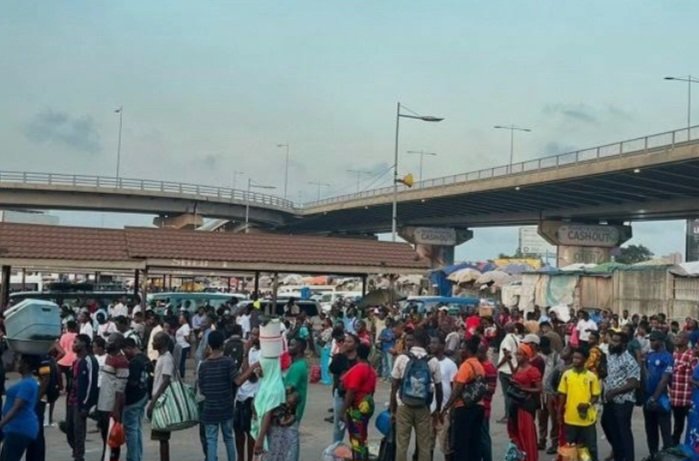
As Christmas approaches, overcrowding at transport stations and along roadsides in Accra and other parts of Ghana is becoming increasingly worrying.
Areas such as Circle, Kaneshie, Madina and Kasoa are already experiencing long queues as passengers struggle to find vehicles to their homes and other destinations.
Workers, schoolchildren, traders and travellers are bearing the brunt. Some workers now have to leave work early just to stand a chance of getting home on time. Others may reach a station as early as 4 p.m. but get home around 8 p.m., even when traveling a relatively short distance.
Some passengers eventually walk home or to cover some distance because they cannot find a vehicle at a particular place, while others are left stranded at stations for hours. There are even reports of people spending the night at stations.
The situation also affects motorists. With so many people and vehicles competing for space, traffic becomes heavier, making it difficult for drivers to reach their destinations promptly.
The crowds and long queues can make it seem as though there are not enough vehicles to meet the demand.
Passengers are also facing rising transport fares. People who carefully budget for their journeys may find that the cost of getting home exceeds what they planned to spend. This places an additional burden on families already dealing with the high cost of living.
And this is happening even before December. What will the situation be like as Christmas draws closer, when more people travel to visit family and friends?
I appeal to the relevant authorities, transport unions and city officials to act urgently.
They should assess the availability of vehicles, coordinate transport services during peak hours, manage queues and traffic more effectively, and ensure that fares are fair and clearly communicated.
The public also deserves timely updates about what steps are being taken.
Ghanaians should not have to spend hours stranded or pay unpredictable fares simply to get home. Christmas is approaching, action is needed now.
Vanessa Elizabeth Nkum,
Kasoa
SKIP THE QUEUE, TAP THE NEWS
You can now read the Ghanaian Times and The Spectator newspapers from the comfort of your device via TimesNewsPlus.
Join our WhatsApp Channel: https://whatsapp.com/channel/0029VbBElzjInlqHhl1aTU27