News
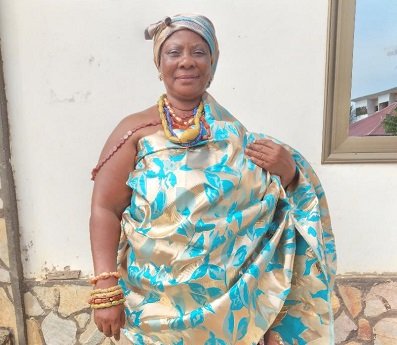
Education reduces poverty – Mamaga Kakator Agar ll

- /home/u249204778/domains/spectator.com.gh/public_html/wp-content/plugins/mvp-social-buttons/mvp-social-buttons.php on line 27
https://spectator.com.gh/wp-content/uploads/2022/08/Mamaga-Kakator-Agar-ll-queen-mother-of-the-Agave-Traditional-Area.jpg&description=Education reduces poverty – Mamaga Kakator Agar ll', 'pinterestShare', 'width=750,height=350'); return false;" title="Pin This Post">
- Share
- Tweet /home/u249204778/domains/spectator.com.gh/public_html/wp-content/plugins/mvp-social-buttons/mvp-social-buttons.php on line 72
https://spectator.com.gh/wp-content/uploads/2022/08/Mamaga-Kakator-Agar-ll-queen-mother-of-the-Agave-Traditional-Area.jpg&description=Education reduces poverty – Mamaga Kakator Agar ll', 'pinterestShare', 'width=750,height=350'); return false;" title="Pin This Post">
Mamaga Kakator Agar ll of the Agave Traditional Area in the SouthTongu District of the Volta Region, has observed that since education is the bedrock of development, advanced countries have made use of it and Ghana cannot be left out.
“Thisis the only way the youth in the areacan be added to the human resource base of the country to help increase productivity”, she indicated.
Addressing about 300 female residents who were trained in entrepreneurial skills atDabalaby the Morning Glory Foundation (MGF), MamagaKakatorAgar ll asked them to take the training seriously and make good use of it.
The queen mother said that in collaboration with other queens and Rose of Mama Africa, a Non- Governmental Organisation (NGO), led by Mr Moses SegbenuAhali, a native of the area, had visited many communities and schools to convince both parents and pupils about the need to take education seriously.
She said, unfortunately, the non-availability of funds had caused the project to be suspended, adding that it would be highly appreciated if philanthropists in the area and beyond could come to the aid of the queens to continue the project.
She encouraged women to check their cervical and breast cancer status by visiting the hospital, andurged pregnant women in the community to attend ante natal clinic to enable them to take tetanus injection for protection, and immunise their children from birth to five years.

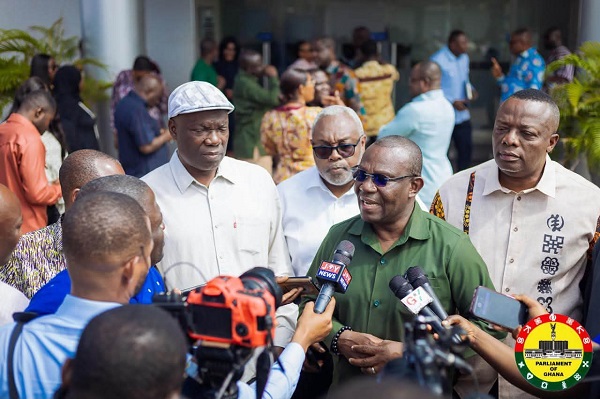
The Parliamentary Select Committee on Energy has appealed to the Ministry of Finance to release GH¢5.6 million to the Petroleum Commission to enable it to establish and operate a world-class data centre.
According to the Committee, access to the funds will strengthen the Commission’s capacity to manage critical upstream petroleum data and improve its operations.
Speaking during the appeal, Chairman of the Committee, Emmanuel Kwasi Bedzrah, said the move was crucial to efforts to revitalise Ghana’s upstream petroleum industry and increase oil production.
He noted that although investment and hydrocarbon production had declined in recent years, Parliament’s approval of an extension of the petroleum agreement to 2030 had attracted additional funding and contributed to an increase in production from about 80,000 to 120,000 barrels per day.
Meanwhile, concerns have been raised over repeated budget allocations for oil exploration in the Voltaian Basin.
Mr. Bedzrah stressed that funds approved for exploration must produce tangible results, adding that the Committee would require clear evidence of progress before supporting future budget allocations for the programme.
The appeal was made during a working visit to the Petroleum Commission as part of the Committee’s oversight activities to assess its operations and management procedures.
During the engagement, the Chief Executive Officer of the Petroleum Commission, Emeafa Hardcastle, took the Committee through the Commission’s working procedures and mandate, which includes regulating, managing and coordinating upstream petroleum activities.
She disclosed that since assuming office in 2025, government had pursued measures to reverse the decline in crude oil production, sustain output and reposition Ghana as an attractive destination for investment in Africa’s increasingly competitive petroleum sector.
In addition, she said government had secured fresh commitments of about US$35 billion to help revitalise the sector.
As part of the oversight exercise, the Committee is expected to conclude its monitoring visit with engagements at the National Petroleum Authority (NPA) and the Ghana Oil Company Limited (GOIL).
By Edem Mensah-Tsotorme
News
“No civilisation deserves to be annihilated” – Mahama calls for dialogue on global conflicts at UNGA 81

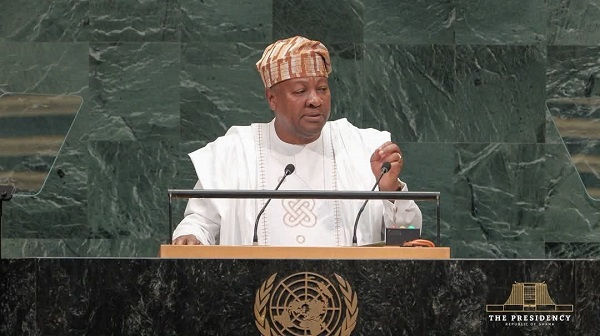
President John Dramani Mahama has called for solidarity and dialogue in resolving global conflicts, insisting that no civilisation deserves to be wiped out.
“No human civilisation deserves to be annihilated, certainly not a member state of the United Nations,” President Mahama stated in his address at the 81st United Nations General Assembly in New York.
He called for solidarity with nations facing terrorism, especially the Alliance of Sahel States (AES), and for a uniform approach to conflicts in Europe, the Middle East and Africa.
On the Middle East, the President called for a return to negotiations, saying “The current Middle East crisis is having a deleterious effect on the world economy.”
“I believe that dialogue can resolve even the most intractable of problems,” he added.
By Edem Mensah-Tsotorme