News
Build reading culture from childhood —Experts

- /home/u249204778/domains/spectator.com.gh/public_html/wp-content/plugins/mvp-social-buttons/mvp-social-buttons.php on line 27
https://spectator.com.gh/wp-content/uploads/2025/09/The-panelists.jpg&description=Build reading culture from childhood —Experts', 'pinterestShare', 'width=750,height=350'); return false;" title="Pin This Post">
- Share
- Tweet /home/u249204778/domains/spectator.com.gh/public_html/wp-content/plugins/mvp-social-buttons/mvp-social-buttons.php on line 72
https://spectator.com.gh/wp-content/uploads/2025/09/The-panelists.jpg&description=Build reading culture from childhood —Experts', 'pinterestShare', 'width=750,height=350'); return false;" title="Pin This Post">
Experts in Africa’s book industry have stressed the need to build a strong reading culture from childhood if the continent is to develop a vibrant publishing sector.
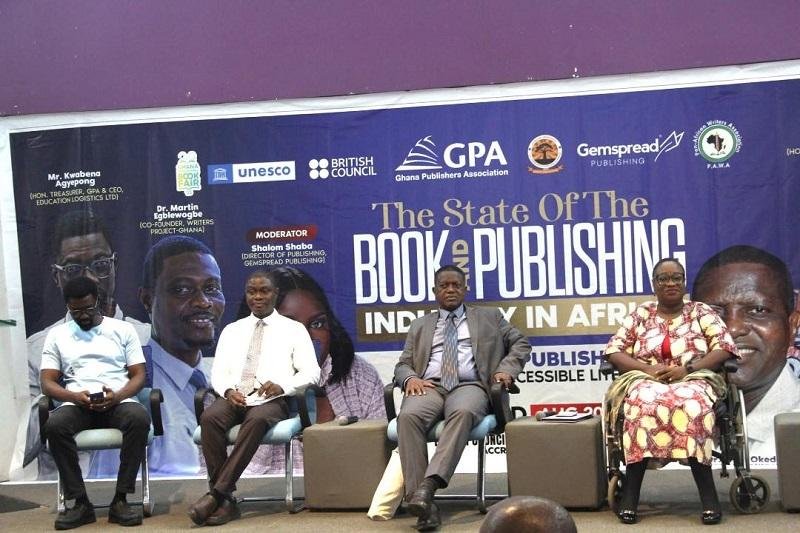
This call was made during a panel discussion in Accra on the theme “The State of the Book and Publishing Industry in Africa”.
The panel featured Dr Martin Egblewogbe, Co-Founder of Writers Project-Ghana; Dr Mrs Lucy Ry-Kottoh, Head of the Department of Publishing Studies at KNUST; Dr Wale Okediran, Secretary General of the Pan African Writers Association (PAWA); and Mr Kwabena Agyapong, Chief Executive Officer of Education Logistics.
Mr Agyapong argued that developing a love for books must begin early in life. “When books are given to children early, they grow up loving to read,” he said.
He urged government to enact policies that would ensure books were available in schools and homes, stressing that this was key to nurturing future readers and sustaining the industry.
The panelists agreed that accessibility and inclusiveness were also critical.
Dr Mrs Ry-Kottoh said publishing should serve everyone, regardless of background or ability.
“Nobody should be left out because they cannot see, hear, or read in the usual way,” she noted, calling for wider use of audiobooks, braille, and other inclusive formats.
She added that technology was already helping to expand access. “Audiobooks now give opportunities to people who are blind or too busy to read. These innovations can help grow our market,” she said.
Dr Egblewogbe highlighted how reading habits are shifting, especially among young people.
“Many now enjoy stories on phones, social media, and even through games. If we do not move with the times, we will lose our young readers,” he warned.
For his part, Dr Okediran of PAWA raised concerns about the profitability of publishing in Africa.
He cited high production costs, weak distribution systems, and low reading culture as barriers to growth, and called for government support and private sector partnerships to sustain the industry.
The panelists concluded that while publishing faces many challenges, building a strong reading culture from childhood is the foundation upon which a thriving book industry can be built.
By Esinam Jemima Kuatsinu

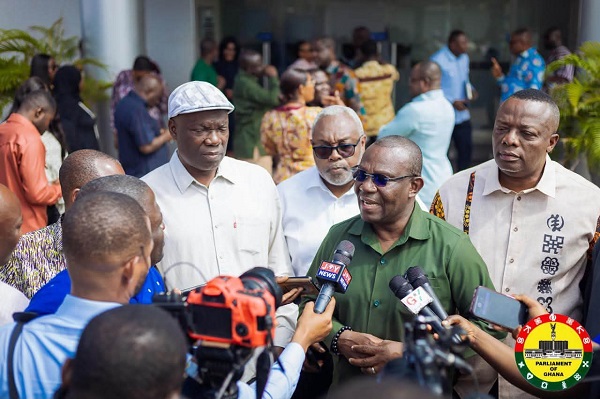
The Parliamentary Select Committee on Energy has appealed to the Ministry of Finance to release GH¢5.6 million to the Petroleum Commission to enable it to establish and operate a world-class data centre.
According to the Committee, access to the funds will strengthen the Commission’s capacity to manage critical upstream petroleum data and improve its operations.
Speaking during the appeal, Chairman of the Committee, Emmanuel Kwasi Bedzrah, said the move was crucial to efforts to revitalise Ghana’s upstream petroleum industry and increase oil production.
He noted that although investment and hydrocarbon production had declined in recent years, Parliament’s approval of an extension of the petroleum agreement to 2030 had attracted additional funding and contributed to an increase in production from about 80,000 to 120,000 barrels per day.
Meanwhile, concerns have been raised over repeated budget allocations for oil exploration in the Voltaian Basin.
Mr. Bedzrah stressed that funds approved for exploration must produce tangible results, adding that the Committee would require clear evidence of progress before supporting future budget allocations for the programme.
The appeal was made during a working visit to the Petroleum Commission as part of the Committee’s oversight activities to assess its operations and management procedures.
During the engagement, the Chief Executive Officer of the Petroleum Commission, Emeafa Hardcastle, took the Committee through the Commission’s working procedures and mandate, which includes regulating, managing and coordinating upstream petroleum activities.
She disclosed that since assuming office in 2025, government had pursued measures to reverse the decline in crude oil production, sustain output and reposition Ghana as an attractive destination for investment in Africa’s increasingly competitive petroleum sector.
In addition, she said government had secured fresh commitments of about US$35 billion to help revitalise the sector.
As part of the oversight exercise, the Committee is expected to conclude its monitoring visit with engagements at the National Petroleum Authority (NPA) and the Ghana Oil Company Limited (GOIL).
By Edem Mensah-Tsotorme
News
“No civilisation deserves to be annihilated” – Mahama calls for dialogue on global conflicts at UNGA 81
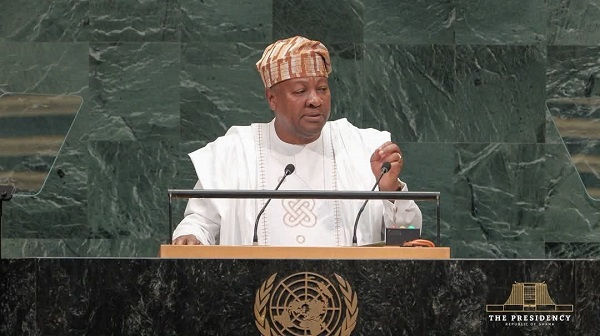
President John Dramani Mahama has called for solidarity and dialogue in resolving global conflicts, insisting that no civilisation deserves to be wiped out.
“No human civilisation deserves to be annihilated, certainly not a member state of the United Nations,” President Mahama stated in his address at the 81st United Nations General Assembly in New York.
He called for solidarity with nations facing terrorism, especially the Alliance of Sahel States (AES), and for a uniform approach to conflicts in Europe, the Middle East and Africa.
On the Middle East, the President called for a return to negotiations, saying “The current Middle East crisis is having a deleterious effect on the world economy.”
“I believe that dialogue can resolve even the most intractable of problems,” he added.
By Edem Mensah-Tsotorme

 Entertainment1 week ago
Rhythms On Da Runway returns November 28 with 16th edition themed ‘Unbound’
- Entertainment1 week ago
Ohemaa Mercy’s Tehillah Experience outfit was priestly regalia, not costume – Management clarifies
 News1 week ago
Janet Asana Nabla criticises Mahama over China curriculum controversy involving Haruna Iddrisu