News
Damba Festival, a living tradition across northern Ghana

- /home/u249204778/domains/spectator.com.gh/public_html/wp-content/plugins/mvp-social-buttons/mvp-social-buttons.php on line 27
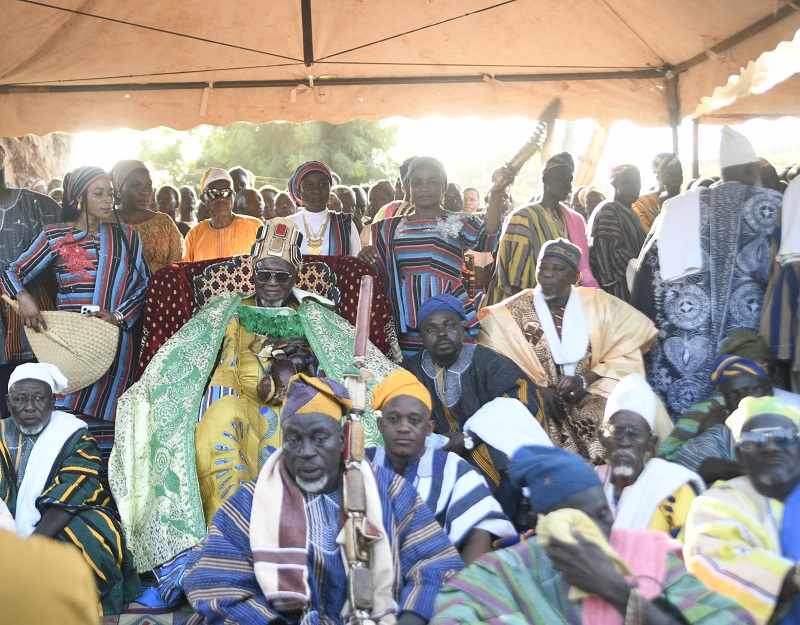
https://spectator.com.gh/wp-content/uploads/2026/09/Kumbumgu-Na-and-elders-seated-during-the-festival-800x600.jpg&description=Damba Festival, a living tradition across northern Ghana', 'pinterestShare', 'width=750,height=350'); return false;" title="Pin This Post">
- Share
- Tweet /home/u249204778/domains/spectator.com.gh/public_html/wp-content/plugins/mvp-social-buttons/mvp-social-buttons.php on line 72
https://spectator.com.gh/wp-content/uploads/2026/09/Kumbumgu-Na-and-elders-seated-during-the-festival-800x600.jpg&description=Damba Festival, a living tradition across northern Ghana', 'pinterestShare', 'width=750,height=350'); return false;" title="Pin This Post">
Damba, one of Northern Ghana’s major traditional festivals, has once again brought chiefs, elders, families, young people and visitors together in a celebration of culture and tradition.
This year, the celebrations were observed across several communities in Yendi, Bimbilla, Kumbungu and Lamashegu and Tamale.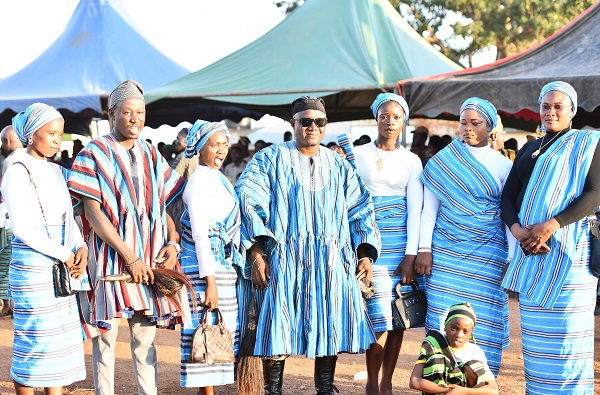
Although each community had its own character and way of celebrating, traditional music, dancing, colourful regalia and community participation remained common features.
In Yendi, the traditional capital of Dagbon, this year’s Damba was marked by the absence of the late Ya-Na Abukari Mahama II, who passed away earlier this year.
It was the first Damba in seven years to be celebrated in Yendi without the late King.
His absence was felt at the Gbewaa Palace, where the festival had been celebrated under his leadership in previous years.
The late Ya-Na’s eldest son, Kampakuya-Naa Yakubu Abukari, Regent of Dagbon, led the traditional observance during the transition period.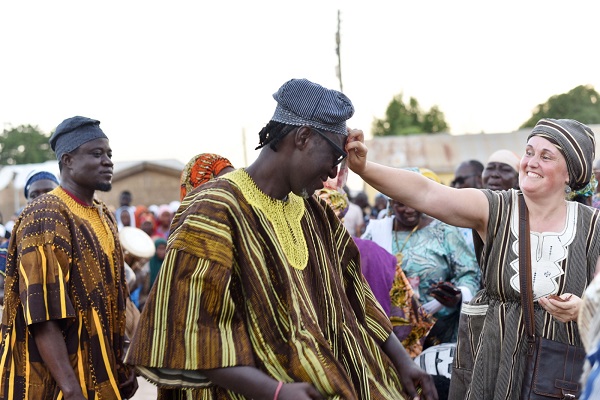
Despite the mixed emotions among celebrants, the sound of drums and traditional musical instruments soon drew crowds to the palace.
Within a short time, the palace grounds were filled with chiefs, elders, families, young people and children.
Children took part in traditional performances as drummers and musicians provided the rhythm for the celebration.
One of the notable scenes was the appearance of the “truck-pusher chief,” who arrived on a decorated truck accompanied by young followers.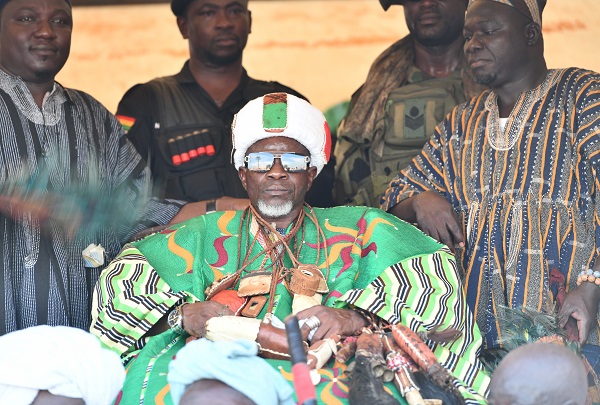
His appearance became one of the memorable moments of the celebration and demonstrated the community character of the festival.
In Bimbilla, the traditional capital of the Nanung Traditional Area, Damba brought traditional authorities, elders, families and young people together.
The celebration was led by the Regent of the Nanumba Kingdom, Nyalinbolgu Naa Yakubu Andani Dasana.
The activities combined traditional celebration with community events, including a health walk and rice picking.
Traditional clothing, music and dancing formed part of the celebrations as different generations participated.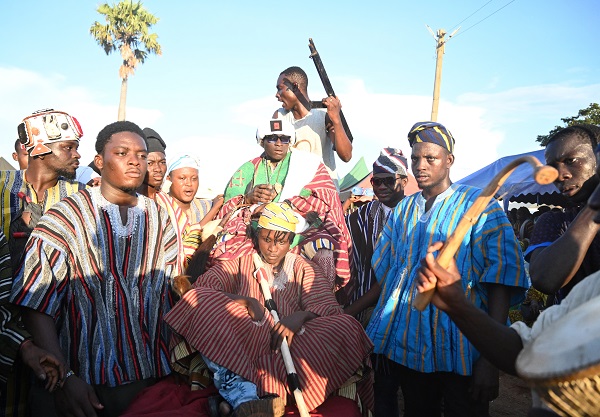
Children watched and joined activities, while young people used mobile phones and cameras to document the festival.
In Kumbungu, the Kumbungu Na, Naa Yab Kumbung Naa Yiri II, led the community’s Damba celebration.
Traditional clothing, drumming, dancing and communal gatherings formed part of the activities.
Elders and traditional authorities provided a link to the customs of the past, while young people and children participated in the celebrations.
For many residents, Damba remains an important occasion to reconnect with their cultural heritage and pass traditions on to the next generation.
In Lamashegu, within the Tamale metropolis, Damba was celebrated under the leadership of Lamashe-Naa Alhaji Mahama Iddrisu.
The celebration brought together traditional authorities, elders, families and residents.
Young people featured prominently in the activities, participating in traditional performances and documenting the occasion with mobile phones and cameras.
The celebrations reflected the ability of traditional culture to remain relevant within a rapidly changing urban environment.
Ending the day in Tamale captured moments thousands of people celebrating at the Tamale Jubilee Park with displays on horses which was one of the highlights of the celebration.
Truck pusher’s chief which is becoming a very important part of the celebration stole the show which attracted much attention.
The celebrations in the four communities demonstrated the diversity of Damba across Northern Ghana.
While the settings and expressions differed, the celebrations shared a common purpose bringing people together and keeping cultural traditions visible.
One of the clearest features of this year’s celebrations was the participation of children and young people.
They danced, watched traditional performances, joined community activities and documented the celebrations.
Their participation points to the important role of younger generations in sustaining Northern Ghana’s cultural heritage.
For many communities, Damba is therefore not simply an annual festival, but is an opportunity for cultural knowledge to be transferred from elders to young people through participation and observation.
It is also increasingly becoming a visual record, as photographers, journalists and young people use cameras and smartphones to document traditional ceremonies.
The festival continues to bring together traditional authority, families and different generations.
From Geoffrey Asiome Kwame Buta, Yendi
SKIP THE QUEUE, TAP THE NEWS
You can now read the Ghanaian Times and The Spectator newspapers from the comfort of your device via TimesNewsPlus.
Join our WhatsApp Channel: https://whatsapp.com/channel/0029VbBElzjInlqHhl1aTU27





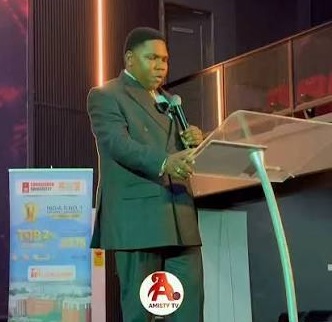
The 2026 Idea Challenge Pitch and media launch was held last Saturday at the Pentecost University in Accra.
It brought together innovators, entrepreneurs and stakeholders to promote creative ideas and solutions aimed at addressing societal challenges.
The initiative, organised by the Visionary Organisation Development and Entrepreneurial Club (VODEC) and National Emerging Leaders Economic Forum (NELEF) provided a platform for participants to showcase their ideas and highlight how innovation and creativity could be transformed into practical solutions.
The programme also sought to encourage young people to develop ideas that could contribute to national development and create opportunities for entrepreneurship.
Held on the theme: ‘building Africa’s future, emerging leaders driving inclusive growth and regional transformation,’ the event sought to serve as a strategic platform to transition youth talent from mere concepts into investable enterprises.
During the pitch session, shortlisted entrepreneurs presented viable business ideas which spanned critical sectors, including climate-smart agribusiness, sustainable waste management, digital technology, and assistive tech for persons with disabilities.
A member of the judging panel, Mr Blessed Amonoo, an Investment Analyst at the Ghana Amalgamated Trust Plc., praised the technical depth of the presentations.
“We are looking for scalability, market readiness, and projects that directly answer local problems,“ Mr Amonoo noted during the evaluation.
“The level of innovation displayed here proves that African youth possesses the answers to the continent’s economic riddles, provided they receive the right structural refinement.”
Finalists selected from this rigorous process will be officially announced and paired with corporate mentors at the flagship forum in September.
Speaking at the event, the Founder and Chief Executive of VODEC Africa, Mr. Daniel Asomani, urged African governments and financial institutions to systematically secure capital for youth-led startups.
Mr Asomani emphasised that Africa’s persistent brain drain can only be reversed if young minds find fertile ground to scale their enterprises locally.
“Our brilliant minds are leaving the shores of Africa not because they want to, but because the local ecosystem suffocates their dreams.”
“The Idea Challenge is our contribution to keeping this talent home but VODEC cannot do it alone. We need policy interventions, tax incentives for startups, and deliberate venture funding to turn these ideas into multi-million-dollarcorporations,” Mr Asomani stated.
By Desmond Aidoo
SKIP THE QUEUE, TAP THE NEWS
You can now read the Ghanaian Times and The Spectator newspapers from the comfort of your device via TimesNewsPlus.
Join our WhatsApp Channel: https://whatsapp.com/channel/0029VbBElzjInlqHhl1aTU27
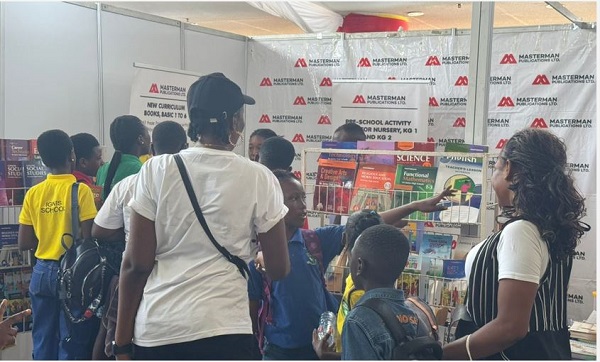
Madam Abla Dzifa Gomashie, the Minister of Tourism, Culture and Creative Arts, has urged the citizenry to develop a strong culture of reading, which she described as a powerful instrument for national transformation.
Madam Gomashie made the call in a speech read on her behalf at the 23rd Ghana International Book Fair that ended in Accra, last Sunday.
It was themed: ‘Transforming Ghana’s Future Through Books’
She noted that for children and young people in particular, developing a strong reading culture was one of the most important investments the country could make for its future.
“Reading is not merely an academic exercise; it is a powerful instrument for national transformation. It broadens our minds, strengthens our capacity to think critically, exposes us to new ideas and enables us to understand the experiences of other people and societies,” the Minister stated.
She cited South Korea’s development journey and the Korean War, where it embarked on an ambitious national development programme through the Saemaul Undong (New Village Movement), which promoted diligence, self-help, cooperation and continuous learning at the community level.
Madam Gomashie said Korea’s remarkable progress was supported by a wider culture that valued education, knowledge acquisition and reading.
The Minister called for deliberate efforts to make reading fashionable and accessible, especially for children and young people, encouraging them to read beyond textbooks and explore Ghanaian literature, African literature, science, history, biographies, technology and creative arts.
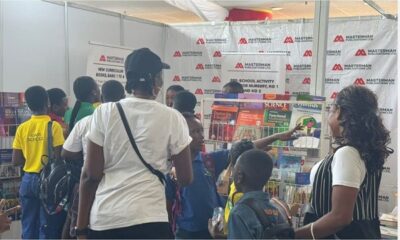
Mr Edward Yaw Udzu, Chairman, Ghana International Book Fair, said the Fair had become an important platform for publishers, authors, booksellers, librarians, educators, printers and readers to exchange ideas and celebrate the written word.
He said the industry was also being reshaped by digital technology, Artificial Intelligence, electronic publishing and audiobooks, urging stakeholders to embrace innovation while preserving the values that made books meaningful.
Mr Udzu mentioned high cost of production, limited financing, piracy, inadequate distribution and declining reading habits as some of the industry’ s challenges, which required coordinated national attention and collective action.
He urged publishers to invest in quality Ghanaian content, writers to tell Ghanaian stories boldly, and parents to make books part of children’s everyday life.
The Chairman encouraged teachers, educationists and librarians to continue to nurture the reading culture and help young people discover the power of knowledge and for booksellers to explore innovative ways to reach new audiences. –GNA
SKIP THE QUEUE, TAP THE NEWS
You can now read the Ghanaian Times and The Spectator newspapers from the comfort of your device via TimesNewsPlus.
Join our WhatsApp Channel: https://whatsapp.com/channel/0029VbBElzjInlqHhl1aTU27