Profile
Jacqueline Antwi-Danso …NSERC Banting Postdoctoral Fellow at the David A. Dunlap Department for Astronomy & Astrophysics

- /home/u249204778/domains/spectator.com.gh/public_html/wp-content/plugins/mvp-social-buttons/mvp-social-buttons.php on line 27
https://spectator.com.gh/wp-content/uploads/2024/11/Jacqueline-Antwi-Danso.jpg&description=Jacqueline Antwi-Danso …NSERC Banting Postdoctoral Fellow at the David A. Dunlap Department for Astronomy & Astrophysics', 'pinterestShare', 'width=750,height=350'); return false;" title="Pin This Post">
- Share
- Tweet /home/u249204778/domains/spectator.com.gh/public_html/wp-content/plugins/mvp-social-buttons/mvp-social-buttons.php on line 72
https://spectator.com.gh/wp-content/uploads/2024/11/Jacqueline-Antwi-Danso.jpg&description=Jacqueline Antwi-Danso …NSERC Banting Postdoctoral Fellow at the David A. Dunlap Department for Astronomy & Astrophysics', 'pinterestShare', 'width=750,height=350'); return false;" title="Pin This Post">

In the 1990s, astronomers discovered two distant, massive galaxies that had completely stopped, or quenched their star formation. The discovery marked a complete shift in everything astronomers thought they knew about how galaxies formed.
Massive galaxies like the Milky Way took several billion years to form. But those newly discovered galaxies did so in just a fraction of that time.
“The discovery meant that these galaxies were older than the age of the universe, which is physically impossible,” says Jacqueline Antwi-Danso, the NSERC Banting Postdoctoral Fellow at the David A. Dunlap Department for Astronomy & Astrophysics.

“When we look at the formation histories of these distant quenched galaxies, the observations suggest that they formed too quickly and too early compared to what we see in cosmological simulations.”
Antwi-Danso is tackling one of astronomy’s biggest challenges in her search to find the earliest distant quenched galaxies in the universe. She is particularly interested in how these galaxies formed and when they stopped forming stars.
Astronomers have discovered several more distant, quenched galaxies at increasingly earlier periods in the universe’s history. These galaxies are more massive than the Milky Way and yet formed within a billion years of the Big Bang (which happened nearly 14 billion years ago). In other words, they formed their stars extremely rapidly, unlike any galaxy observed in the present-day.
So, what does this all mean for astronomers? The extreme star formation processes implied by these observations of distant quenched galaxies are uncomfortably close to the limits permitted by galaxy formation physics. Therefore, trying to understand these objects in more detail is a high priority research area for astronomers.
Massive galaxies like the Milky Way have up to a trillion stars and are characterised by luminous, spiral-like arms of active star formation. Meanwhile, distant, quenched galaxies are composed of old stars and look like relics: small orange-red blobs. This is because their light has been “stretched out” to infrared wavelengths due to the expansion of the universe, which also makes them fainter and harder to spot.
At U of T, Antwi-Danso is building on significant findings from a study she participated in as a PhD student at Texas A&M University. Using the 8-metre telescope at the Gemini South Observatory based in Chile, the FENIKS collaboration surveyed large areas of the sky to increase the chances of finding these rare massive galaxies. They designed and installed two new imaging filters on the telescope to push the boundary of what was possible with ground-based infrared telescopes. The survey led to two critical discoveries.
The first was the identification of two new distant quenched galaxies. The discovery confirmed existing knowledge about the formation histories of distant galaxies, “namely, that these galaxies form too early and too quickly based on what theory predicts,” Antwi-Danso explains.
The study also highlighted that astronomers can reliably use ground-based telescopes to observe distant quenched galaxies as far back as 12.5 billion years into history of the universe. To detect them at earlier times than this, space-based data is required.
Additionally, astronomers are rethinking long-standing models of galaxy formation as they observe distant quenched galaxies with supermassive black holes at their centers emitting energetic radiation.
This is important, Antwi-Danso says, because the differing models for light emission from stars and supermassive black holes can affect estimates of the physical properties of these distant galaxies.
As more questions arise, there is an increasing need to ensure the accuracy of the physical properties of distant quenched galaxies derived from modeling their observations. Fortunately, there have been significant technological advancements to address this need.
Harnessing the power of space-based technology
The next stages of Antwi-Danso’s research involve further exploration of those two distant galaxies she discovered from Chile. To do so, she’s leveraging the power of the James Webb Space Telescope (JWST).
Distant galaxies are hard to detect because their emitted light is shifted to infrared wavelengths, where the earth’s atmosphere blocks most of the light. The sky in the infrared is about 10,000 times brighter than the typical distant massive galaxy. This makes it extremely difficult to detect the most distant quenched galaxies using ground-based telescopes.
The JWST – which launched in December 2021 – is about 100 times more sensitive than the largest ground-based infrared telescopes and can observe galaxies in a fraction of the time of its predecessors.
In fact, it has doubled the number of spectroscopic observations of the most distant, quenched galaxies within only two years of operation. Before its launch, astronomers had spectra of only 35 of these galaxies observed within the first two billion years of the universe’s history.
To further observe those two galaxies, Antwi-Danso will use data from the JWST to examine their spectra – the light emitted by these galaxies over a range of wavelengths – which can reveal information like chemical composition. Insights will help provide a more accurate understanding of their formation histories to compare with updated cosmology simulations, and, hopefully, offer new answers about possible tensions between theory and observations.
Additionally, Antwi-Danso is part of the Canadian NIRISS Unbiased Cluster Survey (CANUCS), a multi-institutional collaboration that uses gravitational lensing — a phenomenon where a massive object acts as a cosmic magnifying glass — to study the building blocks of the earliest galaxies.
Within that collaboration, Antwi-Danso is also a researcher on the Technicolor Survey, which employs multiple filters on the JWST’s Near-Infrared Camera to observe quenched galaxies at wavelengths that are inaccessible from the ground.
“We want to find galaxies that contain the first generations of stars, and then model their observations with galaxy formation models to infer their physical properties and star formation histories,” Antwi-Danso says.
With the technological advantages provided by the JWST to push the boundaries of distant galaxy observations, Antwi-Danso’s research will provide valuable insight into understanding how early galaxies came to be.
“We’re really excited to see where the results lead and to compare those observations with current theoretical predictions for these distant massive galaxies.”









Italian premium security door manufacturer Dierre S.p.A. has named award-winning Ghanaian Afrobeats and Highlife artiste King Promise (Gregory Bortey Newman) as the face of its new Ghana and West Africa marketing campaign.
The partnership, managed by Regiments Management Company Limited, forms part of Dierre’s efforts to strengthen its presence in the West African market.
The two-week campaign, themed “Secure What Matters,” will run across digital, outdoor and influencer platforms, with King Promise featuring in a campaign film showcasing Dierre’s Prestige and Synergy security door ranges.



“Home is everything. It is where you protect the people and things that matter most. Dierre builds doors that reflect exactly that security, quality and style without compromise. I am proud to represent a brand that stands for those values,” King Promise said.
Founded in Italy, Dierre is a global manufacturer of armoured security doors, interior doors and fire-protection systems. Its products carry international anti-burglary certifications across Classes 3, 4 and 5, with the company producing hundreds of thousands of doors, locks and safes annually.
King Promise is one of Ghana’s leading Afrobeats and Highlife artistes, known for his distinctive sound, international collaborations and growing global audience.
The partnership combines Dierre’s security and design expertise with King Promise’s influence in contemporary African music and culture, as the brand expands its consumer engagement in Ghana and across West Africa.
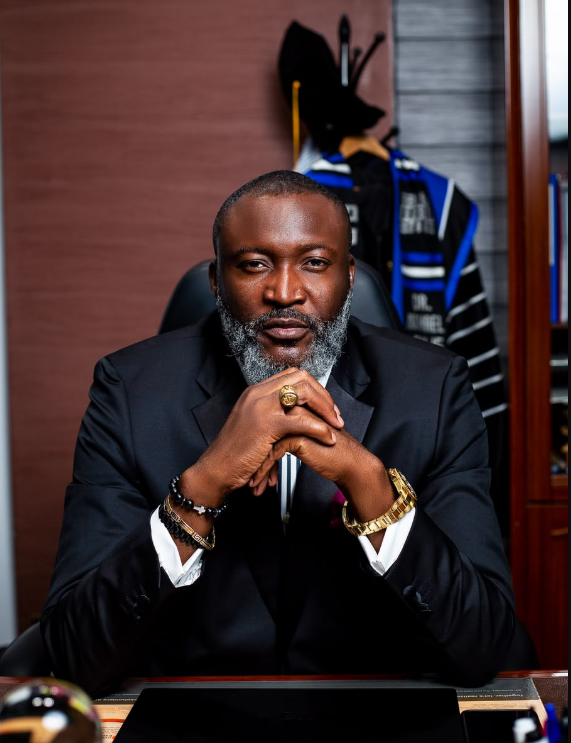
From humble beginnings to building an enterprise with global ambitions, Michael L. Bartlett-Vanderpuye’s journey is a story of discipline, independence, resilience and the belief that businesses should be built to outlive their founders.
Long before he became the Group Chairman of M&C Group, Michael L. Bartlett-Vanderpuye was building from modest beginnings.
His entrepreneurial journey did not start in a sophisticated corporate office or with a large team behind him.
At one stage, he was working from his room with limited resources, focused on turning an idea into a viable business.
That beginning became an important part of his philosophy: build the business first, then let the infrastructure grow with it.

Michael’s early experiences shaped his determination to become an entrepreneur. After university and periods of professional employment, including banking, accounting, marketing, packaging and logistics, he developed a deeper understanding of how businesses operate and how different industries connect.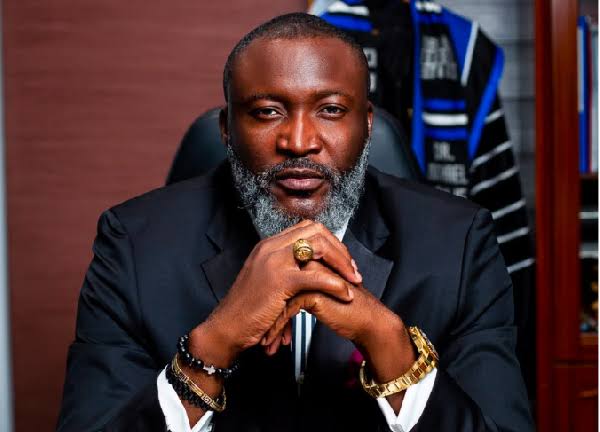
His exposure to mining advisory work, property and other commercial opportunities broadened his perspective and helped him identify opportunities beyond a single sector.
But the journey was far from easy.
He recalls the uncertainty of sending proposal after proposal without knowing which one would eventually open a door.
Even after establishing an office in East Legon, some people assumed he was working for someone else because they could not imagine that the business belonged to him.
The confidence and corporate presence associated with success today were built through years of uncertainty, rejection, experimentation and persistence.
His evolution from working out of a room to leading M&C Group reflects a broader philosophy that has guided his business life: do not build an image before you build the substance.
For Michael, entrepreneurship is not simply about owning a company. It is about learning how to turn knowledge, relationships, opportunities and resources into sustainable value.
He believes professionals in every field can develop an entrepreneurial mindset by creating assets, building networks, investing in opportunities and developing additional sources of value alongside their careers.
That philosophy has influenced the way he approaches business expansion. Rather than viewing companies as isolated entities, Michael sees opportunities to create connections between industries, people and services.
Strategic partnerships, in his view, can create greater value than treating every other business as a competitor.
His approach has also been shaped by research and international exposure. He argues that entrepreneurs must understand the markets they enter rather than simply copy businesses they see succeeding elsewhere.
Behind every successful enterprise, he believes, are structures, regulations, relationships, research and decisions that may not be immediately visible from the outside.
As his business interests have grown, so has his ambition. M&C Group represents a significant chapter in that evolution, reflecting his drive to build an enterprise that extends beyond a single venture.
His vision is rooted not merely in personal wealth, but in creating businesses capable of generating employment, developing people, building partnerships and contributing to the wider economy.
Michael is particularly concerned about the role of the private sector in addressing unemployment and creating sustainable opportunities. For him, a successful business should ultimately do more than enrich its owner. It should employ people, develop skills, support suppliers and create opportunities that extend beyond the founder.
That long-term perspective is central to his understanding of success.
He is cautious about equating visibility with achievement. In an age where social media can make a business appear larger than it is, Michael believes the real measure of an enterprise lies in its systems, customers, assets, operations and results. The brand should be supported by substance.
His personal journey has therefore become a lesson in patience and discipline. The man who once had to convince people that the business was actually his now speaks about building systems, protecting capital, understanding markets and thinking beyond the immediate reward.
And his ambitions do not stop with the present generation.
Michael describes legacy as something that should extend beyond his children to future generations. His objective is to build something sustainable-something that can continue creating value after he is no longer at the centre of it.
From a modest room and limited resources to the boardroom and the development of a growing business group, Michael L. Bartlett-Vanderpuye’s story is ultimately about building before displaying, learning before expanding and creating something designed to last.
His journey is a reminder that global ambition does not necessarily begin with global resources. Sometimes, it begins with little more than an idea, discipline, persistence and the willingness to start where you are. – MyStoryMagazine

 Entertainment1 week ago
Rhythms On Da Runway returns November 28 with 16th edition themed ‘Unbound’
- Entertainment1 week ago
Ohemaa Mercy’s Tehillah Experience outfit was priestly regalia, not costume – Management clarifies
 News1 week ago
Janet Asana Nabla criticises Mahama over China curriculum controversy involving Haruna Iddrisu