Features
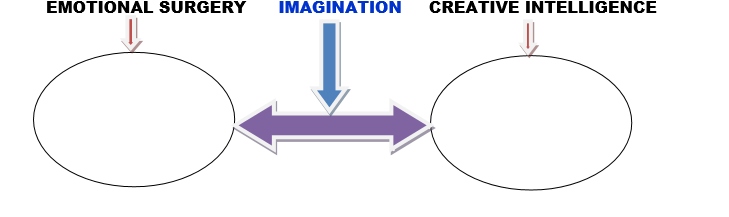
Emotional Surgery

- /home/u249204778/domains/spectator.com.gh/public_html/wp-content/plugins/mvp-social-buttons/mvp-social-buttons.php on line 27
https://spectator.com.gh/wp-content/uploads/2023/11/emotional-surgery-picture.png&description=Emotional Surgery', 'pinterestShare', 'width=750,height=350'); return false;" title="Pin This Post">
- Share
- Tweet /home/u249204778/domains/spectator.com.gh/public_html/wp-content/plugins/mvp-social-buttons/mvp-social-buttons.php on line 72
https://spectator.com.gh/wp-content/uploads/2023/11/emotional-surgery-picture.png&description=Emotional Surgery', 'pinterestShare', 'width=750,height=350'); return false;" title="Pin This Post">
What do you know about your brain and its inner activities? Everything that we execute or command or establish is done by the inner building blocks of the brain (Neurons). These are special brain cells that communicate with each other through electrical impulse and bio-chemical reactions (Neuro transmitters). Emotional Surgery is the artistic and scientific way of using colour coding frequencies and wavelength to send special colour signals through optical nerve path ways to remove that which is not good from the mind giving it a breather to generate novel ideas and rest.
The colour codes used in Emotional Surgery stimulate the brain cells to tune the body’s rhythm to ground zero or its base equilibrium. The colour codes produce enough power to communicate special meanings to the Neurons. Through this, highly complex unique platforms are created and novel ideas are developed. Emotional Surgery acts as an interface of Creative Intelligence.
Emotional Surgery acts as stealth operating system that intercepts unlawful coordination of Neural activities. It is to build super type “A” brains. Emotional Surgery has been created to cure emotional disorders including post-traumatic stress disorders (PTSD).
CREATIVE INTELLIGENCE
Creative Intelligence is the ability to wire, rewire and rewind Neural connectivity to like term partners and fire them together to build ideas of value using internal and external body power vibrations. This is to call into existence unseen systems to solve past, present and future challenges successfully. Between Emotional Surgery and Creative Intelligence is the Complex Neuro Kinetic Network Engineering (IMAGINATION). Creative Intelligence-Bringing the imaginative value into reality for a purpose.
By Robert Ekow Grimmond-Thompson

Features
Environmental stewardship is an act of worship: The Islamic response to climate change, environmental degradation (Part 5)

Waste management and public cleanliness
Closely connected to water conservation is the Islamic emphasis on cleanliness. The Prophet Muhammad (peace be upon him) taught that “Purity is half of faith” (Sahih Muslim, Hadith 223). Although this Hadith primarily refers to personal and spiritual cleanliness, its broader implications extend to the cleanliness of homes, neighbourhoods, markets, roads, and public spaces. A clean environment reflects both personal discipline and collective responsibility.
Unfortunately, indiscriminate disposal of refuse remains a significant challenge in many communities. Plastic waste clogs drainage systems, contributes to flooding during the rainy season, pollutes rivers and beaches, and threatens marine ecosystems. Open burning of waste further degrades air quality and poses serious health risks, particularly for children and the elderly (UNEP, 2024).
Islam calls believers to eliminate harm wherever it exists. The Prophet Muhammad (peace be upon him) said, “Removing harmful things from the road is an act of charity” (Sahih al-Bukhari, Hadith 2989; Sahih Muslim, Hadith 1009). This teaching encourages Muslims to view environmental cleanliness as an act of service to society. Proper waste disposal, recycling, community clean-up campaigns, and responsible sanitation practices are therefore practical expressions of Islamic charity and civic responsibility. Mosques can play an exemplary role by maintaining clean premises, minimising plastic waste during religious programmes, promoting reusable materials where practical, and educating congregants on environmental sanitation. Such initiatives demonstrate that environmental ethics are inseparable from Islamic values.
Sustainable development and the ethics of moderation
The modern concept of sustainable development seeks to meet present needs without compromising the ability of future generations to meet their own needs (World Commission on Environment and Development, 1987). Although this terminology is contemporary, its underlying principles have long been embedded in Islamic teachings.
The Qur’an consistently promotes moderation and warns against excess. Allah commands, “Eat and drink, but be not excessive. Indeed, He likes not those who commit excess” (Qur’an 7:31, Sahih International). Extravagance, wastefulness, and irresponsible consumption contribute significantly to environmental degradation by accelerating resource depletion, increasing pollution, and generating unnecessary waste. Islam, therefore, encourages a lifestyle characterised
by moderation (wasatiyyah), gratitude, and responsible consumption.
Similarly, the Qur’an describes the universe as having been created in perfect balance and instructs humanity not to disturb that balance (Qur’an 55:7–9). Sustainable development, viewed through an Islamic lens, is not solely about economic growth; it is about ensuring that economic progress, social wellbeing, and environmental protection advance together in harmony. Development that
enriches one generation while impoverishing the next contradicts the ethical principles of justice and stewardship emphasised throughout the Qur’an.
For Ghana, sustainable development requires integrating environmental protection into national planning, mining, agriculture, infrastructure development, and industrialisation. It also demands greater investment in renewable energy, climate-resilient agriculture, responsible land management, afforestation, and environmental education. These initiatives are consistent not only with international commitments such as the United Nations Sustainable Development Goals (particularly Goals 6, 12, 13, and 15) but also with the Islamic principles of stewardship, justice, moderation, and public welfare.
Ultimately, water conservation, responsible waste management, and sustainable development are not separate environmental agendas; they are practical manifestations of humanity’s role as Khalifah. Every drop of water conserved, every piece of waste properly managed, every tree planted, and every effort to promote sustainable living reflects obedience to Allah and contributes to the preservation of His creation. In this way, ordinary environmental actions become
extraordinary acts of worship, demonstrating that faith is expressed not only through ritual devotion but also through responsible care for the world that Allah has entrusted to humankind.
Aligning Islamic environmental ethics with the sustainable development goals
The environmental values espoused by Islam closely align with the United Nations Sustainable Development Goals (SDGs), demonstrating that Islamic principles continue to provide practical guidance for addressing contemporary global challenges. While the SDGs were adopted in 2015 as an international framework for sustainable development, many of their underlying values have been embedded in Islamic teachings for over 14 centuries.
For example, the Islamic emphasis on protecting water resources directly supports Sustainable Development Goal 6 (Clean Water and Sanitation), which seeks to ensure the availability and sustainable management of water for all. Likewise, the Qur’anic prohibition against wastefulness and extravagance complements SDG 12 (Responsible Consumption and Production) by encouraging moderation, efficient resource use, and environmental responsibility.
Islam’s call to preserve ecological balance and prevent corruption on earth resonates strongly with SDG 13 (Climate Action), which urges coordinated efforts to combat climate change and build resilience against its impacts. Similarly, the obligation to protect forests, wildlife and biodiversity reflects the aspirations of SDG 15 (Life on Land), which promotes the conservation, restoration and sustainable use of terrestrial ecosystems.
This convergence illustrates that environmental stewardship is both a religious obligation and a global development priority. Muslims therefore have an opportunity to contribute meaningfully to national and international sustainability efforts while remaining faithful to the ethical teachings of the Qur’an and the Sunnah. Protecting Allah’s creation simultaneously fulfils the objectives of
Islamic law and advances the broader pursuit of sustainable and inclusive development.
The author is Chief Imam of Katamanso Municipal and Certified Counsellor and Governnace Expert.
SKIP THE QUEUE, TAP THE NEWS
You can now read the Ghanaian Times and The Spectator newspapers from the comfort of your device via TimesNewsPlus.
Join our WhatsApp Channel: https://whatsapp.com/channel/0029VbBElzjInlqHhl1aTU27
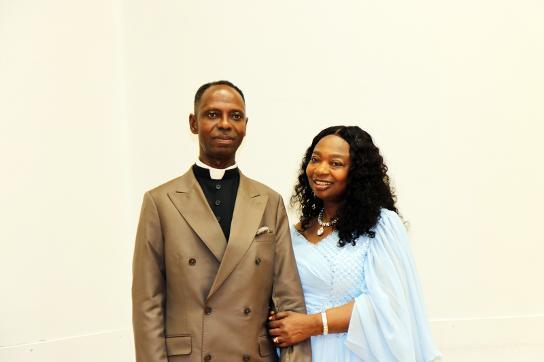
On Sunday, 16 August 2026, the Church of Pentecost (COP) in Finland held a befitting farewell church service for Apostle Francis Owusu Kwaah, the National Head of COP in Finland. It was a well-attended event and, by all measure, a perfect way to offer a well-deserved gratitude to Apostle Owusu Kwaah for his service and contribution to the growth of the church in Finland.
Apostle Owusu Kwaah arrived in Finland on 22 November 2020 and took up the position as the National Head of COP in Finland, taking over from Apostle Edmund Appiah who then moved to the UK.
Many people extolled the remarkable character and excellent leadership qualities of Apostle Francis Owusu Kwaah.
Achievements of Apostle Owusu Kwaah
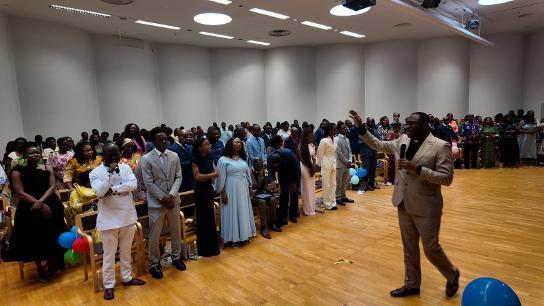
A key farewell message stated that under Apostle Owusu Kwaah’s leadership the church has experienced remarkable growth and transformation.
The message said further that there have been significant increases in church membership—two (2) more Assemblies have been added to the church fold while three pastors have been ordained (2 of them have been sent into missions abroad, with the other one is working in Finland).
Testimonies and Appreciations
Testimonies and messages of appreciation were delivered as appeared in the programme by the National Presbytery, the Men’s Ministry, Women’s Ministry, Children’s Ministry, and other well-wishers.
“Our Apostle is known for being approachable and reliable. His warm personality and humility have endeared him to many”, the farewell message further said, adding that his ministry has extended far beyond the walls of the church. He has faithfully visited hospitals, homes, and prisons to preach the word of God, pray with people, and bring hope to those in need.
For the over 20 years that the church has existed after it was started in September 2000 as a prayer group with a small number of devoted persons in Helsinki (see www.copfinland.fi), the COP has had smooth running and change of leadership to its advantage.
Apostle Owusu Kwaah took over from Apostle Edmund Appiah, who was the first to be appointed as National Head of COP in Finland from 2013 until early 2020. Indeed, under the leadership of Apostle Owusu Kwaah, and Apostle Appiah before him, the Church has grown and spread to other cities and towns in Finland.
Apostle’s response
Surrounded by his beloved wife, Mrs Joyce Owusu Kwaah, and their five children, Apostle Owusu Kwaah delivered a powerful and infectious message in response to the messages of gratitude to him and his family for their good work in the church.
He preached the importance of loving God with one’s whole heart. He entreated the audience to love God and do His work to glorify his name.
The Apostle thanked the COP Finland, the numerous friends and well-wishers who supported him and interacted assuredly with him and his family and thus made their stay very comfortable in Finland.
COP’s future and growth in Finland
The COP Finland has become very formidable in the religious space in Finland.
Indeed, it has played a prominent role in the religious or spiritual existence of its members, as well as in people’s social lives as a key aspect of integration into the Finnish society.
The church continues to grow and, for example, it has been one of the major channels through which the Ghana Union Finland (GUF), an association for Ghanaian immigrants in Finland, has made more contacts with members of the Ghanaian immigrant community.
SKIP THE QUEUE, TAP THE NEWS
You can now read the Ghanaian Times and The Spectator newspapers from the comfort of your device via TimesNewsPlus.
Join our WhatsApp Channel: https://whatsapp.com/channel/0029VbBElzjInlqHhl1aTU27