Features
When children become shepherds: The woes of Fulani children

Education remains a critical component of Ghana’s socio-economic development.
This is because education serves as the spring board for social and economic change. It for this reason that Ghana continue to commit resources into the educational sector in terms of budgetary allocations.
The reason is that the government of Ghana subscribes to the concept that learning is the primary means of upgrading the socio-economic status of its citizenry.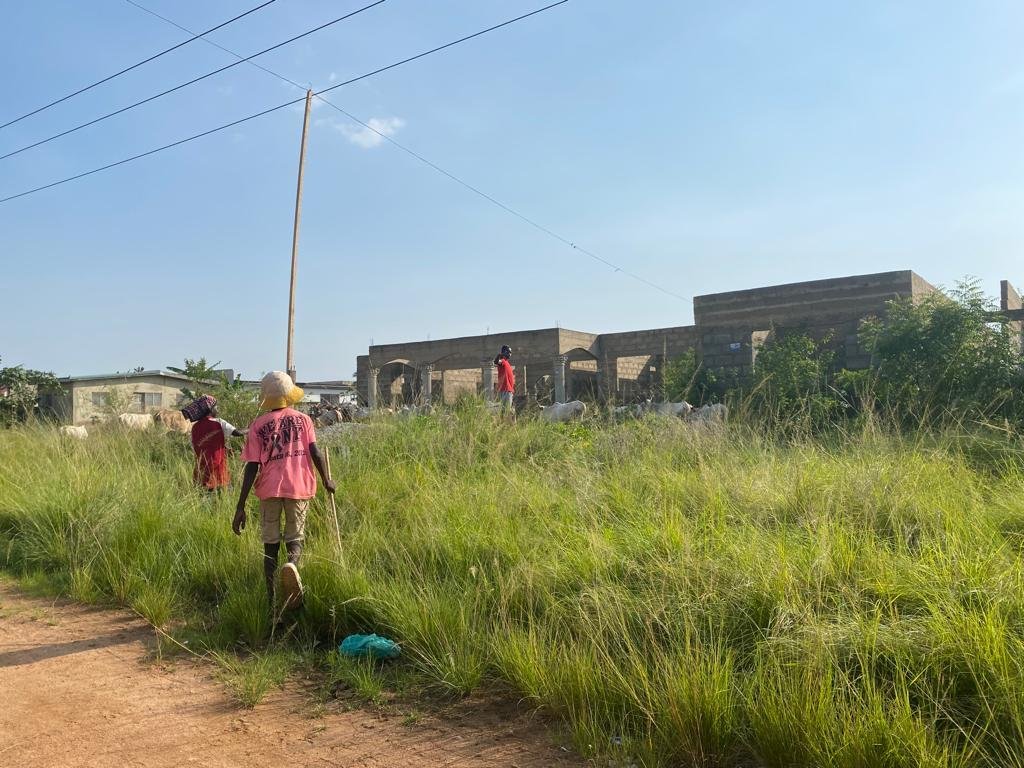
For instance, the 1992 Constitution of Ghana, under Article 25 (1), guarantees the right to education for all.
It is against this backdrop that Ghana has subscribed to the concept of Free Compulsory Universal Basic Education (FCUBE) and Free Senior Secondary School Education to achieve SDG4.
These policies have sought to ensure inclusive and equitable quality education and promote lifelong learning opportunities for all in order to leave no one behind in the area of human development and capacity building.
Literacy and formal education are two key indicators for measuring socio-economic development.
Formal education plays an important role in the socio-economic development of a country, as it equips individuals with the necessary knowledge and skills to fully contribute towards the development of society.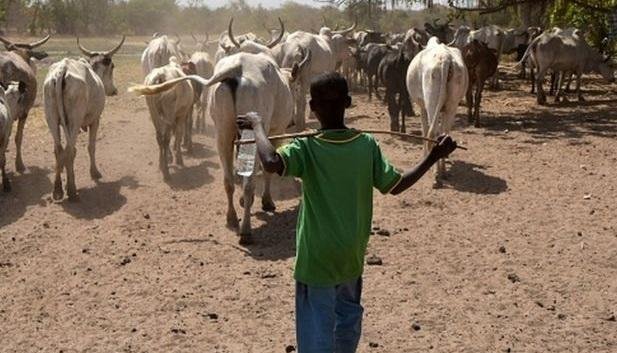
The four pillars of education for the 21st Century as espoused by UNESCO comprise learning to know, learning to do, learning to live and learning to be.
These are tools that contribute to societal transformation and empower individuals to be useful to themselves and society.
Literacy is therefore an essential component of the right to education and for accessing resources, effective communication and interaction among people.
It must be mentioned that literacy interventions contribute to empowerment of people, particularly women and other disadvantaged people or groups to participate in social, economic, civic and cultural activities.
The sad reality
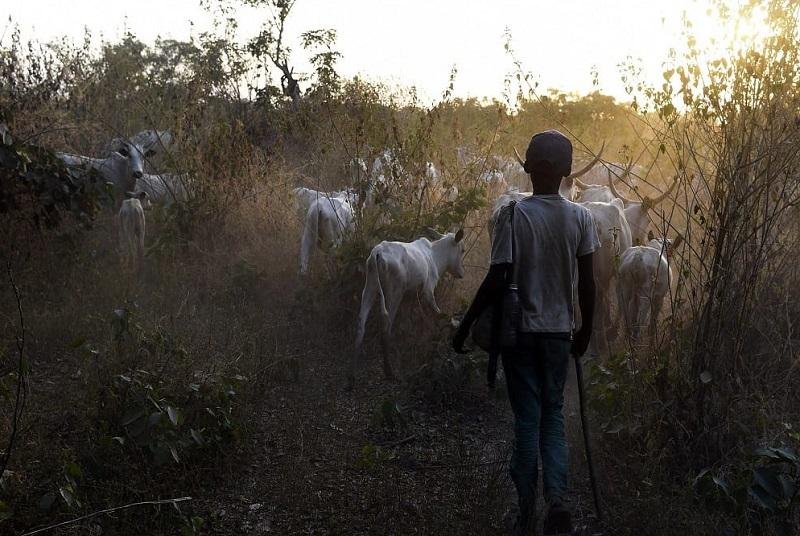
Sadly, despite the importance of education and efforts of government in ensuring inclusive education for all, including free basic and senior high education for all children in Ghana, many Fulani children are still not in school. This population are difficult to educate due to their nomadic lifestyles and other social-cultural factors.
Considering their routine grazing treks, their children’s school attendance are usually truncated by the daily grazing movement as the children are mostly used as labour.
Unlike farmers who use child labour marginally, the Fulani community rely heavily and continuously on children for labour.
Many Fulani men will not send their children to school even if an adult is available to tend the animals because they believe that the child needs to learn the herding skills.
This cultural practice has, therefore, contributed to many Fulani children dropping out of school or not getting the opportunity at all to be in the classroom in many parts of the country.
Sadly, many of these children are unable to tell their stories to get the needed help.
Omaru Sanda’s experience
A Ghanaian journalist, Umaru Sanda, who is also of the Fulani extraction shared his personal experience on this issue in an article, titled: “The untold story of ‘enslaved’ Fulani herdsmen.” This article was published on November 7, 2017 on citinewsroom portal.
In the article, Umaru uncovered many factors that had led to many Fulani children not having access to education.
“Many of these so called Fulani herdsmen are uneducated and as one of the privileged few, I wish to help give us all some education. I describe myself as one of the privileged few because I am the only one in my nuclear family to have gone to school.
I am the 7th and last born of my illiterate parents. My elder siblings-2 men and 4 women have not had formal education because they have been helping my father herd cattle.
My parents arrived at Asutsuare Junction on Thursday, 24th December, 1976, from Mobole near Afienya, both towns in the Greater Accra Region,” he wrote.
I was not completely spared though, because when I return from school in the afternoon, it was my responsibility to take the cattle grazing, and on weekends and holidays, the responsibility of grazing the cattle was my sole responsibility to enable my siblings who have been doing it all week to have some rest.
I may not have totally enjoyed staying in the bush with cattle while my classmates get extra tuition, but I made the grazing worth the while. I would usually write the words “story book” on a piece of paper which my mother ties to her cloth before leaving for the market,” Sanda explained.
Who are the Fulani?
Found in all the 16 regions of Ghana, the Fulani people, renowned for their nomadic heritage and traditional lifestyle, navigate a path that balances tradition with modern education.
For centuries, the Fulani have sustained their pastoral lifestyle, herding cattle across vast landscapes.
However, this nomadic lifestyle often intersects with barriers to education for their children, presenting hurdles such as limited access to schools, language barriers, and economic constraints.
These challenges have historically hindered the education of Fulani children, impacting their academic journey.
The side of the Fulani
I met Habib Musa, 15, not real his name, and his two younger siblings at Nsakina in the Greater Accra region on December 17, 2023, herding a drove of cattle. They are all Fulani by ethnicity.
When I engaged him, he said he was in Junior High School form-2 and that he only helps with the grazing of the cattle after school.
He said when he goes to school, his father personally takes the animal for grazing, adding that his father does not interfere with his education with the grazing of the animals.
Habib said all his siblings also attend school, saying “I do this with my two brothers. We all go to school and so when we close from school, we take the cattle out to graze.”
Similarly, at Gushegu in the Northern Region, through the aid of a friend, I contacted a Fulani family. It was a family of six.
The name of the man in charge of this family was Osman Nuru, not his real name.
He initially declined to speak and it took some minutes of my friend’s persuasion to change his mind.
Osman does not understand English or Dagbani. He however speaks Hausa. His three boys and a girl, all above school going age have not tasted education before.
The reason Osman could not send his children to school was that where he lived and where the nearest school was located was quite a distance.
He also mentioned that his constant changing of location partly contributed to his inability to have his children in school.
He explained that he previously lived in the Shai area in the Greater Accra region before moving to Agogo in the Ashanti Region and now in Northern Ghana.
In many of the places he had been, Osman said, he faced some level of attacks from the locals, a situation he indicated, brought some safety concerns to him.
He said even though he would have wished that his children went to school, he does not also regret his decision for not allowing them to go to school, citing discrimination and stereotyping as a major factor that compelled him to keep his children from mingling with the locals.
According to him, many of his friends who sent their children to school later withdrawn them based on how the children were treated.
“The Fulani children are always abused verbally and physically in school by both the students and teachers because of their looks,” Osman pointed out.
He said he is a caretaker of the cattle he was in-charge and that the owner of the cattle, who lives in Kumasi in the Ashanti region, only visits them once in a while to check up on the animals.
He said many parents, like himself, do not send their children to school in order to ensure their safety, adding that three of his friends have been killed mysteriously in the area and that they constantly live in constant fear for their lives.
Ibrahim Sakari, a father of three, lives with his family near Saboba in the North East region. He said two of his children attend school.
He said although where he lives was far from the community’s school, an NGO came to them and provided the children with bicycle so that they could easily commute to school.
He, however, added that many Fulani children in the area were not in school due to verbal and physical attacks they sometimes received from the locals.
Sakari also indicated that his own children have reported abuses in many occasions to him, but he always encourages them to ignore such things and focus on their education.
Sakari, who manages some “broken Twi” said he lived with his uncles in Tepa in the Ashanti region before moving to the Saboba area.
At Garu in the Upper East region, my colleague, Inusah, led me to meet a family of Fulani outskirt of the town.
Three families lived together in a hamlet. The leader of the family, Haruna Bukari, not his real name, said it was cultural for every family to teach their children what they do.
For him, even though formal education was good, teaching your children how to take care of cattle was equally good.
“Every child here knows how to tend to the animals,” he said with a broad smile, when asked if the children will not be injured by the animals.
Bukari said although the older children attend school, the younger ones cannot do so, and that it was not safe to allow the children to walk long distances all alone to school every day.
“Those who don’t like us can harm our children on their way to school,” he stated, adding that “many people think that Fulanis are criminals.”
He said sometime last year, some Fulanis at Zakole, a community near Yendi in the Northern Region were attacked, leading to the death of more than eight people.
For him, no parents in this community will find it useful to send their children to school, knowing that their children could also be harmed.
Stereotype and discrimination
Mr Yakubu Barry speaks for the Fulani community in Ghana. In an interview, he explained that the reason many Fulani parents do allow their children to go to school was due to the fear of abuse, discrimination and attacks.
He said for many years, the Fulani community in Ghana have been tagged as criminals, armed robbers and rapists by many people and because of that, people often abuse them even when they had not done anything wrong.
For him, Fulani parents believe that their children are much safer in their homes or on the fields herding the cattle than being in the classroom.
Mr Barry also pointed out that due to the migratory nature of the Fulani people, it makes it difficult for them to have their children in school as they moved with their families wherever they go.
He explained further that although sometimes there might be a school within the environment where they lived but due to their seasonal migration, they do not have anyone to entrust their family with so they send their children along while migrating.
“During seasonal migration, children are left with no other option than to follow their parents to their new abode for about three to four months because of their security, therefore leading to most of them dropping out of school.
By the time they come back home, these children have missed a lot of lessons,” Mr Barry explained.
For him, one of the ways that could help the Fulani people to keep their children in school was to have boarding facilities which are closer and affordable in the schools around where the Fulani people live so that they could send their children to such facilities during their seasonal migration.
“If schools can be sent closer to them with boarding facility which they can also afford, I believe it would be of great help to them,” he noted.
Another challenge, he indicated, was the stereotyping and discrimination against Fulani children who are able to access education.
Using his personal experience, Mr Barry said, his own children and nieces went to fetch water with their school mates but his children were asked to wait for their mates to finish fetching the water before they could do so due to their ethnicity.
“In school, they (Fulani) are mostly attributed to bad social vices to the extent that they are referred to as armed robbers among others and are not allowed to mingle with other school mates,” he noted.
For him, because of how the Fulani children are treated in school, it makes it difficult for them to mingle freely with other colleagues, noting that such factors rather discourage the Fulani children from continuing their education.
“For me and my family to access the Ghana Card, I had to stay in Tamale for two months before I was able to get it.
This was so because a colleague I schooled with at the Tertiary level went to the National Identification Authority (NIA) office to inform them that I wasn’t a Ghanaian and for that reason I shouldn’t be given a Ghana Card,” Mr Barry shared his own story of discrimination against the Fulani people.
He, however, said in spite of the obstacles outlined, there are good signs that the Fulani are gradually embracing education and improving their literacy.
He, therefore, called on the media to use their spaces to educate the public to help dispel the various misconceptions people have about the Fulani.
By Benedicta Gyimaah Folley

After two weeks of hectic activity up north, I drove to Tamale Airport, parked the car at the Civil Aviation car park as usual, paid the usual parking fee and boarded the plane for Accra.
Over the last two weeks, I had shuffled between three sites where work was close to completion. One was a seed warehouse, where farmers would come to pick up good-quality maize, sorghum and other planting materials.
The second was a health facility for new mothers, where they were given basic training in good nutrition and small-scale business management. The third was a set of large boreholes serving three farming communities.
The projects usually ran on schedule, but a good deal of time was spent building rapport with the local people to ensure that the facilities would be well patronised and maintained.
It was great to be working in a situation where one’s efforts were well appreciated. But it certainly involved a lot of work and proactivity. I also made sure that I recorded updates online before going to bed each evening.
When the plane took off, my mind shifted to issues in Accra, the big city. The young guys at my office had done some good work.
They had secured five or six houses in a row in a good part of the city and were close to securing the last one. When we secured this property, we would be able to sell all five houses to one big corporate customer, and we were close to concluding discussions with one.
That was going to be my biggest break. My boys knew that I would give them handsome commissions, so they did their best.
They had suggested that a large tract of land was being offered for sale which, they advised, would be ideal for a couple of big warehouses and a number of upscale apartments.
Things were going according to plan, and I was quietly excited.
However, things were not going so well regarding my relationship with Abena. My buddies Ebo and Nana Kwame called to say that they had met Abena and her friend Jennifer enjoying lunch with a guy whom they suspected Jennifer was trying to link with Abena.
They thought that the match seemed to be going in the guy’s favour because, unusually, Abena greeted them casually and appeared happy in his company.
I was quite disappointed to hear that because Abena and I were heading in a good direction. Apart from the affection I had for her, I liked her family. I decided to take it easy and allow things to fall in whatever direction they would.
Normally, I would take a taxi from the airport to her house and pick her up to come to my place.
This time, I went to my sisters’ joint, where they sat with me while I enjoyed a drink and a good meal.
“So, Little Brother,” Sister Beesiwa said, “what is it we are hearing about our wife-to-be?”
“When did you conclude that she was your wife-to-be?”
“Well said, Little Brother,” Sister Baaba said.
“I hear that Jennifer has boasted to someone that she had connected Abena to a wealthy guy who would take care of her. She said that Bernard Forson was only an agricultural extension worker in the north and did not have the resources to take care of a beautiful girl like her. And apart from being wealthy, the guy comes from an influential family.”
“Amen to that,” I said. “I’m beginning to understand. For some time, Abena has been asking me what work I was doing up north, and she didn’t seem satisfied with my answers.
“So, I think Jennifer fed her false stories about me to get her to move to the Ampadu guy.”
“And what have you heard?” I asked.
“I’ve only heard a couple of whispers. Ebo and Nana Kwame called to say that they had seen her in the company of Jennifer and an Ampadu guy from the family that owns the supermarket.”
“Don’t worry, Big Sis. In the two weeks that I’ll be in town, I’ll drop by their house a couple of times. I won’t stress myself. You already know that I have quite a lot of business to take care of.
“And, of course, if I meet a nice lady to go out with, I certainly won’t miss the opportunity.”
“In that case,” Sister Beesiwa said, “you should be glad that Abena is out of your way. She is easily swayed. Anyone who would make a relationship decision based on a friend’s instigation lacks good sense. I hope the guy is as wealthy as they say?”
“Who gets wealthy running a supermarket chain in Ghana?” Sister Baaba said. “Our supermarkets sell mostly imported products. Look at the foreign exchange rate. And remember that Ghanaians buy second-hand shoes and clothes. Supermarkets are not good business here.
“Perhaps they are showing off that they are wealthy, but in reality, they are not doing so well.
“As I’ve already said, I’ll stop by her place a couple of times, but I’ll mind my own business from now on. Hey, let’s talk family.
“How are our parents? And my brothers-in-law? And my nephews and nieces? Why don’t we meet on Sunday? I’m going to drop my bags at my place and go to see Mama and Dad.”
By Ekow de Heer
The Spectator — Your Weekend Companion
SKIP THE QUEUE, TAP THE NEWS
You can now read the Ghanaian Times and The Spectator newspapers from the comfort of your device via TimesNewsPlus.
Join our WhatsApp Channel: https://whatsapp.com/channel/0029VbBElzjInlqHhl1aTU27

The young Guatemalan Catholic priest has gone a long way towards changing the face of Catholic worship in his homeland, using rap preaching, rap music and rap prophecies. Obviously, one might argue that the man is in the wrong profession.
Many of his countrymen believe that the man, whose style resembles that of Tic Tac, should have become Guatemala’s award-winning hip-hop artiste rather than a minister of the Word.
Imagine Gyedu-Blay Ambolley performing his Zimigwado routine inside the pulpit while administering Holy Communion.
When he first introduced rap into Christian worship, many members of his congregation thought the Guatemalan priest had gone “ment” — precisely, gone “mental”. Far from it, the man is perfectly sane and is attracting young people from far and near with his rap delivery and its staccato, power-packed gospel messages.
TEMPTATION
To begin with, some members of his congregation were tempted to believe that God and Jesus did not understand rap and that anyone who rattled away in rap language was merely wasting time. They wondered whether God would understand what he or she was saying, let alone answer their prayers.
But, of course, rap prayers are being answered in Guatemala, and the rap Mass celebrations continue. The Guatemalan revolution in Catholic worship is fast catching on, although conservative hardliners are not particularly enthusiastic about the idea.
They reckon that if the young priest had been born in the last two centuries, Catholic churches today would resemble rock concert halls, with altar servers break-dancing behind the priest while he administers Holy Communion to those seeking forgiveness for their sins.
One might wonder what type of music Jesus would enjoy if He were alive today. Perhaps He would take a liking to traditional Sikaman gospel highlife. That would be the closest to the music sung in heaven.
No doubt Peter would go in for funk, perhaps gospel funk, while Judas would certainly stick to reggae. That is not to suggest that reggae is evil music. But, considering Judas’s profile, he would probably be someone who would tap his feet to a Jah rendition of “One Love”.
His betrayal of Jesus was purely a business transaction, as far as he was concerned. Music had nothing to do with it. Thirty pieces of silver, if converted into cedis today, would amount to a fortune that the disciple’s greed could not resist.
Today, people are doing exactly what Judas did — selling their own children, nephews and nieces for a pittance. I hear someone was even planning to sell his own mother until the law caught up with him. Sell your own mother? Leave her alone and come and sell Kwame Alomele!
The world is falling apart, but if Jesus were alive today, His disciple James would probably have to choose between jazz and burger highlife. John would go in for cool numbers, just like Andrew. Certainly, Bartholomew and Thomas would choose Congo!
In centuries past, renowned composers produced magnificent works in praise of Jesus. Notably, George Frideric Handel composed works such as Unto Us a Child Is Born and Every Valley Shall Be Exalted in praise of the Lord Jesus Christ.
Johann Sebastian Bach’s Jesu, Joy of Man’s Desiring was another classical gospel composition of the period, which helped establish his place among the greatest composers in musical history. Consider Beethoven, arguably one of the most talented composers, and Mozart, renowned for his extraordinary musical genius, and one begins to appreciate the celestial and hallelujah-inspired character of their compositions.
FAITHFULS
Those were the days when fellowship was a solemn occasion characterised by hymn singing, choral music and sober sermons centred on morality.
Pentecostal-charismatic Christianity emerged when some believers felt that what happened on the Day of Pentecost during the time of the Apostles had been largely sidelined.
On that day, those present spoke in different tongues. Many who were gathered there spoke languages such as Ada-Krobo, Ewe and Gomoa-Fante, despite having come from Judea, Jerusalem, Nazareth and other places.
It was a phenomenon unprecedented in Christian history, yet one that, according to the writer, was largely overlooked by established churches, including the Catholic, Presbyterian, Methodist and Evangelical Presbyterian churches.
One of the reasons for the existence of two Evangelical Presbyterian traditions is the difference in beliefs over speaking in tongues and other manifestations of the Holy Spirit. In other words, one is more charismatically inclined, while the other remains traditionally rooted.
HOLY SPIRIT
One tradition maintains conventional hymn singing, while the other embraces ferv