/home/u249204778/domains/spectator.com.gh/public_html/wp-content/themes/zox-news/parts/post-single.php on line 153
">
Warning: Undefined array key 0 in /home/u249204778/domains/spectator.com.gh/public_html/wp-content/themes/zox-news/parts/post-single.php on line 153
Warning: Attempt to read property "cat_name" on null in /home/u249204778/domains/spectator.com.gh/public_html/wp-content/themes/zox-news/parts/post-single.php on line 153
Treat the dead with dignity!

- /home/u249204778/domains/spectator.com.gh/public_html/wp-content/plugins/mvp-social-buttons/mvp-social-buttons.php on line 27
Warning: Trying to access array offset on false in /home/u249204778/domains/spectator.com.gh/public_html/wp-content/plugins/mvp-social-buttons/mvp-social-buttons.php on line 27
&description=Treat the dead with dignity!', 'pinterestShare', 'width=750,height=350'); return false;" title="Pin This Post">
- Share
- Tweet /home/u249204778/domains/spectator.com.gh/public_html/wp-content/plugins/mvp-social-buttons/mvp-social-buttons.php on line 72
Warning: Trying to access array offset on false in /home/u249204778/domains/spectator.com.gh/public_html/wp-content/plugins/mvp-social-buttons/mvp-social-buttons.php on line 72
&description=Treat the dead with dignity!', 'pinterestShare', 'width=750,height=350'); return false;" title="Pin This Post">
The famous President Nelson Mandela of South Africa once said, “Death is something inevitable. When a man has done what he considers to be his duty to his people and his country, he can rest in peace.” These are words from a man who surely knew his purpose in life. Nobody on this earth created by the Almighty God will live forever. At a point in time, you will be called to eternity to give an account of your stewardship on this earth. This, therefore, presupposes that when you are alive, you have to be righteous and committed to the Almighty God, the Creator and Maker of heaven and earth who our lives depend on.
TREATING THE DEAD WITH DIGNITY
The lexicon explains that death is an inevitable universal process that eventually occurs in all living organisms including humans and it generally applies to whole organisms such as cells and tissues. The overriding duty to treat the dead with dignity is by ensuring that the body of the dead person is well preserved in the mortuary, while preparations are made to provide a befitting burial to the deceased in a way that may not lead to serious life threatening conditions to the people.
KEEPING DEAD BODIES IN MORTUARIES FOR YEARS
In the Ghanaian setting, most of the dead bodies, especially traditional leaders and other influential personalities in the society are usually not buried for months and sometimes up to so many years by their families for inexplicable reasons. Sometimes, these dead bodies are kept in the morgue for a very long period with some families contemplating over who should be appointed as chief mourners or organisers to handle the funeral arrangements or due to disputes over when and where to bury the corpses. In most cases, these litigations finally end up in law courts with injunctions preventing families from moving their dead bodies from the mortuaries. Some elders will even go to the extent of ensuring that new buildings are put up to lay their deceased relatives. These unnecessary litigations over funeral and burial arrangements, often put financial burdens on the children of the deceased persons who have to move heaven and earth to raise the needed funds to pay for the mortuary fees. The inconveniences placed on their children are outrageous and unimaginable. The sad situation is that the families who are litigating over the funeral arrangements will never contribute a dime to support the children of the deceased parents.
LAVISH TREATMENT OF DEAD BODIES AND COST INVOLVED
This lavish treatment of some of these dead bodies by some families has given room for the handlers, both at the mortuaries and the cemeteries, to also charge exorbitantly to preserve the bodies well for a very long time in the fridge before their removal. The grave diggers also demand their share before covering the dead bodies properly. If you cannot afford, then your corpse will be put aside to rot. The fact is that our mortuaries and cemeteries have been turned into commercial entities by workers of these places who engage in dubious undercover deals at the expense of the dead and the bereaved families. Passing through the right channels in these places means you don’t want your deceased relatives to get the necessary attention. The sort of corrupt practices at our mortuaries and cemeteries, especially in our major towns and cities are, indeed, unbearable and disgraceful. The state is being denied huge sums of money through these illegal practices at the final resting places of the dead.
WORK OF MORTUARY ATTENDANTS
It is a fact that not everyone can work at our public mortuaries and those working in these places deserve some sort of recognition and better remuneration and other service conditions. However, because the state is not providing them with that kind of support, they have, therefore, capitalised on the situation to do their own
thing at the place and nobody can begrudge them for the back-door treatment. But some families are suffering due to their inability to pay for these illegal charges from these mortuary attendants. The problem can also be blamed on families who decide to keep their dead bodies for a very long time in our mortuaries while they litigate on the funeral arrangements. Their unnecessary actions of delaying their corpses in the morgue, have placed heavy burden on those who cannot afford these illegal charges. They have the means to pay anything through the back-door and don’t care what happens to anybody.
EMERGENCE OF COVID 19 AND HANDLING OF DEAD BODIES
With the emergence of the Corona Virus Disease in the country which had claimed the lives of innocent people and had brought miseries to many families, the thinking was that people would capitalise on the situation to bury their dead bodies in good time so that the funeral could be scheduled for a later date. However, the situation has rather worsened. As the disease rages on, people continue to keep their deceased relatives in the fridge for a very long time and that has not been a good sign at all. Ghanaians in general revere their dead persons. However, the way and manner we spend huge sums of money on funerals in this country is not healthy and uncalled for. The so-called ‘gbonyo’ party which runs from the day of the burial up to Sunday, the day of the thanksgiving and memorial service is something we need to take a second look at. Families and children of deceased persons without the means to organise such hilarious and lavish funerals often go and borrow money and eventually become debtors after the funeral. It will be of interest to know that when the person was sick or ill nobody offered the necessary funds to cater for his or her medical expenses, however, money can be raised to organise such glamorous funeral. It is a question of encouraging people to die so that people can be happy and rejoice?
PERSONAL EXPERIENCE OF A RENOWNED JOURNALIST T
his piece will not end properly without taking some extracts from the thoughts of the renowned veteran BBC journalist of high repute Madam Elizabeth Ohene about the era before the emergence of mortuary in our country. According to her, before mortuaries became popular in this country, we buried our dead bodies within two or three days and then set a date for the final funeral rites. Now the regular period in which dead body is kept in the mortuary before being buried ranges from three to six months. Ten months to a year is not unheard of. When you try to bury someone within a period that is regarded as “too early”, you are certain to invoke outrage, the veteran prolific writer concluded. She recounted her own experience involving the death of her 90-year- old mother who was buried after three weeks of her death and that was regarded in her village as sacrilege and lack of respect to their beloved mother and blamed the Ghanaian funeral madness on refrigeration saying, “Without fridges, we would not be able to keep bodies for ludicrously long period we currently do”. We need to shake ourselves from the brainwash of the white man and do things that will minimise cost and burden of handling the dead so that we can use our money wisely and judiciously. Indeed, there is dignity after death and we have to jealously and modestly protect the sanctity of the human remains.
Contact email/WhatsApp of author: ataani2000@yahoo.com 0277753946/0248933366
By Charles Neequaye

Warning: Undefined array key 0 in /home/u249204778/domains/spectator.com.gh/public_html/wp-content/themes/zox-news/parts/post-single.php on line 493
Warning: Attempt to read property "cat_ID" on null in /home/u249204778/domains/spectator.com.gh/public_html/wp-content/themes/zox-news/parts/post-single.php on line 493

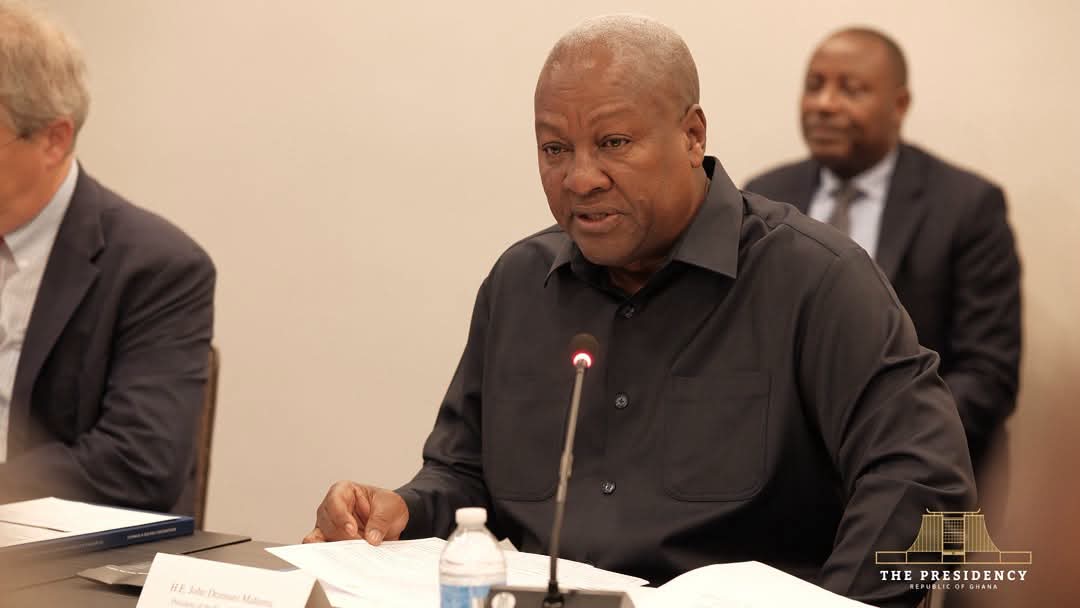
President John Dramani Mahama has called for stronger domestic capacity, effective institutions and sustainable financing as countries in the Global South continue to face growing debt pressures and disruptions in the international development landscape.
Speaking at a Presidential Roundtable organized by the Open Society Foundation in New York on Monday, on the sidelines of the 81st UN General Assembly, President Mahama said the priority for developing nations must be to create jobs, improve public services, build infrastructure and expand opportunities, particularly for young people.
“When I speak about sovereignty in this context, I am speaking about the capacity to act,” President Mahama stated.
He further stressed the need for stronger coordination across government, greater domestic resource mobilisation, sound financial management and institutions capable of delivering measurable results.
“Where an approach proves successful, the next step should be its adoption into public systems, local delivery institutions, and long-term financing models,” he added.
The high-level roundtable brought together presidents and chief executives of major global foundations to discuss sustainable development, financing and strengthening institutions across the Global South.
By Edem Mensah-Tsotorme
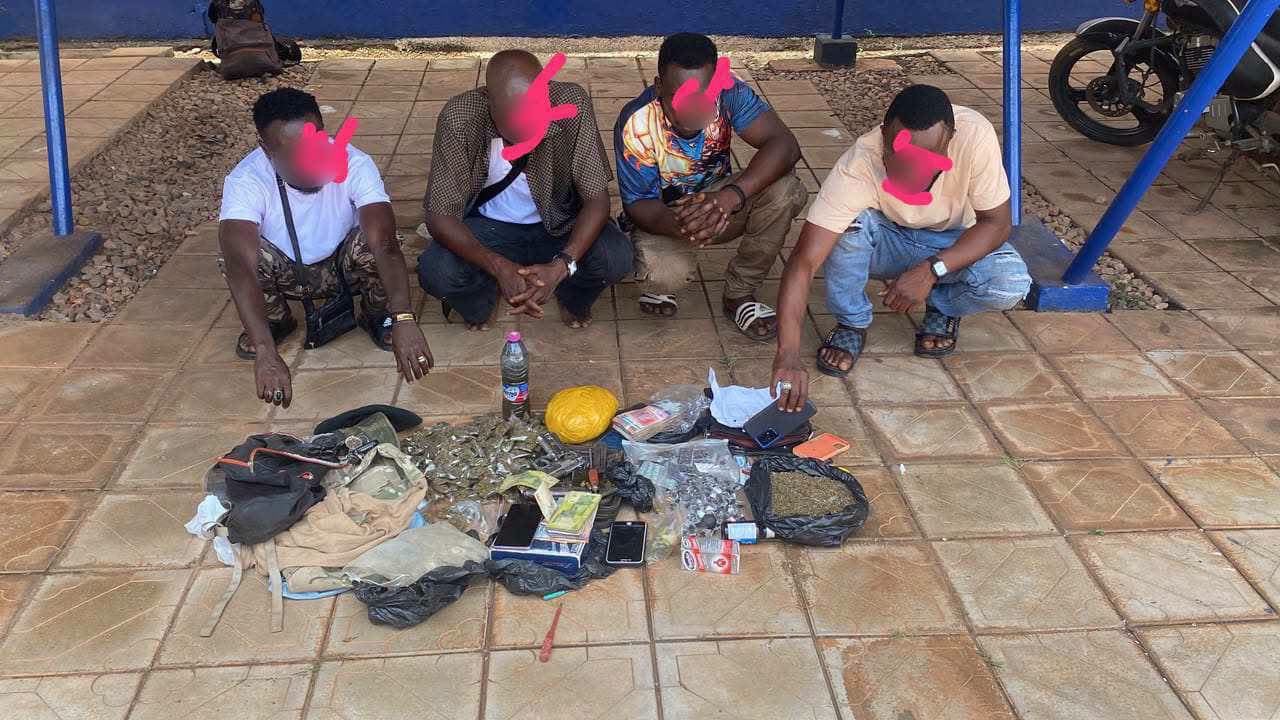
The Northern Regional Police Command has arrested five people during an operation at the Aboabo scraps area in Tamale, where two pistols, ammunition, suspected narcotics and cash were recovered.
The operation was carried out on Monday, September 21, 2026, at about 11:30 a.m. by the Special Operations Team, known as RED MARIA, as part of efforts to clamp down on drug peddling, drug use and other criminal activities in the Tamale Metropolis.
According to the police, the team acted on credible information and proceeded to the Aboabo scraps area, near the forest, where they arrested five suspects.
They were identified as Ibrahim Issahaku, 39; Mohammed John, 28; Mohammed Nawas, 25; Mohammed Osman Awal, 41; and Kwame Boateng, 28.
The police said a search at the residence of Ibrahim Issahaku led to the recovery of two foreign made pistols, two rounds of 9mm ammunition, one parcel of suspected Indian hemp and GH¢1,880 in cash.
The police also found GH¢18,825 concealed inside the motorcycle of Kwame Boateng at the ghetto. The money is suspected to be proceeds from the sale of narcotic drugs.
Other items recovered included 123 wraps of suspected Indian hemp, 12 sachets of 1mg Rohypnol, seven sachets of 250mg Tramadol, 111 wraps of suspected ashes and three motorbikes.
In a statement issued on Tuesday, September 22, 2026, the Northern Regional Police Commander, DCOP Wisdom Lavoe, said the suspects and the exhibits had been handed over to the Regional Drug Law Enforcement Unit for further investigation and the necessary action.
He added that the Regional Command would continue to conduct intelligence led operations to disrupt drug related activities and other criminal activities in the region.
By: Jacob Aggrey

 Entertainment1 week ago
Rhythms On Da Runway returns November 28 with 16th edition themed ‘Unbound’
- News1 week ago
48 Engineer Regiment to be major sub-contractor on Accra-Kumasi Expressway, $2bn ready- Prez Mahama
- Entertainment1 week ago
Ohemaa Mercy’s Tehillah Experience outfit was priestly regalia, not costume – Management clarifies