News
The “No-Bed” Death Trap – Why Market Efficiency is cure for Ghana’s Emergency Crisis


- /home/u249204778/domains/spectator.com.gh/public_html/wp-content/plugins/mvp-social-buttons/mvp-social-buttons.php on line 27
https://spectator.com.gh/wp-content/uploads/2026/02/IMG-20260226-WA0018.jpg&description=The “No-Bed” Death Trap – Why Market Efficiency is cure for Ghana’s Emergency Crisis', 'pinterestShare', 'width=750,height=350'); return false;" title="Pin This Post">
- Share
- Tweet /home/u249204778/domains/spectator.com.gh/public_html/wp-content/plugins/mvp-social-buttons/mvp-social-buttons.php on line 72
https://spectator.com.gh/wp-content/uploads/2026/02/IMG-20260226-WA0018.jpg&description=The “No-Bed” Death Trap – Why Market Efficiency is cure for Ghana’s Emergency Crisis', 'pinterestShare', 'width=750,height=350'); return false;" title="Pin This Post">
The headlines in Ghana this week have been a haunting echo of years past.
A 29-year-old engineer, in the prime of his life, died after being shuttled between three major public hospitals. The reason? A two-word death sentence: “No bed.”
As a nation, we have mourned these “preventable” tragedies for decades.
From the 70-year-old man turned away by seven hospitals in 2018 to the hit-and-run victims of 2026, the script remains the same.
But here is the uncomfortable truth that the Institute for Liberty and Economic Education (ILEE) must speak:
The “No-Bed Syndrome” is not a failure of medicine or furniture; it is a failure of central planning.
The Fallacy of the Government Monopoly
For too long, Ghana’s health strategy has been built on the “Agenda 111” logic—the belief that if the government just builds enough concrete structures, the crisis will vanish.
Yet, history shows that state-run monopolies are inherently rigid. In the public sector, a “no bed” response isn’t just an admission of full capacity; it is a symptom of a system that lacks the incentive to innovate or adapt.
In a free market, a customer turned away is a lost opportunity for growth and a stain on a provider’s reputation.
In our state-monopolized system, a patient turned away is simply “someone else’s problem.”
When there is no competition, there is no urgency. When there is no price signal, there is no efficient way to move resources from where they are idle to where they are needed most.
A Market-Based Path to Survival
If we truly want to stop the dying, we must stop the red tape.
First, we must deregulate. Agencies like HeFRA (Health Facilities Regulatory Agency) must shift from being “gatekeepers” to “facilitators.”
We need to make it as easy for a medical entrepreneur to set up a modular, high-tech emergency stabilization unit as it is to open a pharmacy.
Small, specialized private trauma centers scattered across our cities can act as “pressure valves” for the overwhelmed Korle Bus and Ridges.
Secondly, we must implement Emergency Care Vouchers.
The current National Health Insurance Scheme (NHIS) model is too slow for the “Golden Hour” of emergency care. ILEE proposes a “Money Follows the Patient” model.
If a public hospital cannot provide a bed, the state should automatically issue a digital voucher that pays for the patient’s immediate stabilization at the nearest private facility.
This would create an instant, decentralized network of emergency beds that the state doesn’t have to build, manage, or maintain.
Thirdly, we must embrace Private-Led Technology.
The government’s attempts to track beds via central databases have been plagued by manual entries and slow updates.
Let the private sector build a real-time “Bed-Marketplace” app, an Uber for ambulances.
When private developers compete to provide the most accurate data, ambulance drivers won’t have to guess where to go; the market will tell them.
Conclusion: Choice Saves Lives*
The 24-hour economy we discuss in Parliament should start with our emergency rooms. But we cannot legislate shifts into existence; we must incentivize them.
By granting tax holidays to private investors who build Level-1 emergency units, we can unlock billions in private capital that is currently sitting on the sidelines.
The state has had 69 years to solve the “No-Bed Syndrome” and has failed. It is time to let the Ghanaian medical entrepreneur, the tech innovator, and the private investor step in.
We don’t need more government-built wards; we need the freedom to save ourselves.
Let this be the last time a Ghanaian dies for lack of a bed in a city full of empty rooms.
By: Jacob Aggrey







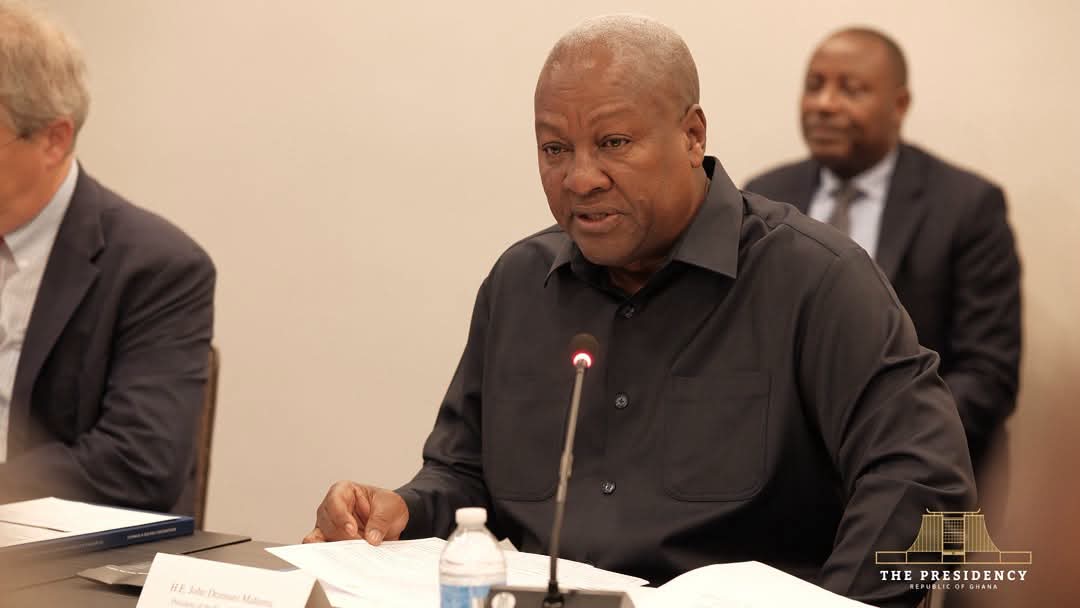
President John Dramani Mahama has called for stronger domestic capacity, effective institutions and sustainable financing as countries in the Global South continue to face growing debt pressures and disruptions in the international development landscape.
Speaking at a Presidential Roundtable organized by the Open Society Foundation in New York on Monday, on the sidelines of the 81st UN General Assembly, President Mahama said the priority for developing nations must be to create jobs, improve public services, build infrastructure and expand opportunities, particularly for young people.
“When I speak about sovereignty in this context, I am speaking about the capacity to act,” President Mahama stated.
He further stressed the need for stronger coordination across government, greater domestic resource mobilisation, sound financial management and institutions capable of delivering measurable results.
“Where an approach proves successful, the next step should be its adoption into public systems, local delivery institutions, and long-term financing models,” he added.
The high-level roundtable brought together presidents and chief executives of major global foundations to discuss sustainable development, financing and strengthening institutions across the Global South.
By Edem Mensah-Tsotorme
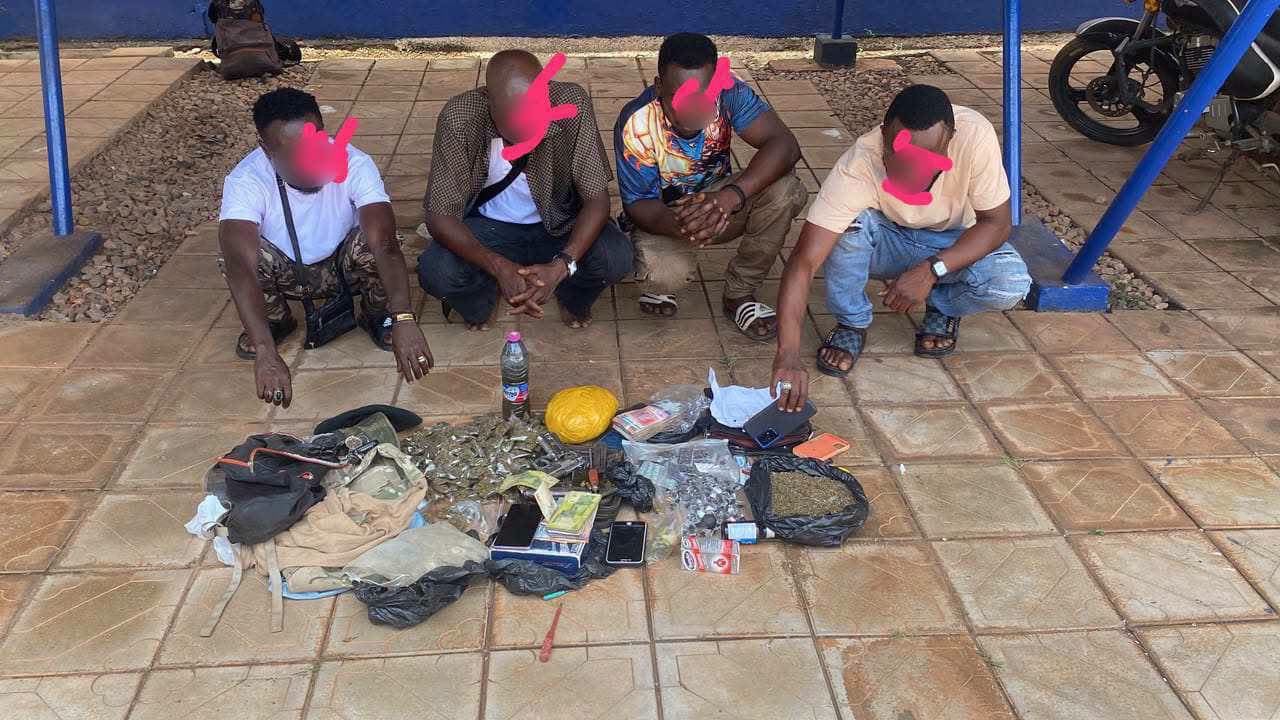
The Northern Regional Police Command has arrested five people during an operation at the Aboabo scraps area in Tamale, where two pistols, ammunition, suspected narcotics and cash were recovered.
The operation was carried out on Monday, September 21, 2026, at about 11:30 a.m. by the Special Operations Team, known as RED MARIA, as part of efforts to clamp down on drug peddling, drug use and other criminal activities in the Tamale Metropolis.
According to the police, the team acted on credible information and proceeded to the Aboabo scraps area, near the forest, where they arrested five suspects.
They were identified as Ibrahim Issahaku, 39; Mohammed John, 28; Mohammed Nawas, 25; Mohammed Osman Awal, 41; and Kwame Boateng, 28.
The police said a search at the residence of Ibrahim Issahaku led to the recovery of two foreign made pistols, two rounds of 9mm ammunition, one parcel of suspected Indian hemp and GH¢1,880 in cash.
The police also found GH¢18,825 concealed inside the motorcycle of Kwame Boateng at the ghetto. The money is suspected to be proceeds from the sale of narcotic drugs.
Other items recovered included 123 wraps of suspected Indian hemp, 12 sachets of 1mg Rohypnol, seven sachets of 250mg Tramadol, 111 wraps of suspected ashes and three motorbikes.
In a statement issued on Tuesday, September 22, 2026, the Northern Regional Police Commander, DCOP Wisdom Lavoe, said the suspects and the exhibits had been handed over to the Regional Drug Law Enforcement Unit for further investigation and the necessary action.
He added that the Regional Command would continue to conduct intelligence led operations to disrupt drug related activities and other criminal activities in the region.
By: Jacob Aggrey

 Entertainment1 week ago
Rhythms On Da Runway returns November 28 with 16th edition themed ‘Unbound’
- News1 week ago
48 Engineer Regiment to be major sub-contractor on Accra-Kumasi Expressway, $2bn ready- Prez Mahama
- Entertainment1 week ago
Ohemaa Mercy’s Tehillah Experience outfit was priestly regalia, not costume – Management clarifies