News
Report bribe-taking court officials – Chief Justice urges public


- /home/u249204778/domains/spectator.com.gh/public_html/wp-content/plugins/mvp-social-buttons/mvp-social-buttons.php on line 27
https://spectator.com.gh/wp-content/uploads/2023/08/484b3780-b927-4aa5-9ef3-53cf9ed277e8.jpeg&description=Report bribe-taking court officials – Chief Justice urges public', 'pinterestShare', 'width=750,height=350'); return false;" title="Pin This Post">
- Share
- Tweet /home/u249204778/domains/spectator.com.gh/public_html/wp-content/plugins/mvp-social-buttons/mvp-social-buttons.php on line 72
https://spectator.com.gh/wp-content/uploads/2023/08/484b3780-b927-4aa5-9ef3-53cf9ed277e8.jpeg&description=Report bribe-taking court officials – Chief Justice urges public', 'pinterestShare', 'width=750,height=350'); return false;" title="Pin This Post">
The Chief Justice, Justice Gertrude Torkornoo, has advised the public not to pay bribes to court officials who request money ostensibly on behalf of judges for favourable decisions.
She said oftentimes such money was actually not requested by judges or given to them, but merely served as a ploy by unscrupulous court staff to enrich themselves.
Justice Torkornoo consequently urged the public to report to the Judicial Service any court staff who would request money under the guise of conveying it to a judge.
Event
She made the appeal at separate Chief Justice Community Sensitisation programmes at Akwatia in the Demkyembour District and Kraboa Coaltar in the Ayensuono District, both in the Eastern Region.
She made the appeal at separate Chief Justice Community Sensitisation programmes at Akwatia in the Demkyembour District and Kraboa Coaltar in the Ayensuono District, both in the Eastern Region.
The programme is an initiative of Justice Torkornoo where she interacts directly with the public in communities to explain the work of the Judiciary and the basic principles of the law.
It is meant to demystify the work of the judiciary and let the public have a better understanding and appreciation of the third arm of government.
Justice Torkornoo said cooperation from the public in reporting cases of bribes, as demanded by court staff, would help the Judicial Service to stop the despicable and unpatriotic activities of court officials who created a market of siphoning money from court users on the pretence of giving it to judges.
“Any court registrar, interpreter, clerk, recorder or any staff who asks for money to be given to a judge is a thief.
The truth is that in the majority of these instances, the judges have not requested any money; the money does not go to them, and they are not even aware.
“Report such staff to the police and the Judicial Service.
We will investigate, and I will sack them if they are culpable and also ensure that they are decisively dealt with.
This is a bad culture destroying the image of the Judiciary, and we are determined to stamp it out,” she said.
Public complaints
The Chief Justice said it was a crime and against the standards of the Judicial Service for court officials to demand money before performing their duties, meant to enhance justice delivery, to the public.
“Bring those people to our attention, and I will not hesitate to sack them, while they also face the full rigours of the law,” she said.
She said the doors of the Judicial Service were open to receive and act on complaints against staff of the service.
“There is a revamped Public Complaints Directorate with public complaints units at all courts.
My office accepts and acts on petitions daily.
Every day, not less than 10 petitions arrive on my desk, and we act on all of them.
“If you are aggrieved by the work of a registrar, clerk, judge or any court staff, let us know, and we will deal with it,” she said.
Measures
The Chief Justice announced that as part of efforts to make the public understand the work of the Judiciary, the Judicial Service would soon come out with courts’ user guides that would explain the jurisdictions of the various courts.
The guides, she explained, would be made available at all court buildings so that the public could access them and understand in simple terms what a particular court could do.
She said the Judicial Service would also post on court premises the fees for the various services it provided to ensure transparency and to prevent staff from demanding more than what was appropriate.
“Let us allow the courts to serve us well.
We must come together and stop all the bottlenecks that frustrate people with the judicial system.
When the Judiciary succeeds, we will all have peace and prosperity,” the Chief Justice added.
As part of the sensitisation programme, participants are allowed to ask the Chief Justice questions relating to the work of the Judiciary, with the Chief Justice answering and explaining the initiatives being implemented by the Judicial Service to improve access to justice and openness and fairness in justice delivery.
On the theme: “Improving Justice Delivery through Community Engagement”, the overall objective of the sensitisation programme is to educate the public and strengthen trust and confidence in the Judiciary.
The Chief Justice normally engages in sensitisation programmes when she visits towns and villages to perform official functions such as the inauguration of new court buildings and infrastructure for the Judiciary.
So far, the programme has been organised in six communities, three in the Greater Accra Region, namely Baastonaa, Ada and Kwabenya, with the rest in the Eastern Region — New Abirem, Akwatia and Kraboa Coaltar.
ADR
One of the main issues discussed by the Chief Justice at Akwatia and Kraboa Coaltar was alternative dispute resolution (ADR) and its significance in the peaceful resolution of conflicts and litigations.
Justice Torkornoo urged litigants to take advantage of courts connected to the ADR system to resolve their differences, describing it as a faster and less cumbersome means of settling disputes.
Apart from the speedy process, she said, ADR also ensured that relationships between parties did not totally deteriorate as a result of the dispute.
“ADR is private; it is your own solution, and it helps to preserve relationships which otherwise would become strained during laborious litigation in the normal court setting,” she said.
Source: Citinewsroom.com


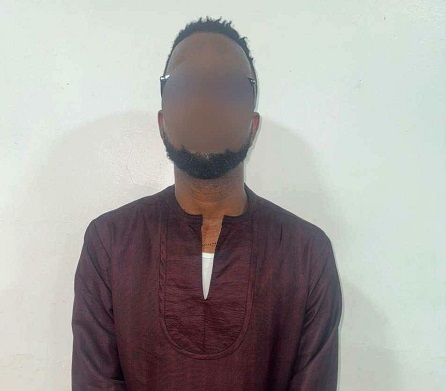
The Ghana Police Service has arrested a man suspected of running a romance scam that targeted women with false marriage promises, blackmail, and the non-consensual sharing of intimate images.
The suspect, Nana Yaw Bonsu Kwarteng, was arraigned alongside Sally Akosua Amoasah before the Accra Circuit Court 1 on charges of conspiracy to commit crime, defrauding by false pretences, and non-consensual sharing of intimate images.
According to preliminary investigations, Kwarteng posed as a pastor conducting online church services on Instagram. He allegedly told women that “God had revealed” they were his future wives.
To gain their trust, police say he went as far as meeting their families and presenting them with promise rings.
Investigators allege the suspect then obtained intimate images of some victims and used them to blackmail them for money.
He is also accused of introducing victims to a fake car tyre business. Under the pretext of shipping and clearing containers of tyres, he allegedly collected thousands of dollars from them before becoming unreachable.
Police further allege that Kwarteng shared the intimate images of some victims with his wife, Sally Akosua Amoasah, who is also accused of threatening the victims.
Seven victims have so far reported the matter to the Police. Investigations indicate the offences date back to 2021.
The court remanded Nana Yaw Bonsu Kwarteng into Police custody to reappear on August 6, 2026. Sally Akosua Amoasah was granted bail.
The Ghana Police Service says it continues to receive complaints from other possible victims.
The Service is urging anyone who may have had similar encounters with the suspect to report to the nearest Police station to assist with ongoing investigations.
By Edem Mensah-Tsotorme
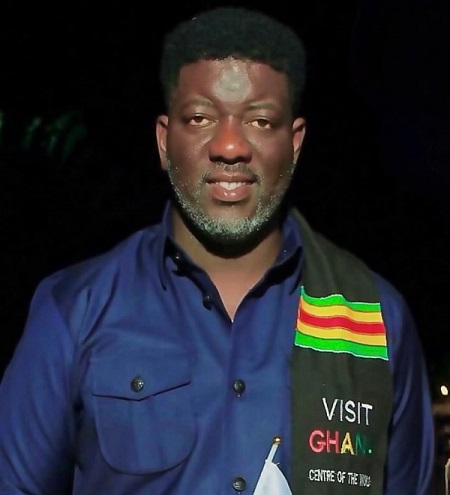
Ghana’s tourism industry is in mourning following the sudden death of Prince Anthony Bart-Appiah, a pioneering figure credited with helping to reconnect the African diaspora to the continent.
Prince Anthony passed away in the early hours of Saturday, July 26, 2026, at his private residence in Spintex, Accra.
He was instrumental in the development and promotion of “The Year of Return,” the flagship tourism campaign that invited members of the African diaspora to return to Ghana in 2019.
The initiative is widely regarded as a turning point that boosted Ghana’s tourism numbers and strengthened cultural ties with Black communities across the world.
Beyond his work with the GTA, Prince Anthony was the Chief Exexutive Officer (CEO) of Bridgezone, an agency dedicated to showcasing Africa to Western audiences and fostering cultural and business connections between the continent and the diaspora.
Colleagues describe him as passionate, strategic, and committed to telling authentic African stories that drive tourism, investment, and pride.
Widely known as Prince Anthony, he served as a Board Member of the Ghana Tourism Authority from 2025 to date.
A former British Army officer and a royal of the Akwamu clan, he brought discipline, vision, and a deep sense of heritage to every role he held
Prince Anthony was also a proud father to two teenagers, whom he deeply cherished.
In a statement, the *Ghana Tourism Authority extended its heartfelt condolences to the grieving family, friends, and all sympathizers.
“The tourism industry has lost a pioneering figure and a vital link to the diasporan community,” the statement read.
The statement further added that “We pray for strength for the family during this difficult time.”
Tributes have since poured in from tourism stakeholders, creatives, and diasporan groups who say Prince Anthony’s legacy will continue to shape how the world sees and experiences Ghana.
By Edem Mensah-Tsotorme