Hot!
Panelists decry low advocacy of reliable and affordable energy

- /home/u249204778/domains/spectator.com.gh/public_html/wp-content/plugins/mvp-social-buttons/mvp-social-buttons.php on line 27
https://spectator.com.gh/wp-content/uploads/2023/11/IMG-20231116-WA00451.jpg&description=Panelists decry low advocacy of reliable and affordable energy ', 'pinterestShare', 'width=750,height=350'); return false;" title="Pin This Post">
- Share
- Tweet /home/u249204778/domains/spectator.com.gh/public_html/wp-content/plugins/mvp-social-buttons/mvp-social-buttons.php on line 72
https://spectator.com.gh/wp-content/uploads/2023/11/IMG-20231116-WA00451.jpg&description=Panelists decry low advocacy of reliable and affordable energy ', 'pinterestShare', 'width=750,height=350'); return false;" title="Pin This Post">
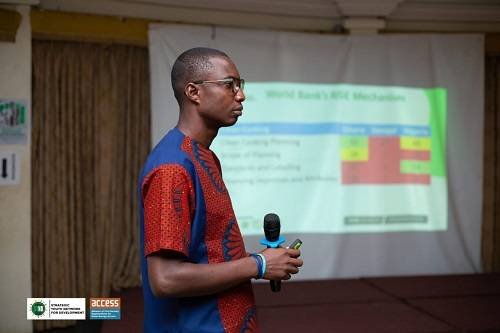
Panelists at a capacity building workshop on the World Bank’s regulatory indicators for sustainable energy(rise) mechanism have decried the low advocacy of reliable and affordable energy.
For them, issues of environmentally sustainable and efficient energy systems for persons living in poverty were key to attaining SDG target 7 which sets out the global goal for universal access to energy services by 2030.
Organised by Alliance of Civil Society Organisation for Clean Energy (ACCESS)Ghana in collaboration with Strategic Youth Network Development (SYND) and Youth-REG, the training brought together CSOs working to deliver universal energy access by advocating at national and regional levels for transparent and inclusive multi-stakeholder participation at all stages of energy processes.
Similarly, to share knowledge and expertise across the membership base of practitioner experience in different regions.
In a presentation, Mr Ezekiel Chineze described the World Bank’s rise mechanism as a set of indicators to help compare national policy and regulatory frameworks for sustainable energy.
He said it assessed countries’ policy and regulatory support for each of the four pillars of sustainable energy-access to electricity, access to clean cooking, energy efficiency and renewable energy and has over 30 indicators covering 140 countries and representing over 98 per cent of the world population.
“Each indicator targets an element of the policy important to mobilising investment such as establishing planning processes and institutions, introducing dedicated incentives or support programmes and ensuring financially sound utilities” he stated.
He indicated that it could help national policy makers benchmark the energy sector framework against regional and global peers by classifying countries into green zone of strong performers in the top third of the 0-100 score range, a yellow zone of middle third performers and a red zone of weaker performers in the bottom third.
The pillars under rise he indicated were electricity access, clean cooking, renewable energy and energy efficiency.
Comparing Ghana to Senegal and Nigeria he said the over rating in 2022 indicated that Ghana was doing well than both countries in terms of the pillars however asked for more room for improvement.
BY BENEDICTA GYIMAAH FOLLEY



The Tema Regional Police Command has arrested a 32-year-old man for allegedly posing as a soldier and extorting money from unsuspecting members of the public at Ashaiman.
The suspect, identified as Bright Atsu Kudiabor, was arrested by the Ashaiman Police on Wednesday, September 16, 2026, at about 7:00 a.m.
According to the Police, he was arrested at an area known as “I Shall Return”, where he was allegedly parading himself as a soldier and demanding money from people.
The Police said Kudiabor, who is an ex-convict, was initially arrested by personnel of the Ghana National Fire Service in Ashaiman with assistance from other members of the public.
A search conducted on him after he was handed over to the Police reportedly led to the recovery of a set of military camouflage uniform.
The suspect is currently in Police custody and assisting with investigations.
The Tema Regional Police Command said he would be processed for court after investigations are completed.
The Police urged the public to remain vigilant and report anyone who falsely presents themselves as a soldier or a member of another security agency to deceive or extort money from the public.
By: Jacob Aggrey
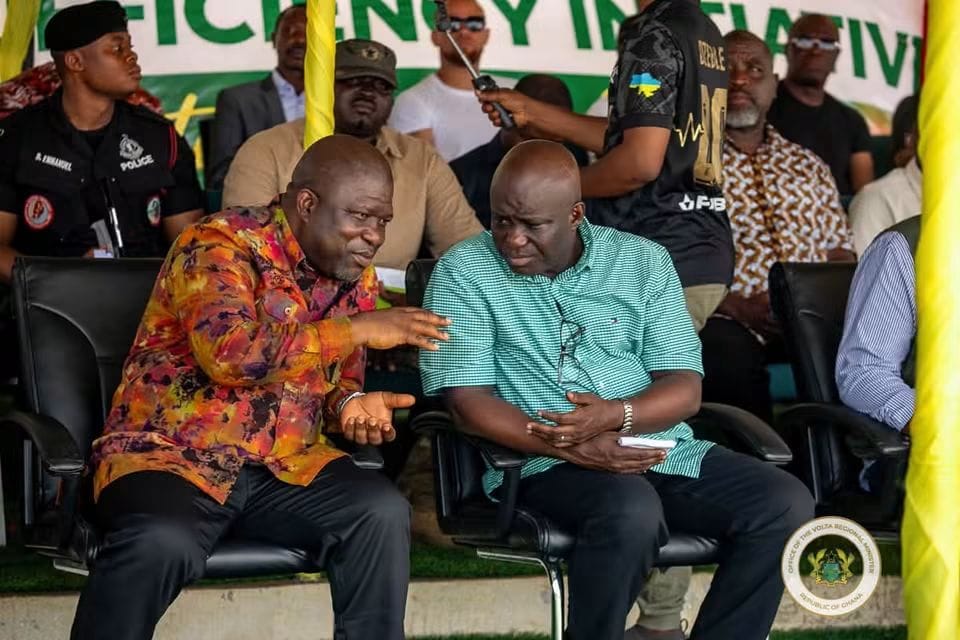
Volta Regional Minister, James Gunu, says the Volta Region holds enormous agricultural potential and efforts must be geared towards connecting farmers to the needed resources to unlock that potential.
He said focus must be on linking farmers to resources, technology, financing and markets to increase production, create jobs and build sustainable livelihoods.
Hon. Gunu made the remarks at the national launch of the Ghana Tomato Self-Sufficiency Initiative (GHATSI) held at Anloga in the Volta Region on Tuesday, September 15.
The initiative, under the theme “Produce at Home. Feed the Nation. Export the Surplus,” seeks to boost local tomato production, processing and marketing while reducing Ghana’s heavy reliance on imported tomatoes.
The launch was attended by the Minister for Food and Agriculture, Eric Opoku, his Deputy, John Setor Dumelo, Feed Ghana Coordinator, Bright Demordzi, Members of Parliament, traditional leaders, MMDCEs, farmers and other stakeholders.
Mr.Gunu expressed appreciation to the Minister for Food and Agriculture for the support announced for the region, including two excavators, 200 cartons of organic fertiliser, and GH¢200,000 for Ms. Kuatudzo Esther Dela, a tomato farmer and processor from Ziope.
He described the initiative as an important step towards making agriculture a stronger driver of food security, job creation and economic growth in the Volta Region.
By Edem Mensah-Tsotorme

 Entertainment1 week ago
Rhythms On Da Runway returns November 28 with 16th edition themed ‘Unbound’
- News1 week ago
48 Engineer Regiment to be major sub-contractor on Accra-Kumasi Expressway, $2bn ready- Prez Mahama
- Entertainment1 week ago
Ohemaa Mercy’s Tehillah Experience outfit was priestly regalia, not costume – Management clarifies