News
How Nana Butler took down exploitative Management Committees


- /home/u249204778/domains/spectator.com.gh/public_html/wp-content/plugins/mvp-social-buttons/mvp-social-buttons.php on line 27
https://spectator.com.gh/wp-content/uploads/2026/10/WhatsApp-Image-2026-10-07-at-16.53.22.jpeg&description=How Nana Butler took down exploitative Management Committees', 'pinterestShare', 'width=750,height=350'); return false;" title="Pin This Post">
- Share
- Tweet /home/u249204778/domains/spectator.com.gh/public_html/wp-content/plugins/mvp-social-buttons/mvp-social-buttons.php on line 72
https://spectator.com.gh/wp-content/uploads/2026/10/WhatsApp-Image-2026-10-07-at-16.53.22.jpeg&description=How Nana Butler took down exploitative Management Committees', 'pinterestShare', 'width=750,height=350'); return false;" title="Pin This Post">
The year was 1993, and the destination was Australia. Down Under, the Black Satellites—Ghana’s exceptionally gifted Under-20 national team—were busy treating the footballing world to a masterclass. They ran, they tackled, they outclassed England, and they fought their way to a historic silver medal. But while the players were leaving their blood and sweat on the pitch in Sydney, an entirely different, much more lucrative sport was being played in the VIP lounges and luxury hotel rooms.
It was the ancient, revered African art of “Management Allowance Harvesting.”
Upon the team’s return, the newly appointed Ghana Football Association (GFA) Chairman, Samuel Nana Brew-Butler, glanced at the tournament’s financial ledgers. What he discovered was a mathematical miracle that would baffle even the finest economists.
The Management Committee, heavily populated by suit-wearing, brief-case-wielding officials under the leadership of Paul Kunke, had pulled off a breathtaking victory. They didn’t win a trophy, but they had comprehensively defeated the actual athletes in the per diem stakes. The officials had taken home significantly more money in allowances than the young boys who had spent 90 minutes sweating under the blistering Australian sun.
Faced with a squad of administrators who clearly possessed a higher “strike rate” at the bank than the strikers did on the field, Nana Butler did the only logical thing. He took a giant administrative sledgehammer and completely dissolved all the GFA Management Committees.
The True “Strikers” of Ghana Football
To understand the sheer genius of the Kunke-led management committee, one must appreciate the sheer physical exertion required to be a football official in the 1990s.
While a player like Augustine Ahinful or Samuel Osei Kuffour only had to worry about running several kilometres, avoiding bone-crushing tackles, and scoring goals against Brazil, the management committee faced far more hazardous perils. There were heavy per diem envelopes to be lifted. There were grueling, five-star buffet lunches to navigate. There was the exhausting psychological stress of checking whether the hotel’s air conditioning was set to the perfect ambient temperature.
Is it any wonder, then, that the administrative “allowance-to-sweat ratio” was heavily skewed toward the boardroom? The players were running on patriotism and the promise of future glory; the officials were running on high-grade, cold, hard foreign currency. Rumour has it that the officials’ wallets were so heavy they required their own tactical formations just to be carried through airport customs.
The Butler Cleans House
When Nana Brew-Butler took over the reins of the GFA, he brought with him a revolutionary, almost bizarre philosophy: that football money should actually have something to do with the people playing football.
When the financial reports from the 1993 World Youth Championship landed on his desk, the numbers told a hilarious story. The management committee had apparently operated under the assumption that they were the primary entertainment act, and the eleven players on the pitch were merely their opening warm-up band.
Recognising that Ghana’s real footballing talent was sitting in the committee rooms engineering per diem payouts rather than scoring goals, Butler struck. In a swift, unceremonious purge, he dissolved the committees, effectively telling the suits that if they wanted to earn that much money from football, they should buy some boots, practice their step-overs, and try making the squad for the next tournament.
It was a dark day for administrative freeloaders across the capital. For a brief moment in Ghanaian history, the ecosystem was thrown out of balance: the players were treated as heroes, and the committee members were forced to look at their bank accounts and reflect on the tragic loss of their premium per diems.
A Timeless Legacy
Decades later, the ghost of Australia ’93 still hovers over Ghanaian football. Nana Butler’s mass dissolution remains a golden, satirical benchmark for how to deal with the eternal affliction of “Committee-itis”—a disease where the number of officials on a plane outnumbers the players, and where the budget for official blazers exceeds the budget for training kits.
The lesson from 1993 remains clear: if you allow the suits to score more heavily than the boots, you will eventually find yourself with an empty trophy cabinet and a very wealthy boardroom. Cheers to Nana Butler, the man who reminded the nation that football is played with a leather ball on grass, not with a calculator in a five-star hotel.
By Emmanuel Amponsah
The writer is a former Editor of The Spectator

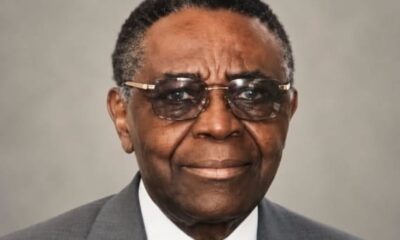






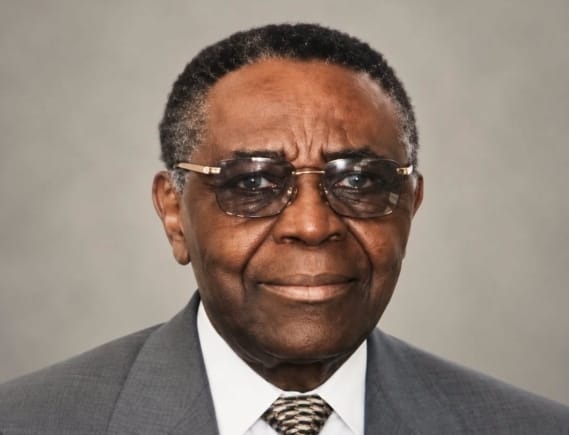
The New Patriotic Party (NPP) has announced with profound sorrow the passing of Ambassador Samuel Arthur Odoi-Sykes, describing him as an eminent statesman, distinguished patriot, and one of the founding pillars of the party.
In a statement issued by the party, Ambassador Odoi-Sykes was eulogized for dedicating several decades of his life to the service of Ghana and the cause of democratic governance.
“His constant dedication to public service, constitutional democracy, and principled political leadership earned him the admiration and respect of colleagues across the political divide,” the statement said.
Ambassador Odoi-Sykes served as Member of Parliament for Ashiedu Keteke, now Odododiodio, during the Third Republic, where he rose to become Minority Leader of Parliament. He was noted for his exemplary parliamentary leadership and advocacy for democratic ideals.
As a founding father of the NPP, he played a pivotal role in laying the institutional and ideological foundations of the party.
His leadership as National Chairman from 1998 to 2001 was instrumental in uniting and strengthening the NPP, culminating in its historic electoral victory in the year 2000 and the first democratic transfer of power between political parties under the Fourth Republic.
Following that landmark achievement, he continued his service to the Republic as Ghana’s High Commissioner to Canada from 2001 to 2006, where he represented the nation with distinction and enhanced Ghana’s diplomatic relations abroad.
The party noted that throughout his lifetime, Ambassador Odoi-Sykes served on numerous national and party committees, offering wise counsel, strategic leadership and invaluable institutional memory.
“His integrity, humility, intellect, and constant commitment to Ghana’s democratic development will remain an enduring source of inspiration for present and future generations,” the NPP said.
“His passing marks the end of an illustrious chapter in Ghana’s political history. The nation has lost a distinguished public servant, while the New Patriotic Party has lost one of its most respected elder statesmen and steadfast architects.”
The party extended its deepest condolences to his wife, children, the entire Odoi-Sykes family, friends, and associates.
“As we mourn his passing, we also celebrate a life exceptionally lived in faithful service to God, country, and the Party. Ambassador Samuel Arthur Odoi-Sykes has indeed paid his dues, and his legacy of principled leadership, patriotism, and selfless service will forever remain etched in the annals of Ghana’s democratic history.
“May his soul rest in perfect peace, and may his memory keep inspiring generations yet unborn,” the statement concluded.
By Edem Mensah-Tsotorme
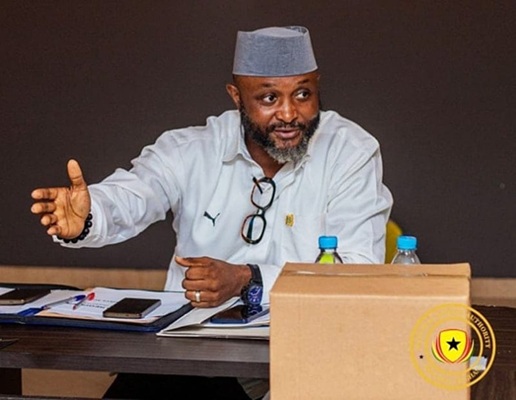
Lawyers for suspended National Sports Authority (NSA) Director-General, Yaw Ampofo Ankrah, say he will not appear before Parliament for now because matters concerning him are currently under investigation by the Criminal Investigations Department (CID) of the Ghana Police Service.
In a statement issued on behalf of Mr Ampofo Ankrah, his legal counsel, Jerry Avenorgbor of Brookman Amissah & Associates, said the sports administrator has cooperated and will continue to cooperate with the police as they work to establish the facts.
The lawyers said Mr Ampofo Ankrah and his representatives would refrain from making detailed public comments on the allegations while the investigation is ongoing.
They urged the media and the public to exercise restraint and avoid presenting allegations, speculation or unverified information as established facts.
The lawyers stressed that the existence of an investigation does not, by itself, amount to a finding of wrongdoing against Mr Ampofo Ankrah or any other person.
On calls for Mr Ampofo Ankrah to appear before Parliament, his lawyers said it would be “imprudent” for him to do so while the CID investigation remains active and he is under suspension.
According to them, appearing before Parliament at this stage could create complications for the investigation and potentially affect the process through which the facts are being established.
Mr Ampofo Ankrah has therefore decided to defer any appearance until the investigation has been concluded and the circumstances surrounding his suspension have been determined by the appropriate authorities.
His lawyers, however, stressed that the decision should not be interpreted as a refusal to submit to lawful processes or to account to Parliament or any other constitutionally mandated institution.
They explained that the position is intended to protect the integrity of the ongoing investigation and prevent any action that could potentially interfere with it.
The lawyers further indicated that if his suspension is lifted and he is restored to his position as Director-General of the NSA at the discretion of the Office of the President, he will respond appropriately to any lawful request to appear before Parliament or another competent institution.
Mr Ampofo Ankrah and his legal representatives are expected to respond to the findings of the investigation and address any issues requiring clarification once the appropriate authorities have completed their work.
They have meanwhile called for patience and respect for the ongoing investigative process.
By: Jacob Aggrey