News
Disa Community receives solar-powered irrigation system

- /home/u249204778/domains/spectator.com.gh/public_html/wp-content/plugins/mvp-social-buttons/mvp-social-buttons.php on line 27
https://spectator.com.gh/wp-content/uploads/2023/05/2b39d535-7d16-46e8-b63a-e796ce744c26.jpeg&description=Disa Community receives solar-powered irrigation system ', 'pinterestShare', 'width=750,height=350'); return false;" title="Pin This Post">
- Share
- Tweet /home/u249204778/domains/spectator.com.gh/public_html/wp-content/plugins/mvp-social-buttons/mvp-social-buttons.php on line 72
https://spectator.com.gh/wp-content/uploads/2023/05/2b39d535-7d16-46e8-b63a-e796ce744c26.jpeg&description=Disa Community receives solar-powered irrigation system ', 'pinterestShare', 'width=750,height=350'); return false;" title="Pin This Post">
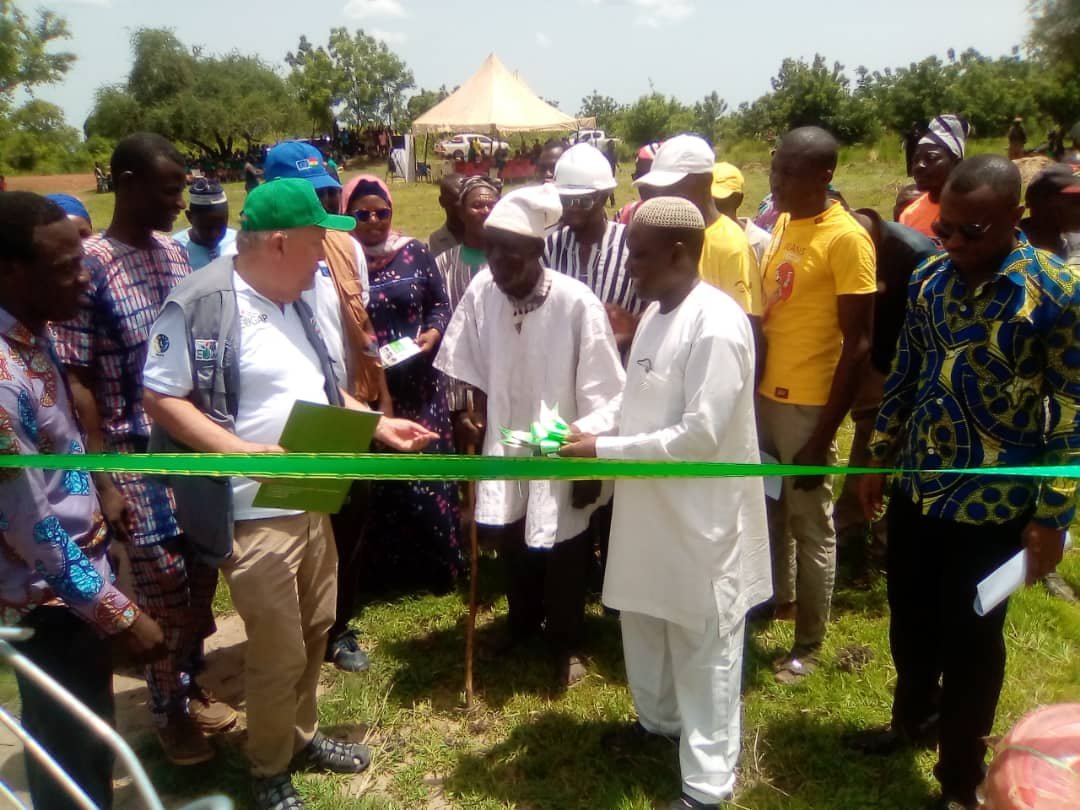
The Market Oriented Agricultural Programme (MOAP NW) under the European Union Ghana Agricultural Programme (EU- GAP) has handed over a solar-powered irrigation system to the Disa community in the North Gonja District of the Savannah Region.
The facility is expected to support the cultivation of vegetables throughout the year to enhance the livelihood of some forty vegetable farmers, comprising three males and 37 females.
Supervised by the Johnny Royals Construction Engineering, the facility which was equipped with taps at vantage points in the gardens would also ensure that many more women joined the cultivation to generate income and also enhance the nutritional value of their meals at home.
Addressing participants at a short ceremony at Disa to hand over the project on Friday, the Team Lead of the Agriculture Finance Consultant of MOAP NW, Dr Andrew Herbard said the development of the solar-automated groundwater micro irrigation scheme was proposed four years ago but construction began in November, last year.
“Rural women in agriculture remain challenged in areas of ownership and access to productive arable land as well as relevant information for their agricultural enterprises; there is therefore the need to channel resources and infrastructure to women engaged in the sector to improve productivity and an important feature of the MOAP-NW programme is its focus on women farmers,” he said.
He explained that the EU/GIZ Co-financed MOAP NW programme was designed to support the improvement of agricultural infrastructure and promote productive investments in North West Ghana, through strong community involvement, capacity building of stakeholders along selected value chains, extension training of service delivery systems for farmers and employment through agribusiness and sustainable utilisation of renewable natural resources.
“We are happy to contribute to the Government of Ghana’s efforts to develop the agricultural sector; in an era of climatic vulnerability, as evidenced by increasingly erratic rainfall patterns which require climate-smart agricultural solutions,”he expressed.
Dr Harberd said the facility would ensure a consistent water supply for all-year-round vegetable production, adding that the project aimed to increase the productivity of women vegetable gardeners by enhancing their livelihoods and generating economic opportunities.
To support climate-smart and sustainable agriculture, he stated that MOAP NW had supported a group of women in the Wa Municipality of the Upper West Region to produce Neem oil for spraying crops which was not harmful to either the crops or human consumers.
The Savannah Regional Director of Agriculture, Alhaji Seidu Sulemana who lauded NW for the intervention, said the irrigation scheme was one of the many benefits the community had enjoyed under the EU-GAP Project.
A beneficiary, Madam Mary Maana who was an okro farmer said even before the project was officially handed over, water from the scheme had kept her farm growing and said she had aleady harvested and sold some okro at the market, earning GH₵ 250.
FROM LYDIA DARLINGTON FORDJOUR, DISA


The Ghana Maritime Authority (GMA) has rejected claims by Dennis Miracles Aboagye that its vessel monitoring system is ineffective and that vessels operating in Ghana’s waters are not being monitored.
The Authority described the claims as false and misleading, insisting that its maritime surveillance system is fully operational.
In a press release dated September 22, 2026, the GMA said it had taken note of comments made by Mr Aboagye on TV3’s Daily Brief and Joy FM’s Newsnite programmes.
According to the Authority, it maintains 24-hour surveillance of vessels operating within Ghana’s maritime domain using various maritime monitoring tools.
It explained that the system is also used to monitor and protect offshore oil and gas facilities, pipelines and submarine cables.
The GMA said it follows standard procedures to track vessels, verify their identities and check their compliance with maritime requirements.
It added that these measures support safety, security and environmental protection within Ghana’s maritime jurisdiction.
The Authority therefore rejected the suggestion that vessels sailing in Ghanaian waters are not being monitored.
The GMA reaffirmed its commitment to continuous surveillance and the protection of Ghana’s maritime interests, while urging the public to disregard what it described as the inaccurate claims and rely on official information from the Authority.
By: Jacob Aggrey
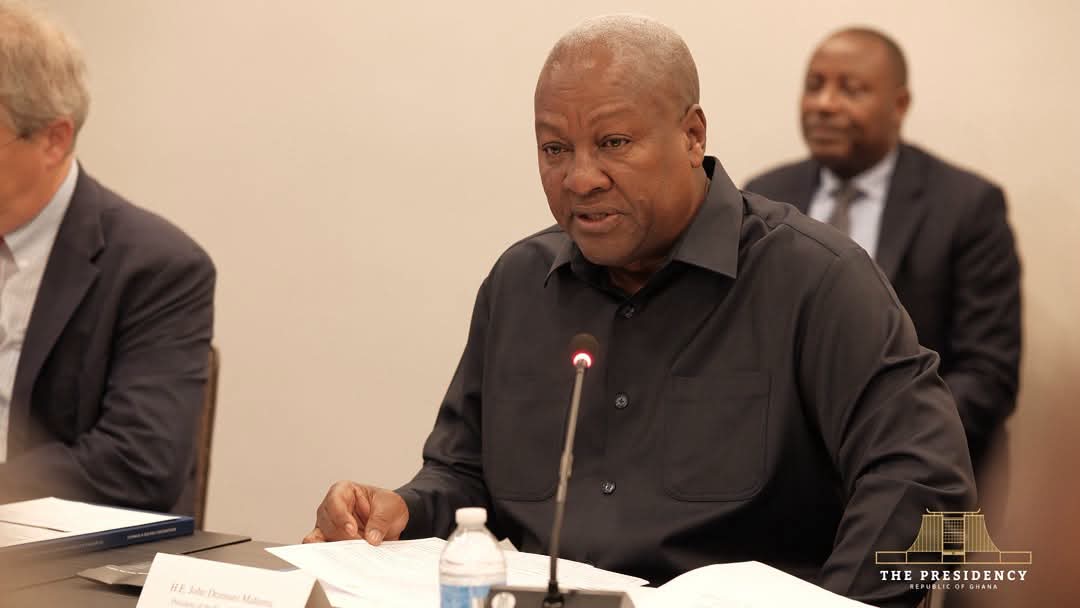
President John Dramani Mahama has called for stronger domestic capacity, effective institutions and sustainable financing as countries in the Global South continue to face growing debt pressures and disruptions in the international development landscape.
Speaking at a Presidential Roundtable organized by the Open Society Foundation in New York on Monday, on the sidelines of the 81st UN General Assembly, President Mahama said the priority for developing nations must be to create jobs, improve public services, build infrastructure and expand opportunities, particularly for young people.
“When I speak about sovereignty in this context, I am speaking about the capacity to act,” President Mahama stated.
He further stressed the need for stronger coordination across government, greater domestic resource mobilisation, sound financial management and institutions capable of delivering measurable results.
“Where an approach proves successful, the next step should be its adoption into public systems, local delivery institutions, and long-term financing models,” he added.
The high-level roundtable brought together presidents and chief executives of major global foundations to discuss sustainable development, financing and strengthening institutions across the Global South.
By Edem Mensah-Tsotorme

 Entertainment1 week ago
Rhythms On Da Runway returns November 28 with 16th edition themed ‘Unbound’
- News1 week ago
48 Engineer Regiment to be major sub-contractor on Accra-Kumasi Expressway, $2bn ready- Prez Mahama
- Entertainment1 week ago
Ohemaa Mercy’s Tehillah Experience outfit was priestly regalia, not costume – Management clarifies