Entertainment
Collaboration, capacity-building at core of Ghana’s coffee sector engagement


- /home/u249204778/domains/spectator.com.gh/public_html/wp-content/plugins/mvp-social-buttons/mvp-social-buttons.php on line 27
https://spectator.com.gh/wp-content/uploads/2024/05/Samuel-Adimado.jpg&description=Collaboration, capacity-building at core of Ghana’s coffee sector engagement', 'pinterestShare', 'width=750,height=350'); return false;" title="Pin This Post">
- Share
- Tweet /home/u249204778/domains/spectator.com.gh/public_html/wp-content/plugins/mvp-social-buttons/mvp-social-buttons.php on line 72
https://spectator.com.gh/wp-content/uploads/2024/05/Samuel-Adimado.jpg&description=Collaboration, capacity-building at core of Ghana’s coffee sector engagement', 'pinterestShare', 'width=750,height=350'); return false;" title="Pin This Post">
Mr Samuel Adimado
The collaborative efforts between The International Trade Center and the Robusta Coffee Agency of Africa and Madagascar (ACRAM) came to fruition as stakeholders from Ghana’s coffee sector gathered recently for a two-day engagement.
The event focused on fostering collaboration, knowledge exchange, and capacity-building among key players in the industry.
With the objective of brainstorming on a pricing scheme that aligns with world market prices while ensuring fair remuneration for farmers based on quality, participants engaged in in-depth discussions and workshops to address the complexities of the coffee value chain.
Additionally, efforts were made to enhance the capacity of private sector member organizations in governance, constitution building and strategies that will drive the growth and development of Ghana’s coffee sector.
The engagement served as a platform for stakeholders to share insights, best practices, and establish partnerships that will contribute to the sustainable growth of the coffee industry in Ghana.
Speaking at the event, Vice President of the Coffee Federation of Ghana, Samuel Adimado, praised the International Trade Center (ITC) for the initiative saying “the pricing determination will be fixed in such a way that it makes the business of coffee more profitable and compensatory enough so that any investor who wants to go into coffee will be able to participate and earn from the coffee industry”.
The ITC is a joint agency of the United Nations and the World Trade Organization for trade-related technical cooperation in developing countries.
Alliances for Action (A4A) is an ITC initiative to establish a network that transforms food systems and advances the Sustainable Development Goals through producer and MSME partnerships that cultivate ethical, climate-smart, sustainable Agri-value chains.
By Spectator Reporter


Organisers of Rhythms On Da Runway have announced November 28, 2026 as the date for the 16th edition of the event, to be held at the Palms Convention Centre.
This year’s edition, themed: ‘UNBOUND: Because You’ve Got Style’, is focused on breaking barriers in fashion and creating space for all.
According to the Chief Executive Officer of Nineteen57 Events, Shirley Emma Tibilla, affectionately called Cookie Tee, the focus of this edition is to give everyone an opportunity to express themselves without barriers.
She told The Spectator that as a leading fashion brand in the country and beyond, they want to open doors for people regardless of their colour, size and abilities among others.
Described by the BBC as “the biggest cultural exposé in Africa,” Rhythms On Da Runway returns this year as a celebration of fashion, music and individual expression without limits.
Organisers say for years fashion has been shaped by narrow ideas of who belongs on the runway, with certain body types, ages and abilities placed at the centre while many others are left out. UNBOUND seeks to open that picture.
This year’s runway will welcome people with different abilities, backgrounds, body types and personal stories. The theme will influence model casting, the collections, the stories told through the clothes and the way guests experience the event.
Beyond the runway, ‘Unbound’ will create room for young people to learn from established designers, gain practical experience and explore careers within fashion and the wider creative industry.
It will also open conversations around adaptive fashion, accessible event design, talent discovery, mentorship and employment.
The 2026 edition will bring together fashion designers and music stars from Ghana and across the African diaspora, with strong collections, live performances and an all-star cast of celebrity models.
The event will also feature the Black Star Awards, which will honour public figures shaping Africa’s future through leadership and contributions to the continent’s Orange Economy.
Organisers say the list of participating designers, performing artists, award recipients and other event details will be announced in the coming weeks.
By Edem Mensah-Tsotorme
SKIP THE QUEUE, TAP THE NEWS
You can now read the Ghanaian Times and The Spectator newspapers from the comfort of your device via TimesNewsPlus.
Join our WhatsApp Channel: https://whatsapp.com/channel/0029VbBElzjInlqHhl1aTU27

Veteran Ghanaian gospel musician Bernice Offei has passed on Saturday August 12, 2026.
She was 63.
The news of her demise flashed through social media on Saturday, prompting an outpouring of grief from musicians, fans and members of the Christian community, who have since paid tribute to her distinguished career.
She gained strong reputation as a singer, songwriter and minister whose music transcended generations.
Some of her popular songs include ‘Kaa She Gbeyei,’ ‘It’s By Grace,’ ‘Nyame Kokroko’ and ‘N’adom Ara Kwa.’
Her contribution to the growth of gospel music in Ghana was recognised in 2009 when she won the Best Female Vocal Performance and Songwriter of the Year awards at the Ghana Music Awards, now known as the Telecel Ghana Music Awards.
Beyond music, Mrs Offei distinguished herself in academia and professional life. She attended Achimota School before earning an MPhil in Crop Science from the University of Ghana and a Master’s Degree in Information Technology from University College London in the United Kingdom.
Mrs Offei was married to Prof. Samuel Kwame Offei, a former Pro-Vice Chancellor of the University of Ghana, and the couple had two children.
Her death comes days after she was reported missing but was later found safe.
Mrs Offei leaves behind a rich music legacy that continues to inspire faith, hope and resilience among generations of listeners. -GNA
SKIP THE QUEUE, TAP THE NEWS
You can now read the Ghanaian Times and The Spectator newspapers from the comfort of your device via TimesNewsPlus.
Join our WhatsApp Channel: https://whatsapp.com/channel/0029VbBElzjInlqHhl1aTU27

 Entertainment1 week ago
Rhythms On Da Runway returns November 28 with 16th edition themed ‘Unbound’
- News1 week ago
48 Engineer Regiment to be major sub-contractor on Accra-Kumasi Expressway, $2bn ready- Prez Mahama
- Entertainment1 week ago
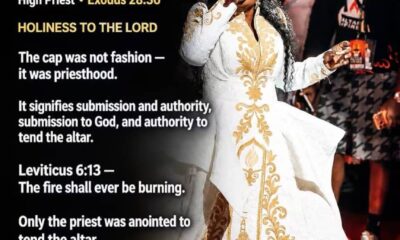
Ohemaa Mercy’s Tehillah Experience outfit was priestly regalia, not costume – Management clarifies