Health Essentials
Why Ghana’s ‘no bed syndrome’ is a policy failure, not a clinical failure -Part 2

The call to action
We must move beyond the cycle of temporary outrage. I propose a four-point blueprint for the Ministry of Health and the government:
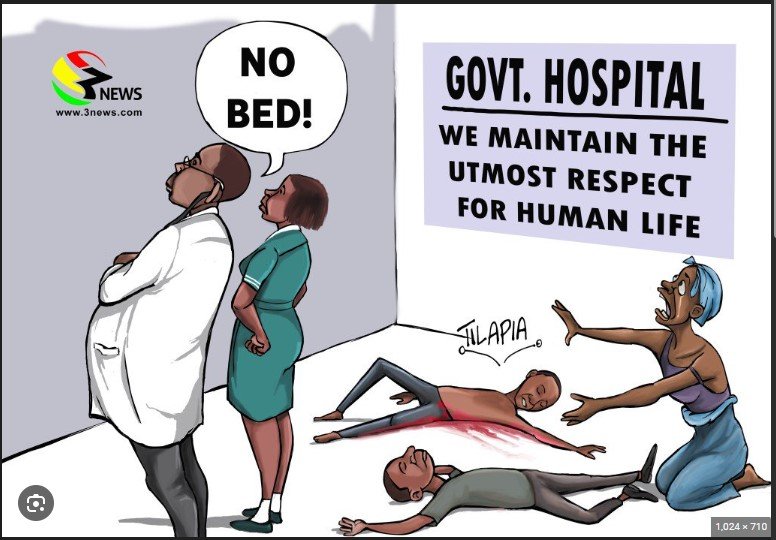

1. A Digital Bed-Tracking Command Centre: Legally mandate all public and major private hospitals to update a live, digital bed-registry every hour. The NAS must be able to see a vacancy before they move. This must be matched with the available resources and services so that the right patient will be sent to the right facility.
2. Strategic Capacity Expansion: We must stop building “prestige projects” and start building high-volume stabilisation centres. We need a targeted investment to triple the ER bed count in Accra and Kumasi within 24 months. This should then be extended to other regional capitals.
3. Specialised Emergency Hubs: Designate specific hospitals as “Centres of Excellence” for Cardiac and Stroke care (and for other health emergencies), ensuring they have 24/7 imaging and intervention capabilities as well as the requisite expertise to manage these conditions. Policy makers must incentivise public-private partnerships to ensure that a heart attack in Accra or Kumasi can be treated with the same urgency as one in New York.
4. Develop a nationwide trauma system: This is extremely important because trauma is a major cause of deaths in Ghana. In the US, each state has a statewide trauma system with three levels. Level 1 trauma centres are usually University Teaching hospitals that provide comprehensive trauma care and also play an important role in local trauma system development, regional disaster planning, increasing capacity and advancing trauma care through research. Level II trauma centres are expected to provide initial definitive trauma care for a wide range of injuries and injury severity.
Level III centres provide definitive care to patients with mild trauma. Having such systems is imperative to ensure proper treatment of trauma patients.
Even for those who survive trauma, disability is a major assault on economic potential and viability. Importantly all this cannot happen with a cash and carry system. Emergencies should be managed under a different model to save life and limb first. Obviously, there is a need to ensure that healthcare facilities will be able to recover their investments in emergency care, and that balancing act needs careful consideration.
Frontline clinicians are often forced to bear the public’s anger for infrastructure deficits they did not create and cannot fix. This is a failure of governance, not a lack of clinical care. Responsibility lies with the policy makers who manage the nation’s resources.
The “No Bed Syndrome” is a systemic disease. It cannot be cured with a directive from the Ministry of Health, parliament or a lecture on ethics. It requires a blueprint, a budget, and the political will to treat this like the menacing threat it is.
It is safe to say that non-emergent healthcare is excellent in Ghana for the most part if you can afford it. However, emergency care is suboptimal. We had a sitting president die from an emergency health issue and a former vice president also die from an emergency. If that is not enough warning, it is clear that anyone can be a victim of an emergency.
If we do not act, the next ambulance driving aimlessly through the streets of Accra could be carrying anyone, including the very people who have the power to fix this issue.
Prof. Jonathan Laryea is a Professor of Surgery at the University of Arkansas for Medical Sciences in Little Rock. Arkansas. He is board certified in General Surgery, Colorectal Surgery and Clinic Informatics.
He is a graduate of the University of Ghana Medical School (Class of 1997)