Profile
Proofed

From Doryumu to two Bars: The remarkable journey of Lawyer Nyarkotey Obu
From the quiet communities of Doryumu and Dodowa in the Shai-Osudoku area of Greater Accra to courtrooms in two West African countries, Lawyer Raphael Nyarkotey Obu’s story is one of unusual professional reinvention.
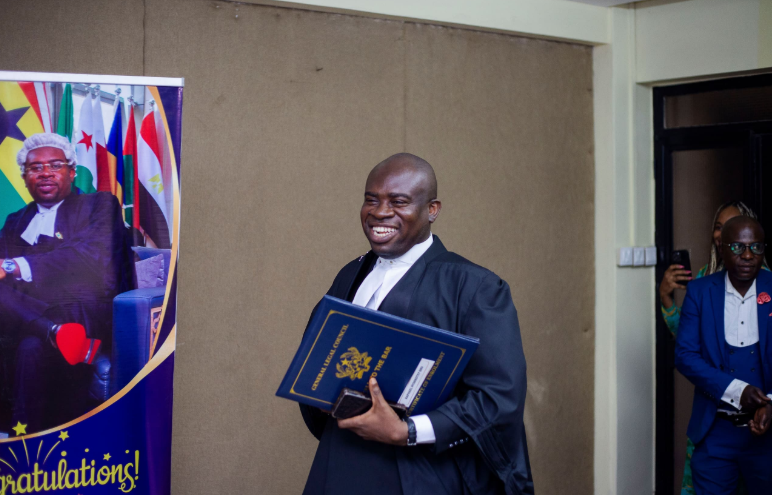

On Friday, October 9, 2026, the naturopathic scholar was called to the Ghana Bar, following his earlier admission to the Bar in The Gambia in November 2024.
The milestone places him in a pioneering position. He has been reported as the first African naturopath to qualify as a lawyer in two West African countries—an achievement that combines natural medicine, academic leadership and legal training in a way rarely seen on the continent.
Beyond the ceremonial wig and gown, however, lies a larger question: how will he use the law to improve the regulation of traditional, complementary and alternative medicine (TCAM) in Africa?
The early journey
Nyarkotey traces his roots to Doryumu in the Shai-Osudoku district. Part of his childhood was spent with his grandmother in the Suhum-Amrahia area, before his family journey took him to Teshie Lascala, where he began his basic education.
He later attended Ghanata Secondary School, Dodowa. These formative experiences preceded a career that would take him from classrooms in Ghana to professional legal training in Banjul and clinical and academic engagements in Asia.
Those beginnings matter because his achievements did not emerge from a single, straightforward professional path. He first built a name in Ghana’s developing natural medicine sector as an educator, researcher, author and advocate for stronger standards.

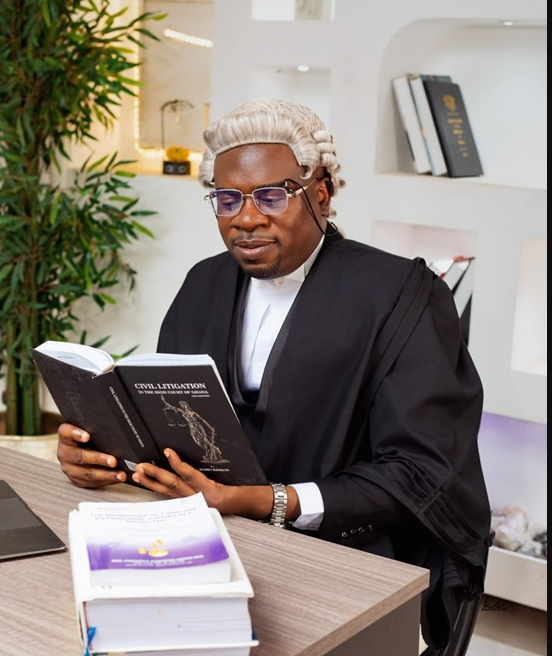
Education and difficult questions
That conviction informed the establishment and development of Nyarkotey College of Holistic Medicine in Ashaiman. The institution pursued structured professional education and competency-based training, including work connected to national occupational standards for naturopathy and holistic medicine.
Yet its growth brought the challenge familiar to emerging health professions: educational ambitions can advance faster than the laws governing those who complete the training.
The College faced questions within Ghana’s tertiary education regulatory environment, while Nyarkotey also became involved in a public dispute with the Traditional Medicine Practice Council (TMPC).
At the centre was disagreement over the reach of the Traditional Medicine Practice Act, 2000 (Act 575), and its application to naturopathy and other complementary and alternative medicine disciplines. The dispute entered the courts, where the interpretation of statutory authority remains a matter for legal determination.

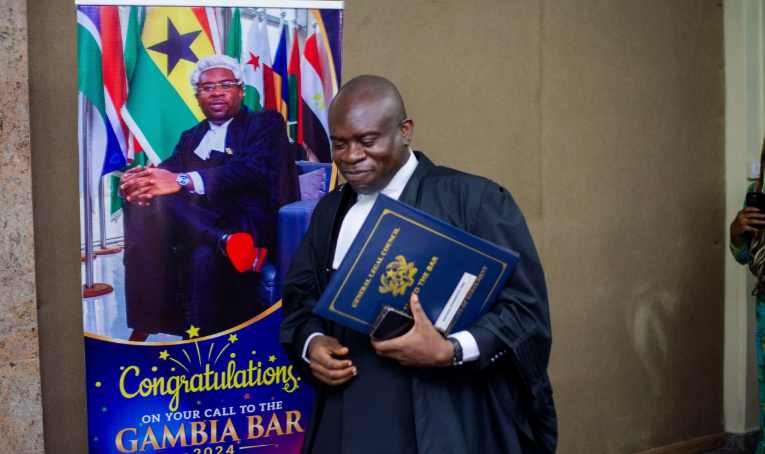
Why he studied law
It was against this backdrop that law became increasingly central to his work. After obtaining his law degree, Nyarkotey proceeded to the Gambia Law School and was called to the Gambian Bar in November 2024. He subsequently completed the route to admission in Ghana, culminating in the October 2026 ceremony. The second Bar call gives his professional story an especially Ghanaian significance: the legal questions that shaped his ambitions can now be addressed with the benefit of Ghanaian legal qualification.
The distinction is noteworthy, but he regards it as a means rather than an end. His interest is not simply in representing individual practitioners. He wants to contribute to laws that separate legitimate professional training from unsupported claims, define safe scopes of practice, provide fair disciplinary processes and protect patients. The objective, he argues, should be regulation that is firm, clear and suitable for Africa’s diverse healthcare landscape.
India and a wider horizon
In August 2026, Nyarkotey led 16 Ghanaian naturopaths to India for clinical immersion at Arujiva Ayurveda and Naturopathy Hospital in Karnataka. Their exposure included Ayurveda, yoga, naturopathy, nutrition and lifestyle-based care.
Subsequent interactions with Indian universities and professional institutions widened the educational exchange. For him, the visit offered a practical view of how training, research, hospitals and public policy can interact within established traditional medicine systems.
India also supplied a lesson in patience. Nyarkotey recalls being told by an Indian colleague that gaining recognition for an educational institution can involve years of persistence. He drew from that conversation a renewed commitment to documentation, programme quality, clinical preparation and continued regulatory engagement.

QAI partnership and standards
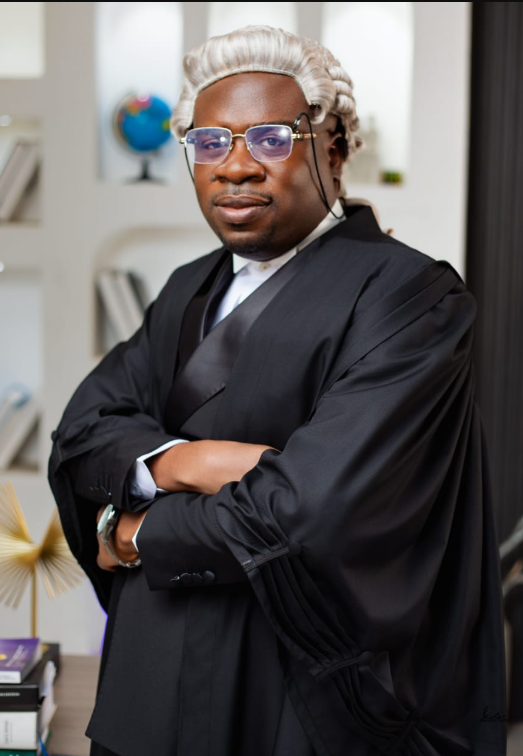
A recent development is the College’s Memorandum of Understanding with India’s Quality and Accreditation Institute (QAI). The partnership is intended to support quality assurance, curriculum improvement and professional development across naturopathy and related complementary medicine disciplines. It marks a shift from pursuing recognition principally through advocacy towards building systems that can be independently assessed.
For Nyarkotey, the agreement offers a platform for developing that quality culture while respecting the jurisdiction of Ghana’s own educational and professional regulators.
An African professional agenda
His thinking has also become continental. In March 2026, representatives associated with naturopathy from 11 African countries established the African Naturopathic Federation, with Nyarkotey as founding president.
The Federation seeks to advance professional education, research, ethics and cooperation. Its potential lies in helping African countries discuss common training benchmarks while allowing each country’s laws, institutions and healthcare needs to shape implementation.
Nyarkotey is additionally promoting an India–Africa AYUSH Centre for Education, Research and Regulatory Cooperation. The proposed platform would connect African institutions and policymakers with Indian expertise, not only in training and clinical exposure but also in standards, research and responsible investment.
He believes African traditional knowledge and India’s institutional experience can form a productive partnership without either being treated as a substitute for scientific scrutiny or patient safety.
A law firm with a specialised mission
Perhaps his most distinctive future plan is a law firm devoted substantially to TCAM and healthcare regulation. He envisages advising governments, professional bodies, colleges, hospitals, clinics and businesses on legislation, registration, licensing, contracts, institutional compliance, patient rights and professional accountability.
He also hopes to assist African countries seeking to draft or modernise legal frameworks for traditional, complementary and alternative medicine.
That ambition follows naturally from his own encounters with overlapping institutions and contested regulatory mandates. More coherent frameworks could clarify which authority regulates practitioners, which oversees academic qualifications and which controls medicinal products.
Such separation would help protect the public while creating lawful pathways for properly trained professionals. Any reform, however, will require consultation with health authorities, patients, conventional medical professionals and complementary medicine stakeholders.
An achievement and a responsibility
Nyarkotey’s story is not free of controversy. His positions on regulation have attracted criticism, and his institution has faced scrutiny. A balanced assessment must recognise those disputes without allowing them to erase the work he has undertaken.
Nor should international partnerships, professorial titles or two Bar calls be mistaken for proof that every proposal is sound. His legacy will depend on the standards he helps establish and the results they produce.
From Doryumu, Dodowa, Suhum-Amrahia and Teshie Lascala to Ghanata Secondary School, Banjul, India and the Ghana Bar, the arc of his journey is striking.
Yet its next chapter may matter more than its earlier honours. If his legal training helps African countries adopt workable TCAM legislation, if his educational partnerships deliver measurable quality, and if his proposed specialist practice contributes to patient protection, the impact will extend far beyond one individual.
The first African naturopath to have qualified as a lawyer in two West African countries now faces a larger professional assignment: turning a remarkable personal achievement into durable legal and educational progress for natural medicine across Africa.
SKIP THE QUEUE, TAP THE NEWS


You can now read the Ghanaian Times and The Spectator newspapers from the comfort of your device via TimesNewsPlus.
Buy Maps
Join our WhatsApp Channel: https://whatsapp.com/channel/0029VbBElzjInlqHhl1aTU27