Sports
Following Black Stars World Cup exit… Jerseys hang on trees, in shops, thousands left unsold

Days before the Black Stars exit from the World Cup, the national team jersey was the hottest item in Ghana and markets in Tamale.
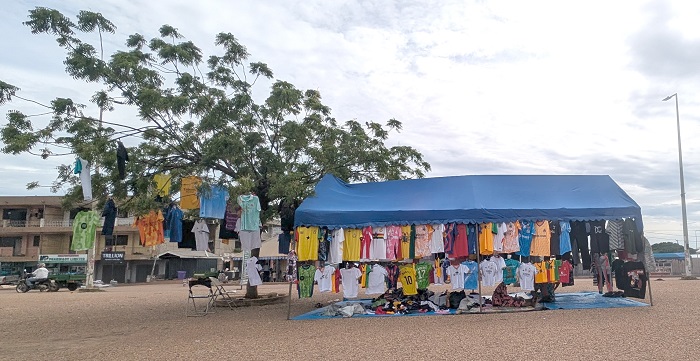
Today, they swings on trees, while song hang motionless in frontage of shops and roadside stalls, due to Ghana’s painful exit from the championship.
The excitement that once gripped football fans across the country has suddenly given way to disappointment, leaving hundreds of traders with unsold Black Stars jerseys that many had hoped would ‘disappear’ before the tournament ended.
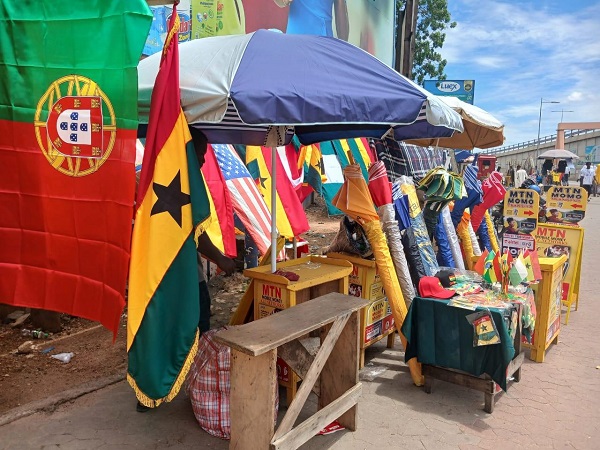
From the Central Market to Aboabo, Lamashegu, the hospital road pavement and other busy commercial centres in Tamale, retailers who had enjoyed brisk business during Ghana’s World Cup campaign now sit quietly beside stacks of jerseys, waiting for buyers who may never come.
“Business was booming when the Black Stars was in the tournament,” said Ibrahim Abdulai, a jersey dealer in Tamale.
“Every match day brought more customers. Some people even bought different jerseys after every match because they believed Ghana would go far.”
According to him, demand rose so sharply that prices nearly tripled as optimism swept across the country.
“A jersey that was selling for GH¢90 suddenly jumped to between GH¢200 and GH¢500 depending on the quality. The authentic replica jersey was the most sought-after and customers were willing to pay almost any price for them,” he explained.

The majority flooding the local markets were replicas of varying quality, imported quickly from Togo to meet growing demand.
For many buyers, authenticity didn’t matter, it was the show of support for the national team.
Some male fans were compelled to buy different customised jerseys for their girlfriends. A man spent GH¢1,850 on jerseys just to wow his girlfriend; so did many men. We hardly saw ladies buying the jerseys.
“I bought four different jerseys,” admitted 31-year-old football enthusiast, Richard.
“I wanted a different one for every important match. Football is about passion. When Ghana was progressing, everybody wanted to be part of the excitement.”
The World Cup frenzy created a temporary economic boom that extended beyond jersey sellers.

Young entrepreneurs offering on-the-spot customisation services worked tirelessly printing names, favourite players’ numbers and personalised messages on jerseys.
Street vendors, mobile hawkers, printers, embroidery operators and small retail businesses all benefited from the surge in demand.
“It wasn’t only the sellers making money,” explained Abdul Karim, who is specialised in jersey customisation.
“People wanted their own names or their favourite players’ names printed immediately. We worked from morning until late at night because the demand was overwhelming,” he added.
For many young people, the tournament provided short-term employment and a valuable source of income.
However, Ghana’s elimination brought the booming business to an abrupt halt.
“Some customers have even returned asking if they could exchange or return the jerseys because Ghana is out,” one trader said with a smile.
“We told them that once you buy it, you own it,” he said.
Others simply walked past the stalls without stopping, something that would have been unimaginable just a few days earlier.
Many traders are now hoping the jerseys will still attract buyers beyond the tournament, arguing that supporting the national team should not depend solely on winning.
Football analysts say the fluctuating demand demonstrates how sporting success influences consumer behaviour and local economies.
As national pride grew during Ghana’s World Cup journey, so did spending.
Every game came with increased confidence, higher demand and rising prices.
But once the dream ended, so did much of the commercial excitement.
The phenomenon reflects what has been witnessed in many football-loving nations around the world.
During successful international tournaments, national team merchandise often experiences unprecedented demand, creating opportunities for retailers, manufacturers and informal sector businesses. Yet the momentum can disappear almost overnight when a team is eliminated.
Karim noted that the unsold jerseys remind us that football brings people together.
“When Ghana was playing, everyone wore the colours with pride. The business may have slowed down, but our support for the Black Stars remains.”
As the World Cup continues without Ghana, the once highly sought-after jerseys remain suspended from tree branches to shop entrances and market stalls across Tamale, a symbol of hopes that soared with every victory but faded with the final whistle.
For now, the jerseys are still hanging.
Perhaps not for another World Cup match, but for another moment when the nation once again rallies behind the Black Stars, and the red, gold and green return to the streets with the same passion that briefly transformed football into business.
From Geoffrey Buta, Tamale