News
‘Equip polyclinic theatres to improve antenatal care’

A philanthropist and antenatal care (ANC) advocate, Mrs Safia Ayivor, has called on the government, private organisations and individuals to prioritise the provision of anaesthesia machines and surgical packs for polyclinic theatres to improve Antenatal Care (ANC) services across the country.

According to her, equipping polyclinics with such critical medical facilities would help save the lives of mothers and babies, particularly in emergency situations where timely surgical intervention would be required.
“If a polyclinic can safely perform a Cesarean section (C-section), it relieves massive pressure on teaching hospitals and saves precious time for the mother,” she stated.
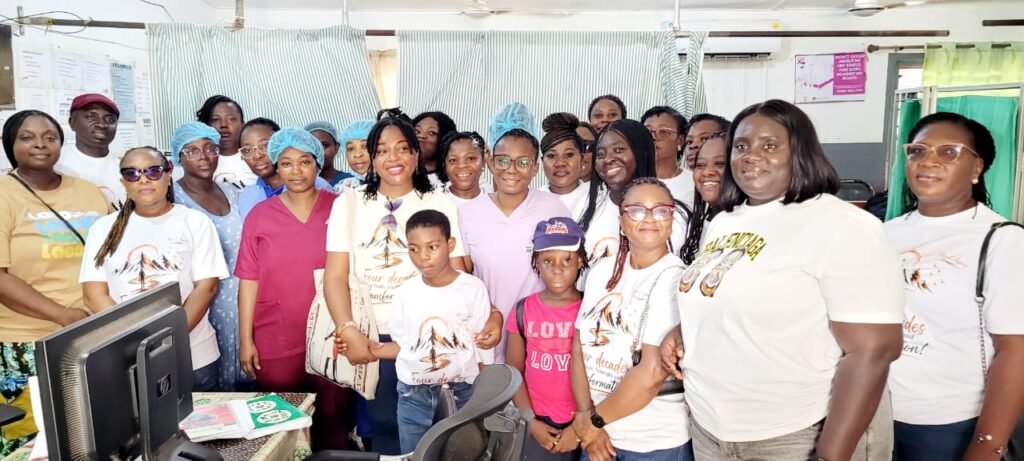
Mrs Ayivor made the remarks after recently donating toiletries, diapers and other essential items worth thousands of Ghana cedis to new mothers and expectant women at the Ashaiman Municipal Hospital in the Greater Accra Region.
The donation, which formed part of activities marking her 40th birthday celebration, was aimed at supporting mothers, especially those from deprived backgrounds, in caring for their newborns.
Joined by family and friends, Mrs Ayivor and her team presented the items to about 50 mothers and pregnant women to support them during the early stages of childcare and motherhood.
She noted that improving maternal healthcare delivery in Ghana requires a shift from crisis management to building a resilient healthcare system capable of handling emergencies effectively.
“Donations act as a vital bandage, but equipping polyclinics to handle emergencies on-site is what will ultimately save lives,” she stressed.
Mrs Ayivor and her team also interacted with nurses and caregivers at the facility to explore additional ways of supporting the polyclinic in the future.
Highlighting some of the challenges confronting ANC units and maternity wards, she pointed to severe space constraints, explaining that many facilities were frequently overwhelmed by the high number of patients.
According to her, the limited space results in long waiting times for pregnant women, while overcrowded wards place enormous pressure on frontline midwives and nurses.
“This operational pressure stretches frontline midwives and nurses to their absolute limits,” she stated.
Mrs Ayivor further called on benevolent organisations and individuals to support healthcare facilities by investing in critical infrastructure rather than focusing solely on consumable items.
“Donations should not just be about consumables, individuals and organisations must also target critical infrastructure to improve healthcare delivery,” she added.
By Jemima Esinam Kuatsinu