Gender
Bravery in the face of fear: The struggle of women at recruitment grounds

For many young women who gathered at last week’s military recruitment exercise, the day was supposed to mark the beginning of a long-awaited dream built on discipline, sacrifice, and the quiet determination to prove that women too can serve, protect, and rise through the ranks of the Ghana Armed Forces. But that dream was shattered when tragedy struck.
Among the crowd were young women who had travelled from distant towns, some clutching envelopes of documents, others holding on to borrowed hope and borrowed money. Many had always believed that the Ghana Armed Forces was one of the few institutions that did not discriminate against their gender. They joined thousands of hopefuls, standing shoulder-to-shoulder under the burning sun, anticipation tightening their chests.
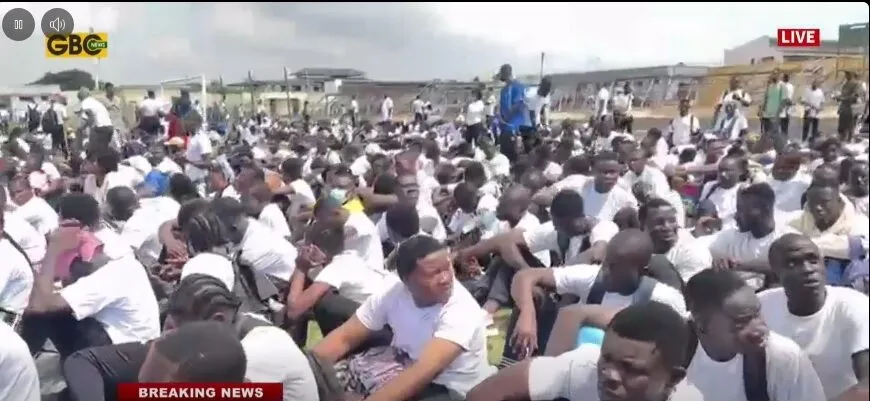

Yet, for six of these young women, the day ended in the unthinkable. They lost their lives in the stampede at El-Wak Sports Stadium, a devastating blow to families, friends, and the nation. Their deaths have left a permanent scar on the dreams they carried and on the community that watched helplessly as hope collided with chaos.
Women caught in the chaos later recounted how panic surged through the crowd. Some were pushed off balance, others struggled to breathe, and a few held on desperately to friends so they would not be swallowed by the moving wave of bodies. Their voices trembled not only from shock but from the fear they had long carried within—the fear of being unseen, unheard, and unprotected.
Unlike their male counterparts, who often approach recruitment with the boldness society readily grants them, many women arrive at such exercises already battling stereotypes. They must first win the silent argument that they belong there. The tragedy, therefore, did not only claim lives and injuries; it magnified the fears women carry even before they step through the recruitment gates.
For some, the military represented their only escape from unemployment and the frustrations of being a young woman seeking stable work in Ghana. That is why they endured the heat, the long queues, and the packed grounds because the uniform symbolized fairness, dignity, and a chance to rewrite their stories.
As families mourn and survivors nurse their wounds, one truth stands out: women’s aspirations must be protected with the same seriousness afforded their male peers. Their courage to defy gender norms should be met with proper safety measures, clear organisation, and a recruitment environment that does not put them at unnecessary risk.
The tragedy has reminded the nation that behind every applicant is a story of sacrifice, hope, family expectations, and for many women, the desire to claim space in fields traditionally reserved for men. These human stories should guide future reforms, and for that reason, gender-sensitive policies must no longer be an afterthought.
It is against this backdrop that the Ghana Armed Forces (GAF) on Monday announced the resumption of its 2025/2026 recruitment exercise in the Greater Accra Region, following the temporary suspension after the stampede on Wednesday, November 12, at the El-Wak Sports Stadium.
In a statement cited by The Spectator and signed by the Acting Director General of Public Relations, Captain (Ghana Navy) Veronica Adzo Arhin, GAF explained that the reinstated process will now take place across eight sub-centres. These include the El-Wak Stadium and Nicholson Park at Burma Camp, which will each have two centres. The Air Force Base at Burma Camp and the Training and Doctrine Command (TRADOC) at Teshie will also each host two centres, while the Eastern Naval Command in Tema will have one.
To ensure smooth screening and reduce congestion, applicants will report in batches of 600, with each individual receiving an SMS specifying their reporting date, batch number, and designated centre.
Even with the revised measures, one concern remains: women’s safety in crowded public spaces must be intentionally prioritised, not assumed under the banner of military discipline. Clearer communication, structured queuing systems, better crowd control, constant medical presence, and trained crisis responders are not luxuries—they are necessities.
Beyond logistics, there must also be recognition that women’s experiences of fear, vulnerability, and danger differ from men—not because they are weaker, but because society has conditioned the environment to be harsher toward them. For every female applicant to any of the security services, there is a story of resistance against stereotypes, limited opportunities, whispered doubts, and unspoken fears.
These stories must shape the reforms that follow, ensuring that young women can pursue the uniform not with fear, but with confidence and dignity. And as the nation continues to mourn the six young women whose lives were lost, the hope remains that lessons learned from this tragedy will safeguard the dreams of those who step forward next, so their courage is met with the order, protection, and respect it deserves.
By Esinam Jemima Kuatsinu
Join our WhatsApp Channel now!
https://whatsapp.com/channel/0029VbBElzjInlqHhl1aTU27

