Gender
Sports Journalists … Challenges They Face

UNTIL few decades ago, Sport Journalism was a “no go area” for women simply because that segment of the industry was male dominated, but times have changed. Some women have ventured the male domain.
In Ghana, the trail blazer was Perpetual Crentsil, of Graphic fame, now a University Lecturer and Consultant in Finland. Others are Veronica Commey of GTV Sports Station, Mavis Amanor of Asempa Sports FM, Juliet Bawuah, formerly of TV3 Station, Roselind Amo of Graphic Sports and Christine Dzakah of Kwese Sports TV; who spoke with The Spectator.


Christine Dzakah, after watching Kate Abdo, ace British Sport Journalist reporting from a football field developed love for the sports. After Senior High School, Christine enrolled at the Ghana Institute of Journalism to study Journalism.
Christine who had from childhood wished to be on television has since worked with Rainbow Radio, Vision One FM, Asempa FM, Star FM and Light TV and is currently at Kwese Sports, a television station, as a Sports Reporter, anchor and producer.
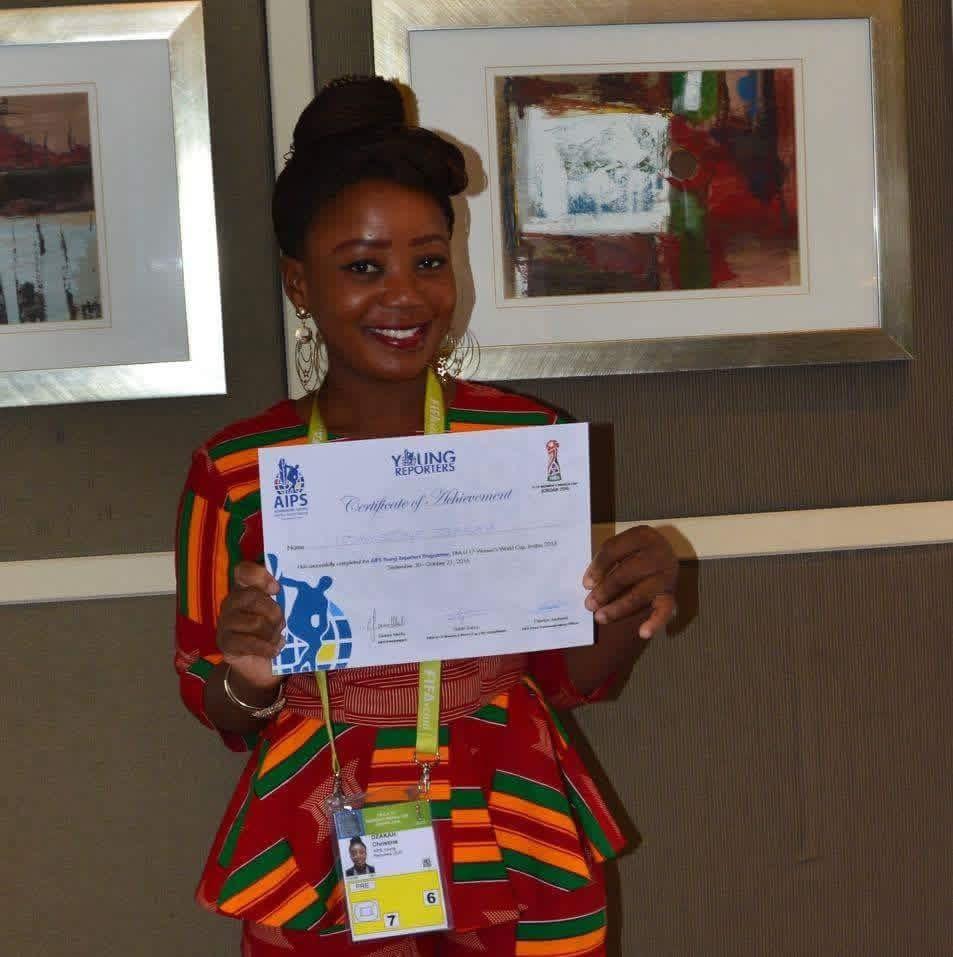
The all-round lover of sports has covered three international tournaments; the 2015 Under-20 Youth Tournament in Senegal, the 2016 FIFA Under-17 Women’s World Cup in Jordan and the 2017 Glo Cup Awards in Abuja, Nigeria.

CHALLENGES
Christine who has been in the sports industry for over six years, bemoaned challenges women in general face in the industry.
Top on the list is the misogynist attitude of discrimination from their male counterparts, unequal treatment of female Sports Journalists and undermining the capabilities of females Sports Journalists because Sports Journalism is mainly regarded as a male profession.
Again, some female Sports Journalists are normally given entertainment aspect of sports programmes to host instead of either reporting or writing sport-related stories.
Sharing an experience on the challenges, Christine mentioned that it was easy for female sports journalists to be swayed by male footballers during interviews with irrelevant interruptions.

BREAKING THE BARRIERS
Her work has earned recognition for her contribution to the promotion and visibility of athletics in Ghana, following years of sustained reporting on a sport that has often competed for mainstream media attention.
Since 2014, Dzakah has covered the sport’s circuit, regional and national championships, bringing athletes and competitions to wider audiences while also encouraging other journalists to expand their coverage of track and field.
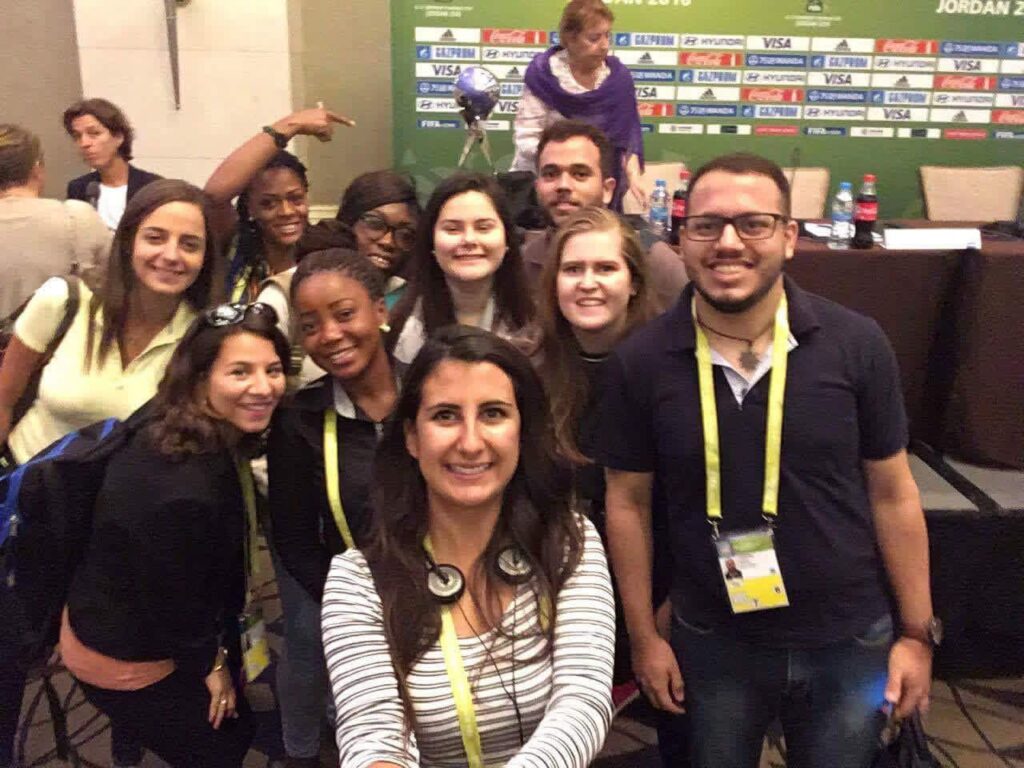
Her growing profile in sports journalism received international recognition in 2016 when she was selected to represent Ghana at the AIPS Young Reporters program in Amman, Jordan. Dzakah was one of 15 young reporters selected from different countries and one of only three representatives from Africa in that edition, which also included a participant from the United States.
The international selection placed her among a small group of emerging sports journalists chosen for the prestigious professional development program.
Dzakah’s impact has also been formally recognized by the Ghana Athletics Association, which presented her with an Award and Citation for her “exemplary dedication” and “unwavering commitment to advancing athletics in Ghana.”
The Association credited her reporting with inspiring “a deeper appreciation for track and field sports among audiences nationwide” and described her role in promoting Ghanaian athletics as “pivotal.” It further recognized her efforts to mentor and encourage fellow journalists to cover athletics, underscoring a contribution that extended beyond reporting individual competitions to helping broaden the sport’s media presence in Ghana.
WAY FORWARD
Touching on the way forward, Christine called for “equal treatment for both male and female sports journalists, and urged women to be determined in their careers and especially in the sports industry”.
She tasked more female journalists to venture into the Sport Journalism because though challenging, it was interesting, Christine entreated employers to recruit more females into field.
Across the country, more women have become Sports Journalists, even though it comes with its own difficulties, but at least now, it is no longer alien to our society.
By Portia Hutton-Mills