Entertainment
Ohemaa Mercy’s Tehillah Experience outfit was priestly regalia, not costume – Management clarifies

The management of renowned gospel musician Ohemaa Mercy has officially addressed public commentary surrounding her ceremonial outfit at the just-ended Tehillah Experience 2026.
The 13th edition of the annual worship concert, themed The Altar of Fire, was held at the Oil Dome, Royalhouse Chapel last Sunday and drew thousands of worshippers. Following the event, discussions on social media focused heavily on the distinctive costume worn by the host to lead worship.
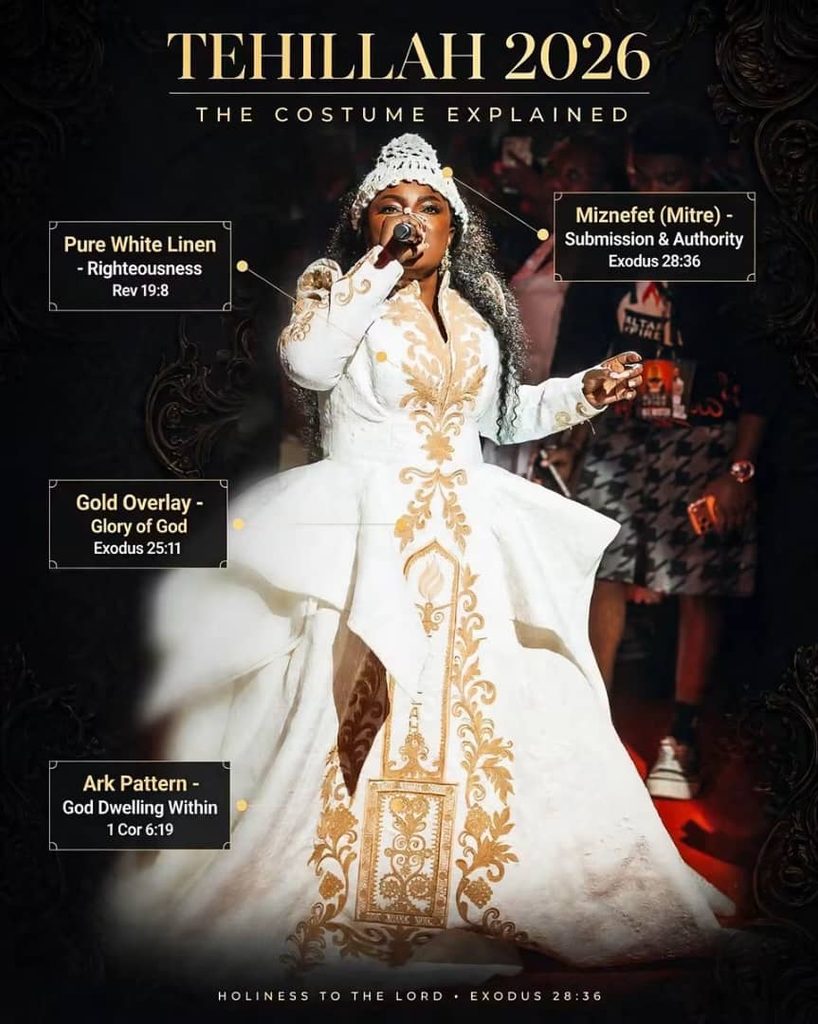

In an official statement titled “The Message Behind The Mantle: Decoding Ohemaa Mercy’s Altar Entry at Tehillah Experience 2026,” management explained that the outfit was deeply symbolic and biblically inspired.
“At this year’s Tehillah Experience, Ohemaa Mercy did not simply mount the stage, she made an altar entry. Long before she lifted the microphone, her attire had already delivered a sermon,” the statement noted.
Management broke down the attire into four key elements:
The Cap, representing the Priestly Mitre, mirrors the Miznefet worn by the High Priest as instructed in Exodus 28:36-38, which bears the inscription “Holiness to the Lord.”
According to the team, it was not a fashion statement but a declaration of priesthood, referencing Leviticus 6:13. The cap also symbolises covering and submission to divine authority.
The Cross carried ahead with white linen was described as the heart of the Christian faith, signifying that Christ went ahead and that access to the altar is by His righteousness and resurrection, not human strength.
Citing John 19:17, Galatians 2:20 and Colossians 1:20, management said the cross had to go first to make peace for God’s presence to enter.
The Garment of white, gold and crimson reflects three biblical truths: white for purity and consecration (Revelation 19:8), gold for glory and royal priesthood (1 Peter 2:9), and crimson for sacrifice (Romans 12:1).
The Entry itself, management added, was an intentional procession likened to Esther approaching the royal courts (Esther 5:1-2) and the priest entering the Holy Place. With horns sounding and intercessory prayers, it mirrored 2 Chronicles 5:13-14, when the glory of the Lord filled the temple.
“On that night, the Oil Dome ceased to be an auditorium of fans awaiting a concert. It became a tabernacle. And her entry was a prophetic reminder that God still answers by fire when the altar is kept burning,” the statement said.
Management concluded that what was worn was not a costume but “Priestly Regalia for an Altar Assignment” and thanked all who attended and supported the mandate.
By Edem Mensah-Tsotorme