News
First IUI quadruplets delivered in Ghana

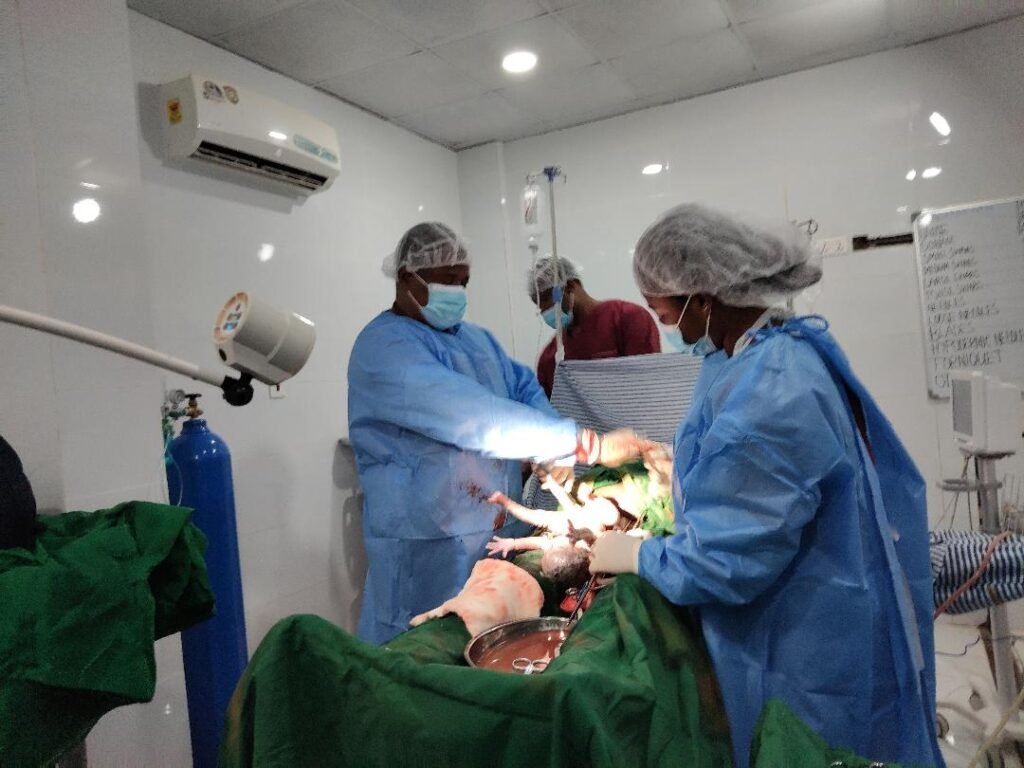
A 30-year-old surrogate mother has delivered a set of quadruplets at The Walking Egg Medical and Fertility Centre at Pokuase in Accra, in a rare surrogacy success that has brought renewed attention to assisted reproductive care in Ghana.
The babies-two boys and two girls- were delivered through a caesarean section in the early hours of Tuesday at 36 weeks and weighed an average 2.5 kilograms each, a weight doctors say was healthy for a multiple pregnancy.

IUI stands for Intrauterine Insemination, a common fertility treatment where healthy sperm are collected, ‘washed’ and concentrated in a lab, and then directly inserted into a woman’s uterus around ovulation using a thin catheter to help sperm reach the egg for fertilisation, often used for unexplained infertility, cervical issues, or mild male factor infertility, and is less invasive than IVF.
Speaking to The Spectator after the surgery, the Medical Director of the Centre, Dr Nana Yaw Osei, said the pregnancy was achieved through Intrauterine Insemination (IUI) and was not planned to result in multiple births.
“With IUI, you introduce prepared sperm into the uterus and have no control over how many eggs fertilized.”

“Unlike IVF, where embryos are formed outside the body and the number transferred can be controlled, this outcome was left entirely to nature,” Dr Osei explained.
He said unlike IVF which could result in multiple babies, this is “possibly the first IUI leading to quadruplets in Ghana.”
He revealed that the surrogacy arrangement was necessary because the intended mother had lost her uterus during surgery to remove fibroids, making it medically impossible for her to carry a pregnancy.
“She had no womb of her own, through no fault of hers,” Dr Osei said, adding that “Surrogacy was the only option available for her to have a biological child.”
When scans later showed that the surrogate was carrying four fetuses, the medical team considered fetal reduction, a procedure sometimes used to reduce risks in multiple pregnancies. However, the option was rejected.
“As a strong Christian, fetal reduction is abortion to me,” Dr Osei said. “After discussions with the intended parents and the surrogate, we all agreed to continue with the pregnancy.”
Despite concerns commonly associated with multiple pregnancies, Dr Osei noted that the surrogate experienced no major complications, and the delivery was smooth. Paediatric assessments conducted after birth confirmed that all four babies are healthy.
Dr Osei again indicated that surrogacy, though still widely misunderstood, is recognised under the Registration of Births and Deaths Act, 2020 (Act 1027).
He urged the public to engage the subject with greater understanding.
“Surrogacy is not about convenience,” he said. “It is about restoring hope to people who have lost the ability to carry a child.”
Describing the moment of delivery, he added, “I was in tears in the theatre. It reminded me why I chose this profession.”
By Esinam Jemima Kuatsinu
Join our WhatsApp Channel now!
https://whatsapp.com/channel/0029VbBElzjInlqHhl1aTU27

