Profile
Nyange: The sleeping capital of the Gonja Kingdom rises again

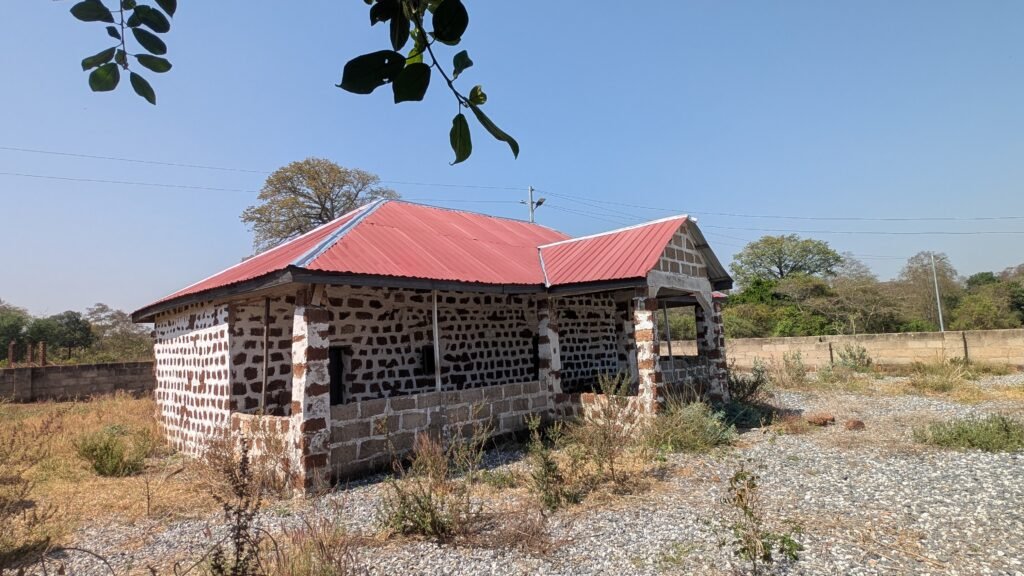
FEW miles from Damongo, in Ghana’s Savannah Region, is Nyange, a place which is divided by a busy major road from Tamale to Sawla, which looks abandoned because of the ruins of the buildings, but holds a history vast enough to have once anchored an entire kingdom.
Long before Damongo became the administrative heartbeat of Gonjaland, Nyange served as the spiritual and political centre of the Gonja Kingdom, the original seat of the Yagbonwura, home to ancestral palaces, ritual grounds, and the rituals that shaped kings.
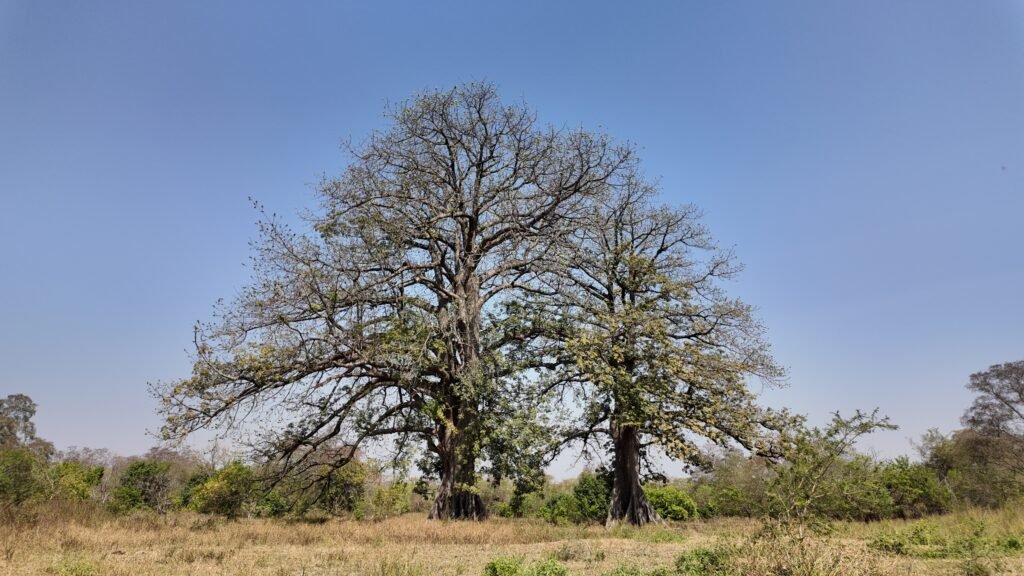

For decades, Nyange drifted into silence, but after Yagbonwura Bii-Kunuto Jewu Soale I, the King and Overlord of the Gonja Kingdom, announced intentions to reconstruct elements of the old capital, I felt compelled to visit to see for myself what remained of this sacred landscape, and to understand why its revival matters now.
Walking through Nyange, I met a woman who we spent some time narrating briefly the unspoken chapters of Nyange history. The land according to her, still holds the outlines of what once defined a kingdom—the Gonja, the stone foundations of ancient palaces, sacred groves where rituals once echoed, and open courtyards where chiefs, land priests, and kingmakers shaped the affairs of the state—and the empty bricks and white dotted paint that host every late and Yagbonwura.
Nyange was the original home of the Ndewura Jakpa Palace, a towering symbol of power that stood until 1944, when Yagbonwura Awusi Ewuntomah of Daboya transferred the royal seat to Damongo. The administrative centre moved but Nyange’s spiritual authority never left.
Where Every King Begins and Ends His Journey
My visit revealed why no Gonja story is complete without Nyange. Its significance is anchored in traditions still observed today.
When a Yagbonwura passes, the first funerary rituals begin in Nyange before the body travels to the Royal Mausoleum in Mankuma. The journey follows an ancient path that deliberately avoids Sawla—a tradition safeguarded for generations.
Rites That Begin a Reign
In 2023, whiles covering the enskinment of the Yagbonwura, he first arrives in Nyange to begin his sacred initiation, where every Yagbonwura has to start the initiation.
These rites, performed only here, link the new king to the ancestry of Ndewura Jakpa. For centuries, Nyange was the permanent residence of successive Yagbonwuras, where its soil is layered with leadership, legacy, and the quiet footsteps of royalty.
A Heritage Landscape Waiting to Be Reimagined
As we moved through the community, it became clear that Nyange holds immense potential for cultural tourism, research, and documentation.
Still visible across the landscape are the ruins of palaces occupied by ancient Yagbonwuras, the tomb of Wasipewura Chinchanko of Daboya, remains of the stone palace of Yagbonwura Mahama Dagbonga of Bole, enskinment sites, sacred burial grounds, the Nyange Forest Reserve—long known for trees used in crafting royal coffins—and the homes of key custodians, including Nyangewura and Land Priest Vogu Jamani.
Nyange’s proximity to Mole National Park makes it ideal for an eco-cultural tourism circuit, weaving together wildlife, architecture, oral history, drumming, dance, and the lived memory of the Gonja people.
Local leaders are already discussing the creation of heritage trails, interpretive centres, and storytelling experiences led by community custodians.
Just beyond Nyange lies Larabanga, home to one of West Africa’s oldest Sudano-Sahelian mosques. Together, these two communities could anchor a cultural corridor capable of drawing visitors from across the world.
Larabanga offers architectural and religious significance, whiles Nyange offers political and spiritual heritage. Together, they tell a complete story of identity, power, belief, and continuity.
As I spoke with some people in Nyange, I could feel both urgency and hope, when they outlined a clear vision for the future by the efforts of the Yagbonwura to restore palace ruins, document sacred sites, establish cultural education and preservation programme, and develop sustainable tourism models that benefit residents.
But more than infrastructure, they spoke of identity—emphasising that, “our history is here.”
Leaving Nyange, I carried with me the feeling of a place on the brink of transformation, the past lingers in its broken walls and ancient pathways, but the future feels within reach—guided by royal leadership, community pride, and the quiet determination to revive a forgotten capital.
Nyange is not simply being restored, rather it is being reclaimed. And as the reconstruction efforts begin, the world may soon witness the rebirth of a capital that once shaped a kingdom and is ready to do so again.
From Geoffrey Buta, Nyange.
Join our WhatsApp Channel now!
https://whatsapp.com/channel/0029VbBElzjInlqHhl1aTU27

